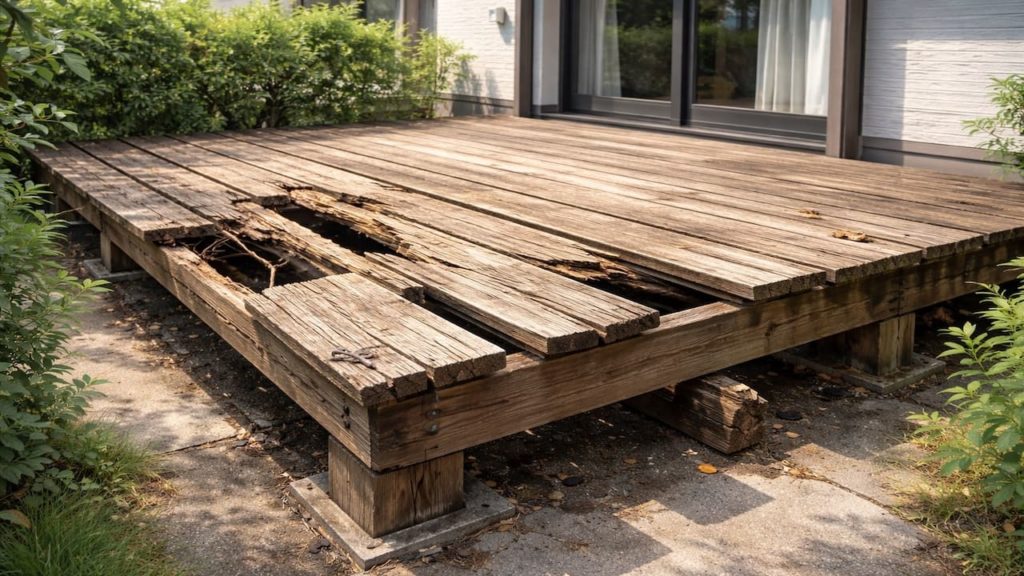
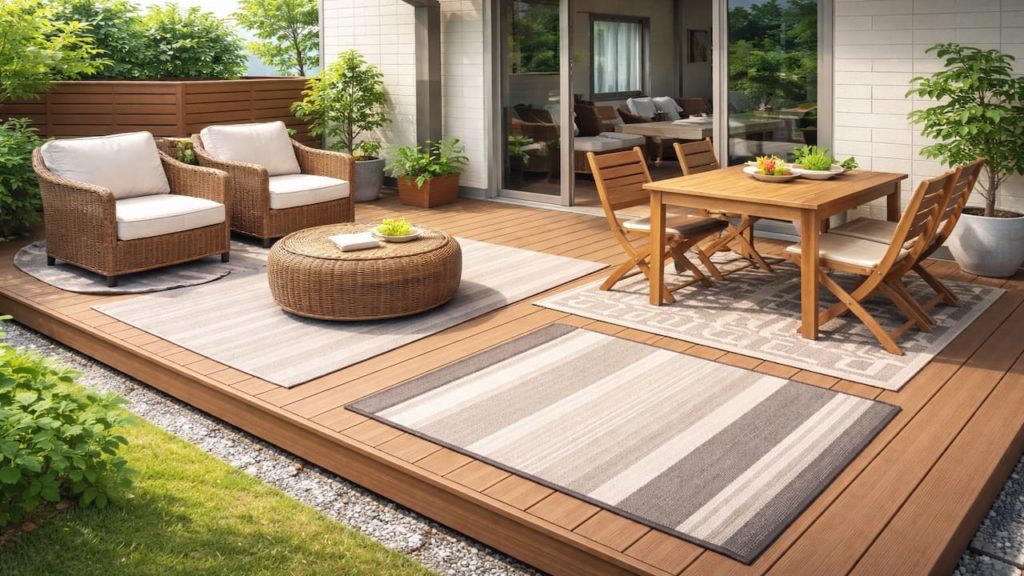
You put planters on your deck, and after a few weeks you notice dark rings and a sour smell. Now you’re stuck between loving the green and hating the stains.
In Japan, humid summers and long rainy spells keep wood from drying, especially on small balconies with weak airflow. Even “just water” can turn into rot when a pot sits flat.
In this guide, you’ll learn how to stop planter rot on a deck without killing your setup. You’ll fix the contact points, control runoff, and keep air moving under every pot.

Hi, I’m Ken — I’m Japanese, and I live in Malaysia long-term, so I explain everyday life in Japan from a practical ‘from abroad’ perspective.
I hold a building design qualification and I’ve been on site for 20+ years across hundreds of jobs. I turn Japan’s unspoken rules into simple checks, so you can avoid costly mistakes and take the next step with clear actions that feel safe.
1. Deck planters cause rot: 5 checks to prevent stains
Stop the stain by breaking constant wet contact.
Most deck damage is not from one big spill, but from tiny wetness that never dries. Planters create a shadowed wet zone, and Japanese rainy seasons keep it damp for days. Slow drying.
- Lift pots so air reaches the deck boards
- Catch runoff before it soaks the wood
- Prevent soil grit from grinding the surface
- Move pots so one spot can dry
- Check underside for slime and hidden mold
You might think “it’s outdoor wood, it can take water” — sure, but constant contact is different from rain that drains away. Deck boards can handle wet and dry cycles, not wet forever. Fix the contact, and the deck survives.
2. Feet trays gaps
Create a gap under every planter like it’s non negotiable.
Feet give airflow, trays control runoff, and gaps stop trapped moisture from turning into a swamp. If you only add a tray, you may trap water like a lid with no vent. If you only add feet, you may drip straight onto the boards in typhoon season. Balance.
- Add pot feet to lift base off boards
- Use a tray that still allows airflow
- Leave gaps so water can exit fast
- Keep tray edges from touching deck boards
- Remove trapped water after heavy rains
“I’ll just put a mat under it” — mats often hold water and make the problem worse. What you want is space and escape routes, not a damp blanket. Build a gap system, and stains stop multiplying.
3. Why planters rot decks faster than you expect
Rot accelerates when water plus dirt blocks oxygen.
Planters drip, soil splashes, and fine grit packs into the wood grain. That gritty mud holds moisture against the surface, then blocks airflow, which is a perfect rot starter. In Japan, winter dryness can crack boards, and the next rainy season pushes water into those cracks. Ugly cycle.
- Wet soil film keeps wood from drying
- Fine grit scratches open the surface finish
- Standing water pulls tannins into dark rings
- Shade under pots slows evaporation a lot
- Algae growth signals moisture staying too long
You might blame the deck finish — but even a good finish loses when a pot never moves. The real enemy is the micro swamp under the base. Solve that, and the finish suddenly “works again.”
4. How to set planters so the deck stays clean
Set a simple system that dries fast after watering.
Start with feet plus a tray that does not seal the base, then keep a small gap so air can flow. Expect ¥300–1,200 for basic saucers or trays depending on size and pack. According to amazon.co.jp.
- Place three or four feet for stable airflow
- Choose trays that you can empty quickly
- Keep a finger width gap around bases
- Water slowly so trays do not overflow
- Rotate planters so boards dry evenly
You might say “this is too much work” — but cleanup after rot is worse, and it spreads under everything. On Japanese balconies, water also drips to lower units, so control matters. Build the system once, then it runs on autopilot.
5. FAQs
Q1. Is a stain always rot under the planter?
No, sometimes it is tannin bleed or algae film, and it can clean off if caught early. Check for soft wood or a musty smell to confirm.
Q2. Should I use a rubber mat under pots?
Only if it does not trap water and it allows airflow. A mat that stays wet is basically a rot accelerator — avoid that setup.
Q3. Can I leave water sitting in drip trays?
Don’t, because stagnant water keeps humidity high right where the deck needs to dry. Empty trays after watering and after rain.
Q4. What if I’m on an apartment balcony with little airflow?
Raise pots higher with feet or a stand and keep gaps larger so air can move. Japan’s humid summer nights make trapped moisture linger longer than you expect.
Q5. How often should I move the planters?
Move them whenever you notice a dark outline starting, or after long wet weather. Even a small shift helps the boards dry and evens out sun exposure.
Pro's Tough Talk

I’ve spent 20+ years working around Japanese homes, so I’ve seen what tends to work—and what tends to go wrong—in everyday use. A planter sitting flat on wood is like a wet sponge taped to your deck.
The rot combo is simple: water, dirt, no air. Trays without gaps become little ponds. Feet without trays become drip torture, especially in Japan’s rainy season.
Right now, lift every pot with feet or a stand. Today, add trays you can empty and keep gaps open. This weekend, scrub the deck, dry it, and reset the layout.
If water stays under the pot for more than a day, your setup is wrong, no matter how pretty it looks. If the board feels soft or blackened, stop and fix that area before you keep watering. Deck repair is not a hobby.
You water at night, wake up, and there’s a perfect brown ring like coffee art. Yeah, that’ll end well. Then you drag a pot to “clean later,” hear the grit scrape, and suddenly your deck has racing stripes. Trays are a seatbelt for your deck, not an accessory.
Summary
Deck stains from planters come from constant wet contact, not one-time splashes. Lift, catch runoff, and keep gaps so air can do its job.
If you still see dark rings, your trays are trapping water or your pots never move. Change the setup, then watch how fast the boards dry.
Fix the feet trays gaps first and your deck stops getting punished for your hobby. After that, you can focus on plant care without babysitting the wood.