You step on the deck and the boards feel spongy, like they give up under your weight. Now you’re wondering if it is just old wood or something worse.
In Japan, rainy seasons and humid summers keep deck surfaces damp, especially in shaded side yards and balcony corners. Rot can start underneath while the top still looks normal.
In this guide, you’ll learn how to spot deck rot before it spreads using quick checks you can do today. You’ll find soft spots, test screws, read mold clues, and decide if you should stop using the area.

Hi, I’m Ken — I’m Japanese, and I live in Malaysia long-term, so I explain everyday life in Japan from a practical ‘from abroad’ perspective.
I hold a building design qualification and I’ve been on site for 20+ years across hundreds of jobs. I turn Japan’s unspoken rules into simple checks, so you can avoid costly mistakes and take the next step with clear actions that feel safe.
1. Deck boards feel spongy: 5 checks to spot rot
Spongy boards mean the structure may already be weakening.
Spongy usually means the wood fibers lost strength, not just surface wear. In Japan, long wet spells keep the underside damp, so damage keeps moving even when the sun comes back. Hidden rot. The earlier you check, the smaller the fix.
- Walk slow and mark any springy board zones
- Press with your heel to feel bounce change
- Probe seams with a screwdriver tip carefully
- Check board ends where water sits longest
- Look underneath for dark streaks and sag
You might think it is only one bad plank — but spongy often means the support below is compromised too. If you keep stepping there, you increase flex and speed up cracking. Do the checks, then treat the weak area like a warning light.
2. Soft spots screws mold
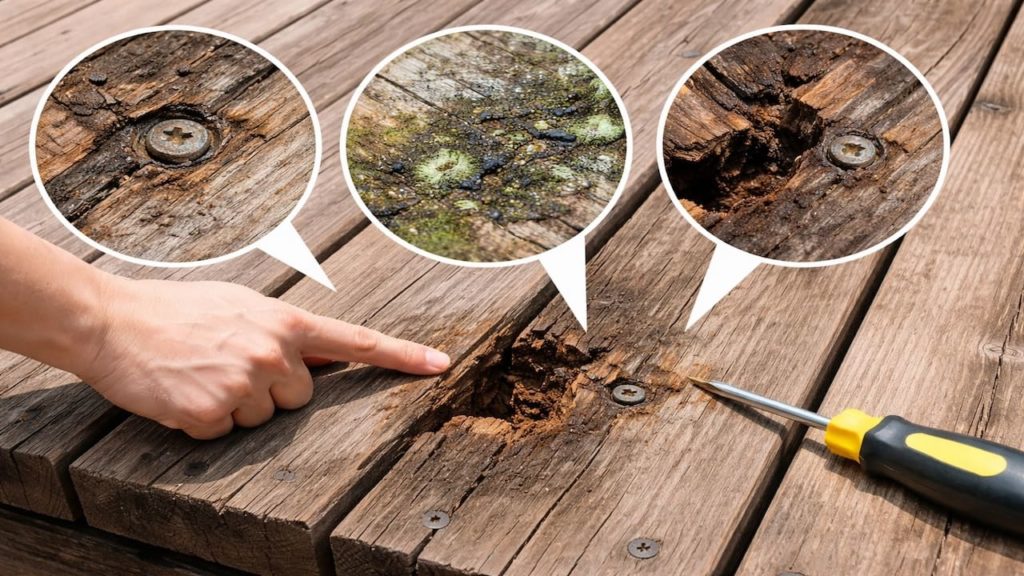
Soft spots plus weak screws plus mold is the rot triangle.
Soft spots show loss of wood strength, weak screws show loss of holding power, and mold shows moisture staying too long. Japan’s tight deck layouts can trap damp air under furniture and planters, so mold becomes a clue, not just a stain. Quick test. Use your hands and a simple tool to confirm.
- Press soft spots and compare to solid boards
- Try tightening screws and note if they spin
- Check for black specks around seams and knots
- Smell for musty odor after a wet night
- Look for green film where airflow is weak
You might say mold is just cosmetic — sometimes it is, but it often points to trapped moisture. If screws spin without biting, the wood fibers are already crushed. Treat the triangle as real rot until proven otherwise.
3. Why deck boards turn spongy in Japan
Spongy boards happen when moisture stays and movement repeats.
Water enters through cracks, seams, and end grain, then sits because the underside cannot dry. In Japan, shade from walls and fences reduces evaporation, so dampness becomes the default state. Slow drying. Add foot traffic and the frame flexes, which opens gaps wider.
- End grain soaks water like a wick
- Debris traps moisture along joist lines
- Repeated flex loosens fasteners and enlarges holes
- Planters drip and keep boards wet for days
- Shaded corners grow mold and hide early rot
You might blame age alone — but the real driver is wet plus flex, over and over. If the deck feels bouncy, the joints are already working loose under load. Fixing only the top surface will not stop the underlying cycle.
4. How to test rot and decide repair vs rebuild
Decide by testing the frame and the screw bite.
Start with a safe test: stop using the spongy area and clear furniture so you can see seams and edges. cost is mostly time/effort, and the payoff is knowing whether you need a small repair or a full rebuild. In Japan, pick a dry day and give the deck a chance to air out before you judge softness.
- Mark weak boards and avoid stepping there
- Probe along seams and note depth of sink
- Test screws for bite and immediate loosening
- Inspect underside for dark rot streaks and sag
- Check railing posts near weak boards for sway
You might want a simple “replace this board” answer — but if the screw bite is gone, the support below is suspect. If probing sinks easily across multiple boards, stop patching and plan bigger work. If it is one localized spot and the frame is stiff, you can repair and keep monitoring.
5. FAQs
Q1. Is spongy always rot, or can it be normal aging?
It is not always rot, but spongy is never a good sign. If it returns after drying weather or spreads to nearby boards, treat it like active damage.
Q2. What is the quickest DIY test without removing boards?
Press with your heel and compare to a known solid area, then probe seams with a screwdriver tip. If screws spin or the probe sinks deep, the wood is likely compromised.
Q3. When should I stop using the deck immediately?
If you feel a sudden dip, hear cracking, or the railing posts move, stop using that span—especially if kids or guests use it. Safety beats curiosity.
Q4. Does mold on the surface mean the wood is rotten?
Not always, because mold can grow on dirt and moisture on top. But mold near seams and screw lines often signals water is staying where it should not.
Q5. Can I just add more screws to make it feel solid?
Extra screws can mask the problem for a short time if the wood is still sound. If the wood is soft or screws cannot bite, adding more fasteners just makes more damaged holes.
Pro's Tough Talk

I’ve spent 20+ years working around Japanese homes, so I’ve seen what tends to work—and what tends to go wrong—in everyday use. Spongy boards are the deck version of a trapdoor feeling, and it never gets better by hoping.
Here’s the cold split, in Japan’s rainy season you get wet wood, flexing joints, and hidden decay all at once. Water feeds rot, flex widens gaps, and screws lose bite like chewing gum. That spongy spot is like a soaked sponge cake pretending to be lumber. And the wobble spreads like a rumor.
Right now, mark the weak area and stop stepping there. Today, probe seams and test screw bite on the worst board. This weekend, inspect the underside and decide repair or rebuild.
If screws spin or the probe sinks deep you stop patching and you plan real replacement work. If it is one small spot and the frame is stiff, repair it and keep checking after wet weather.
You walk out with a mug, put weight on the soft board, and do that little panic shuffle. Dude, no. Fix it before your deck turns your morning into slapstick.
Summary
Spongy deck boards are a warning that moisture and movement may be damaging the wood. Check springy zones, probe seams, test screw bite, and look for mold clues.
If weakness spreads, screws spin, or the underside shows sag and dark streaks, stop using that area. If it is localized and the frame is stiff, a repair can still make sense.
Do the 5 checks today and mark the weak boards so you can act before rot multiplies. Once the structure is solid again, you can focus on comfort and surface finish.