You want your deck to look good, but you do not want a monthly maintenance hobby. The big question is whether stain or sealer gives you the least upkeep.
Japan throws UV in summer, long rain weeks, and sudden storms that soak everything. Add daily foot traffic and wet shoes, and the finish choice starts to matter.
In this guide, you’ll learn how to choose stain or sealer for low upkeep based on real wear. You’ll match UV, rain, and traffic to the right product and avoid redo work.

Hi, I’m Ken — I’m Japanese, and I live in Malaysia long-term, so I explain everyday life in Japan from a practical ‘from abroad’ perspective.
I hold a building design qualification and I’ve been on site for 20+ years across hundreds of jobs. I turn Japan’s unspoken rules into simple checks, so you can avoid costly mistakes and take the next step with clear actions that feel safe.
1. Deck stain vs seal choice: 5 checks for less upkeep
Pick the finish that matches your deck’s abuse pattern.
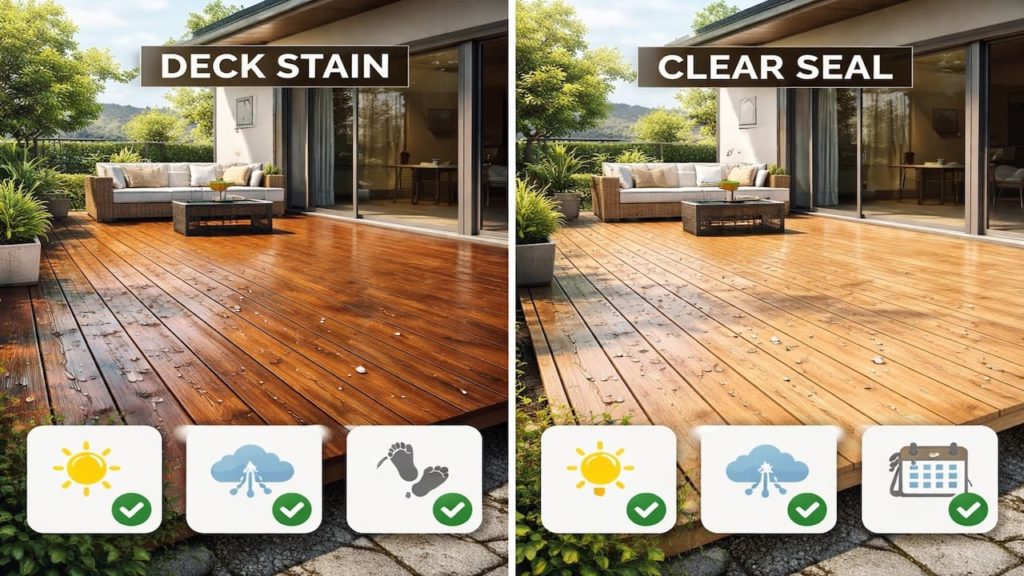
Stain usually adds color and some protection, while sealer focuses on water resistance with a clearer look. In Japan, humid summers keep wood damp longer, so anything that traps moisture can peel or cloud. Your goal is fewer recoat cycles, not the fanciest shine—low drama wins.
- Check how much direct sun hits daily
- Check how long rainwater sits after storms
- Check how often shoes grind grit on boards
- Check if mildew appears in shaded corners
- Check if you want color change or natural
You might think one product is always better, but decks fail by conditions, not branding. If you pick wrong, you will either chase peeling film or chase fading color. Choose for your abuse pattern and the upkeep drops hard.
2. UV rain traffic
UV fades color rain feeds rot traffic grinds surfaces.
UV breaks down pigments and the wood surface, so stain can fade and look patchy first. Rain keeps joints wet, and Japan’s rainy season can turn small gaps into constant damp lines. Traffic adds sandpaper friction, so thin finishes wear fast—especially near doors and stairs.
- Look for gray weathering on top surface boards
- Look for splash zones near edges and posts
- Look for worn paths near doors and seating
- Look for peeling spots where water pools often
- Look for black specks that signal mildew growth
You might focus only on color, but color is not protection if water keeps winning. If rain and traffic are heavy, you want a finish that wears gracefully and is easy to touch up. If UV is the main enemy, you want better UV blockers and a realistic recoat plan.
3. Why low upkeep fails when the deck stays damp
Damp wood makes finishes fail faster than you expect.
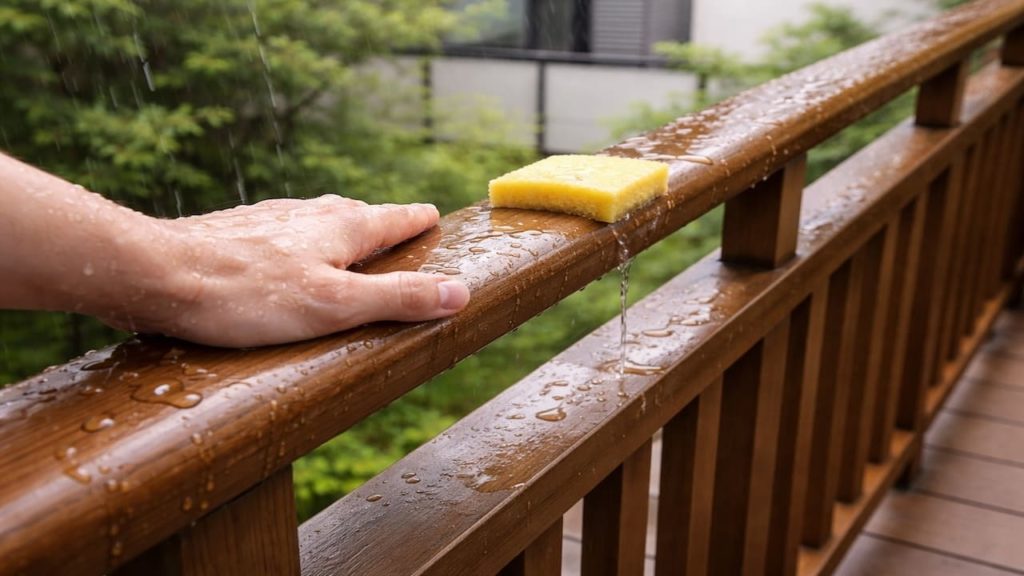
When wood stays wet, it swells, then dries and shrinks, and the surface keeps moving under the coating. That movement opens tiny cracks, and water sneaks under the film and lifts it. In Japanese housing, decks often sit between walls or fences, so airflow is weak and drying is slow—perfect failure setup.
- Moisture cycles loosen adhesion around board seams
- Swelling pushes fasteners and opens micro gaps
- Shade slows drying and encourages mildew staining
- Dirt holds water against finish for longer
- Trapped moisture causes cloudy spots under film
You might blame the product, but the environment is usually the bully. If the underside stays wet, any film-style finish will eventually complain. Reduce damp time and even a simple system lasts longer.
4. How to choose stain or sealer for low maintenance
Choose by whether you prefer touch ups or full recoats.
If you want easy touch ups, a penetrating stain often wears more evenly and does not peel like a thick film. If you want a clearer look, use a sealer that is meant for exterior UV and accept faster refresh on high-traffic lanes. Basic exterior wood cans often land around ¥1,500–3,000 for 0.7–1L. According to komeri.com.
- Pick stain if you hate peeling and scraping
- Pick sealer if you want minimal color change
- Prioritize UV rating when sun hits all day
- Prioritize water beading when rain lingers often
- Plan a test patch before coating everything
You might want a forever finish, but decks are outdoor floors, not museum pieces. If your deck gets heavy rain and shade, build a simple routine and accept refresh coats. The right choice is the one you will actually maintain.
5. FAQs
Q1. Is stain always lower maintenance than sealer?
No, it depends on your deck’s sun and water exposure. Penetrating stain often avoids peeling, but clear sealers can be quick to refresh on light-use decks.
Q2. What if I hate the idea of sanding later?
Avoid thick film builds that peel, because peeling forces scraping and sanding. Choose a system that fades or thins instead of lifting off.
Q3. Can I put sealer over an old stain?
Sometimes, but only if the old layer is compatible and clean. Test a small area first—if it beads weird or turns cloudy, stop.
Q4. What is the biggest mistake that creates extra upkeep?
Coating over damp wood or dirty boards, because it traps moisture and weakens adhesion. Clean, dry, then coat, or you redo it.
Q5. How do I keep the finish looking even?
Do small touch ups before wear becomes bare wood, especially on walking lanes. Consistent quick fixes beat dramatic once-a-year panic.
Pro's Tough Talk

I’ve spent 20+ years working around Japanese homes, so I’ve seen what tends to work—and what tends to go wrong—in everyday use. In Japan’s rainy season, your deck is basically a sponge with a calendar.
Here’s the cold breakdown: UV cooks the surface, rain keeps it swollen, and traffic grinds it like sandpaper. Stain is like sunscreen for color, sealer is like a raincoat for water, and both get wrecked if you trap moisture. A thick film on a damp deck is a bandage on a leaky pipe.
Right now, decide what you hate more, fading or peeling. Today, check where water sits and where feet walk most. This weekend, test one patch and commit to the system.
If you see peeling start you stop layering and switch to a simpler maintenance path. If you only see fading and dry wood, touch up and keep moving. That’s the decision line.
You finish coating, feel proud, then someone drags a chair and leaves a fresh scar. Bruh. Next rain hits, you slip once, and suddenly you care a lot about “grip” and “upkeep.”
Summary
Choose stain or sealer based on what beats your deck most: UV, rain, or traffic. In Japan’s humid weather, damp time and wear lanes decide your upkeep load.
If you fear peeling and scraping, lean toward systems that wear evenly and allow touch ups. If you want a clearer look, accept faster refresh on high-traffic zones.
Pick the finish you will maintain and test one patch before you coat the whole deck. Then keep the deck clean and dry faster, and the upkeep stays light.