You stained your deck and it still feels sticky when you touch it. In Japan, shaded decks and balcony floors can stay damp for longer than you expect.
The problem can be too much stain, trapped moisture, or air that never really moves. It’s annoying, but you can sort it out without panic.
In this guide, you’ll learn how to get a deck stain to dry without staying tacky. You’ll check the surface, fix the drying conditions, and rescue the finish so it feels clean again.

Hi, I’m Ken — I’m Japanese, and I live in Malaysia long-term, so I explain everyday life in Japan from a practical ‘from abroad’ perspective.
I hold a building design qualification and I’ve been on site for 20+ years across hundreds of jobs. I turn Japan’s unspoken rules into simple checks, so you can avoid costly mistakes and take the next step with clear actions that feel safe.
1. Deck stain won’t dry: 5 checks to avoid tackiness
Tackiness means the finish is stuck in slow-dry mode.
Most deck stains “dry” by solvent leaving the film, not by magic. If the coat is too thick or the wood is still wet, that escape route closes—then the top skins over and the bottom stays gummy. In Japan’s humid seasons, decks under deep eaves or between close houses lose drying time fast. Sticky spots.
- Press a paper towel and check for oily transfer
- Look for puddled stain near board edges
- Rub a hidden spot and see if it smears
- Confirm the product type on the can
- Check if old coating blocks stain soaking in
You might think “just wait longer” will always fix it, and sometimes it does. But if the surface still prints when you tap it, waiting can lock dirt into the film. Focus on the cause, not your patience, especially with Japan’s tight outdoor spaces. Fix the bottleneck and it moves.
2. Shade airflow timing
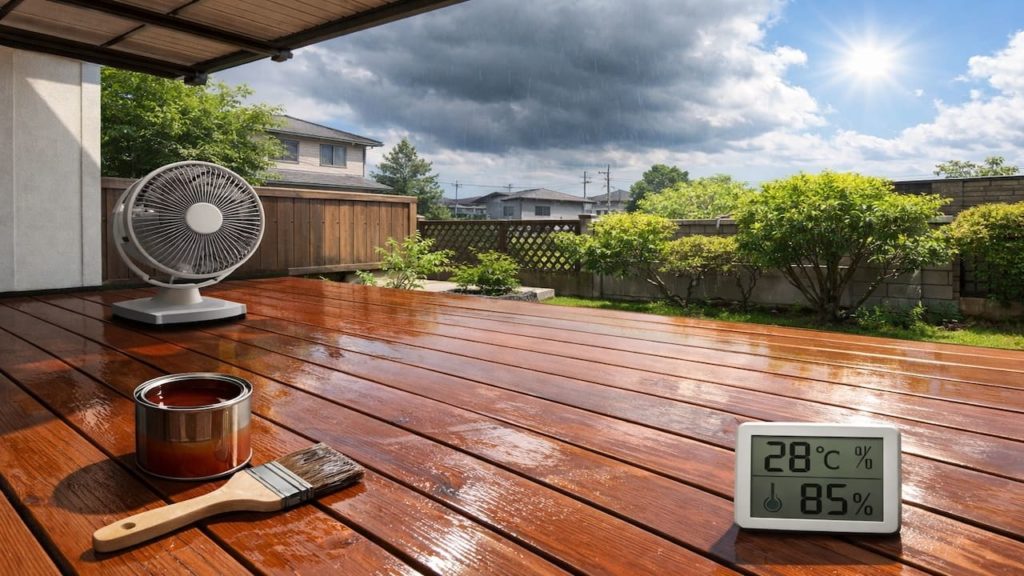
Shade is fine but dead air makes stain stay tacky.
Shade lowers surface temperature, so the stain stays thicker and evaporates slower. Airflow is the other half of the job—without it, vapor hangs around the boards and re-wets the film. In many Japanese homes, a deck sits near walls, fences, or balcony screens, so wind gets blocked. The cost is mostly time/effort.
- Stain after boards warm up but avoid harsh sun
- Open nearby windows to create cross ventilation
- Move planters and screens to free air paths
- Keep doors closed so indoor humidity stays inside
- Stop watering plants near the deck for now
Some people blame shade and try to stain at noon. That can flash-dry the top and trap solvent underneath, so tackiness returns later. Choose a window with gentle warmth and moving air, and your deck behaves. Better finish.
3. Why the stain stays tacky after it looks dry
A soft film happens when the bottom never got a chance.
Stain can look dry because the surface stopped shining, yet the layer under it is still wet. That’s the trap—surface dry, bottom wet, and every touch reactivates it. Japan’s rainy season humidity can keep wood fibers swollen, so they hold moisture and slow the whole system down. False dry.
- Moist boards trap solvent and slow evaporation
- Thick coats skin over and seal below
- Old finishes prevent stain from soaking evenly
- Cool nights condense moisture back onto surfaces
- Dust and pollen embed into soft stain film
You may hear “it’s a bad brand” and feel tempted to blame the can. But most tacky decks are a process problem, not a mystery chemical curse. If you control moisture, thickness, and air movement in Japan’s damp months, the same product usually dries fine. Treat the setup and the cure follows.
4. How to rescue a tacky deck surface fast
You can reset tackiness without stripping the whole deck.
First, stop traffic and keep shoes off until you stabilize the film. Next, blot only the sticky areas with a clean cloth to remove excess and let the surface breathe—do not flood it. Wet rags can ignite on their own if you pile them up. According to nfpa.org. In Japan’s compact outdoor spaces, lay rags flat outdoors on a noncombustible surface.
- Blot sticky zones lightly and remove extra stain
- Spread rags flat outside until fully dried
- Increase airflow with fans but avoid dusty blasts
- Wait for a dry day and test a small patch
- Recoat thin only after the smear test passes
People worry blotting means “ruining” the stain, but leaving a gummy layer ruins it faster. If it improves within a day with airflow, you’re on track. If it still prints and grabs dust, stop adding product and focus on drying and evaluation. Decision point.
5. FAQs
Q1. How long should I wait before I touch it again?
Use the light tap test on a hidden corner, not your palm. If it prints or feels rubbery, treat it as wet and keep waiting with airflow.
Q2. Can I put another coat on top to “seal” the tackiness?
Another coat rarely fixes tackiness—it usually traps the wet layer underneath. Fix the cause first, then recoat thin only when the smear test comes back clean.
Q3. What if the deck is under an eave and never gets sun?
That’s common in Japan where houses sit close and shade stays all day. You can still dry it by creating airflow and choosing a low-humidity day for staining.
Q4. Is water-based stain easier for humid weather?
Sometimes, but water-based products can still stay soft if you lay it on thick or the wood is damp. Pick the right product for your deck and follow the label for recoat timing.
Q5. Do I have to strip everything if it’s sticky everywhere?
Not always. Try blotting and airflow first, then decide based on whether the surface stops grabbing dust and fingerprints.
Pro's Tough Talk

I’ve spent 20+ years working around Japanese homes, so I’ve seen what tends to work–and what tends to go wrong–in everyday use. You touch the rail, then your fingers come back glossy. That’s the moment you realize it’s not “dry,” just quiet.
Here’s the cold breakdown: the coat is too thick, the wood is too wet, or the air is too lazy. Not your fault, and the stain isn’t evil. It’s like chewing gum on a sneaker when you step wrong. It’s like syrup under a dry crust when you recoat too soon. Tackiness isn’t a vibe, it’s trapped solvent.
Right now, block foot traffic. Today, blot the sticky spots and remove the extra. This weekend, give it airflow and test a small patch before you add anything.
If it still prints after airflow and blotting stop recoating. That’s your line in the sand, and it tells you the problem is underneath, not on top.
Congrats, you made a flypaper deck.
Summary
Sticky deck stain is usually a thickness, moisture, or airflow issue, not a curse. Check for smear, pooling, and blocked ventilation before you blame the product.
If the surface improves after blotting and airflow, keep it simple and let it finish curing. If it keeps printing and grabbing dust, stop recoating and rethink moisture and compatibility.
Do one small test patch today and follow what it tells you. Then move on to your next home task with a deck that finally feels clean.