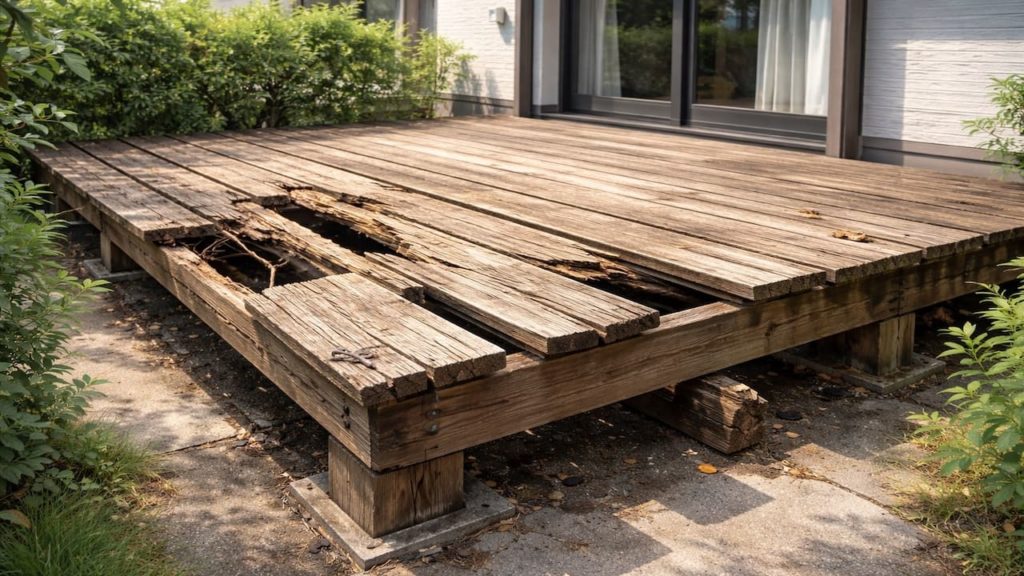
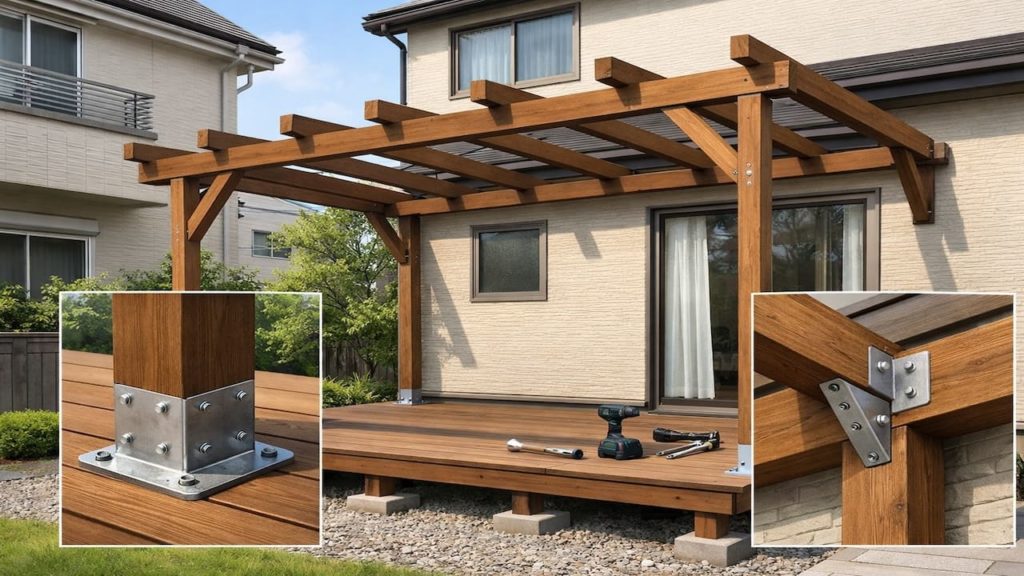
Your deck boards are starting to cup or warp, and it looks worse every rainy day. In Japan, humid air and long wet seasons push wood to move hard.
It might be normal wood behavior, or it might be a setup issue that keeps feeding moisture into the boards. If you catch the pattern early, you can stop the damage before it turns into a rebuild.
In this guide, you’ll learn how to prevent deck boards from cupping or warping. You’ll check moisture flow, fastening, spacing, and drying so the boards stay flatter.

Hi, I’m Ken — I’m Japanese, and I live in Malaysia long-term, so I explain everyday life in Japan from a practical ‘from abroad’ perspective.
I hold a building design qualification and I’ve been on site for 20+ years across hundreds of jobs. I turn Japan’s unspoken rules into simple checks, so you can avoid costly mistakes and take the next step with clear actions that feel safe.
1. Deck boards cupping or warping: 5 checks to prevent it
Cupping usually means the board is wetter on one side.
Wood moves toward the wetter face, and it does it slowly but relentlessly—so the board edges lift while the middle sinks, or the whole plank twists. In Japan, shade plus rainy season humidity keeps the underside damp longer, especially on decks tight to walls or fences. Fasteners cannot “force” wood to behave if moisture stays uneven. Uneven wet.
- Check if board tops dry faster than undersides
- Check if edges lift more than the center
- Check twist direction across multiple boards
- Check if cupping worsens after each rainfall
- Check if warped boards sit near one wet corner
You might assume the boards were “bad lumber” from the start. Sometimes, but most cupping is caused by moisture imbalance that your deck layout creates. Fix the conditions and even average boards stay flatter. No drama.
2. Moisture fasteners
Moisture control and correct fastening work as one system.
If water sits on joists or the underside stays damp, boards keep cycling swell and shrink, and the fasteners get worked loose over time. If fasteners are too few, too short, or placed wrong, they let the edges lift and the board cups harder. Set aside a small supply budget like ¥800–2,500 for better screws and bits, because stripped heads and weak hardware waste time. Tight grip.
- Check screw length matches board thickness properly
- Check fastener spacing at edges and ends
- Check if nails back out during wet months
- Check if joist tops stay wet after rain
- Check if boards were installed wet from storage
Some people blame fasteners alone and keep adding more. That can help, but if the underside stays wet, you are tightening a problem that keeps returning. Drying wins, then fastening holds. Simple sequence.
3. Why deck boards cup and warp over time
Boards warp when they dry unevenly and get forced into shape.
Deck boards are exposed on top but sheltered underneath, so the top face can bake while the bottom stays cool and damp. That mismatch makes the fibers pull in different directions, and the board bends to relieve stress. Tight side yards and blocked wind make it worse—airflow is the hidden boss. Slow twist.
- Sun heats tops while shade cools undersides
- Wet debris holds moisture against the board bottom
- End grain sucks water and swells faster
- Overtight screws crush fibers and lock stress
- Uneven joists force boards into a bend
You might think sealing the top will fix it forever. Sealing can help, but sealing only the top can worsen the moisture imbalance if the underside stays wetter. Your goal is balanced dry time, not a shiny surface. Reality.
4. How to stop cupping with spacing and fastening fixes
Reduce trapped moisture first then re-secure edges correctly.
Start by clearing debris and improving airflow so the underside dries, then address fastening so edges cannot lift. If the joist tops hold water, add drainage and clean paths before you touch the boards, or you will fight the same moisture loop again. When you tighten, use a steady pattern and do not crank until fibers crush—snug is strong. Clean fix.
- Remove leaf buildup so water cannot sit
- Open airflow paths under the deck frame
- Add edge screws to pull cupped boards down
- Pre-drill ends to prevent splitting during tightening
- Replace badly warped boards rather than forcing flat
People try to clamp boards flat while they are still wet, then lock them there with screws. That traps stress and makes future cracking more likely when the board dries. Let the deck dry out, then re-secure with the right spacing and edge control. Better long-term.
5. FAQs
Q1. Will cupped boards flatten on their own?
Sometimes they relax when moisture levels normalize, but many decks keep the underside damp so the board never fully resets. If cupping worsens after every rain, it will not “just stop.”
Q2. Is it safe to sand down the high edges?
Sanding can reduce trip risk, but it does not fix the moisture cause and can thin the board unevenly. If you sand, do it lightly and still correct drying and fastening.
Q3. Should I replace nails with screws?
Screws usually hold edges better than nails and reduce lift over time. Do it after the deck dries and follow a consistent pattern so boards are not forced into a twist.
Q4. Do wider boards warp more?
Wider boards often show cupping more because the moisture difference across the width is larger. Good airflow and proper edge fastening matter even more with wide planks—one weak corner can steer the whole board.
Q5. Can sealing prevent warping completely?
Sealing helps slow moisture swings, but it cannot beat standing water and trapped damp under the deck. Treat sealing as support, not a cure.
Pro's Tough Talk

I’ve spent 20+ years working around Japanese homes, so I’ve seen what tends to work—and what tends to go wrong—in everyday use. When boards cup, it is not a mystery, it is moisture pulling the strings.
Cold breakdown: the underside stays wet, the top dries faster, and the board bends to survive. Your fasteners either hold the edges or they do nothing, and debris under the deck is basically a wet blanket. It is like a paperback book left open in the rain. It is like a spoon that bends when you keep twisting it.
Right now, clear the junk under the boards. Today, find the wet corner and stop the water sitting there. This weekend, re-secure edges with a clean screw pattern.
If boards stay warped after the deck dries replace the worst ones. Forcing rotten or stressed wood flat is how you end up with splits and squeaks later, and then you blame the universe.
Yeah, keep calling it “character.”
Summary
Deck boards cup and warp when they stay wetter on one side and dry unevenly. Check moisture flow, airflow, and fastening before you assume the lumber is bad.
Clear debris, stop water from sitting on the frame, and tighten edges only after the deck dries. If warping is severe or the wood is stressed, replacement is the smarter call.
Fix the wet underside first then lock the edges down. Once the deck dries evenly, the boards stay flatter and maintenance gets easier.