You heard about putting a waterproof membrane under deck boards, and now you are tempted. In Japan, decks get slammed by humidity, wind-driven rain, and weeks of slow drying.
The idea sounds smart, but the wrong layer can trap moisture and grow mold where you cannot see it. The goal is protection without creating a hidden wet box.
In this guide, you’ll learn when a membrane under boards helps and when it backfires. You will check drainage, airflow, and install details so your deck stays dry and solid.

Hi, I’m Ken — I’m Japanese, and I live in Malaysia long-term, so I explain everyday life in Japan from a practical ‘from abroad’ perspective.
I hold a building design qualification and I’ve been on site for 20+ years across hundreds of jobs. I turn Japan’s unspoken rules into simple checks, so you can avoid costly mistakes and take the next step with clear actions that feel safe.
1. Deck waterproof membrane under boards: 5 checks
A membrane helps only when it does not block drying.
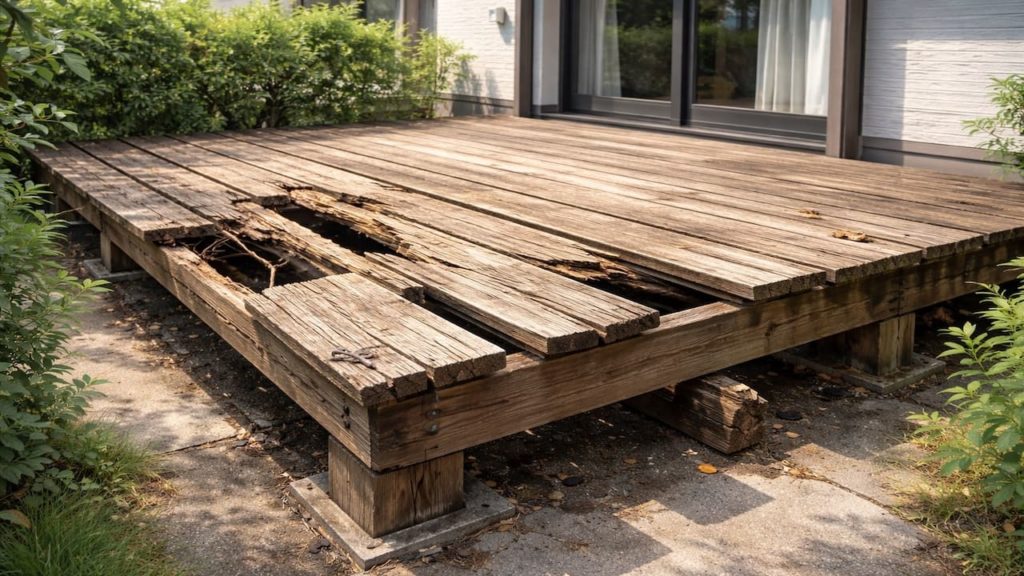
Water gets through board gaps, then sits on joist tops and fastener holes. A membrane can shed that water, but if it turns the frame into a sealed tray, moisture lingers. In Japan’s rainy season, shaded decks can stay damp even after the surface looks dry—slow rot time. Hidden wet.
- Check if joist tops stay wet after rain
- Check if debris collects between boards often
- Check if underside has clear airflow paths
- Check if water can exit without pooling
- Check if you can access drains and corners
Some people treat “waterproof” as a magic word and slap a sheet everywhere. That can trap moisture and make mold worse, especially on tight Japanese side yards. Your first job is to map water paths, then decide what to protect. Control first.
2. Drain airflow mold
Drainage and airflow decide whether mold shows up.
If water cannot drain, it will sit under the boards and feed mildew smell. If air cannot move, drying stops and mold has time to grow. That is common on Japanese homes with deep eaves, privacy screens, and fences that block wind—quiet damp. For materials like butyl flashing tape or deck membrane rolls, budget about ¥1,000–3,500 for basic supplies and patches. According to monotaro.com.
- Check that runoff reaches an open exit route
- Check low corners where water could pool
- Check if plants drip and keep one bay wet
- Check if screens block wind under the deck
- Check if the deck sits close to the wall
You might think mold only happens indoors. Outdoor mold is real when you create a shaded damp cavity under boards, which happens fast in Japan’s humid months. If your design relies on “it will dry someday,” it will not. Make it dry on purpose.
3. Why membranes under deck boards can cause hidden mold
Bad installs trap moisture and turn the frame into a humid chamber.
A full sheet membrane can bridge over low spots and create pockets where water sits. If seams are sealed but the cavity is not ventilated, humidity stays trapped, especially after night condensation. In Japan, warm days and cool nights can cycle moisture into enclosed spaces—repeat damp. Mold risk.
Mold can grow where moisture stays and airflow is limited, and some people may have respiratory or allergy reactions from exposure. According to CDC.
- Sheets create water pockets on uneven joists
- Sealed seams reduce drying to near zero
- Wet debris turns into a moisture sponge layer
- Condensation forms in cool shaded cavities often
- Fastener holes wick moisture into end grain
People say “I will cover it all so water cannot touch wood.” That ignores vapor and trapped humidity. Wood rots when it stays wet, not only when rain hits it. Give water a way out and give air a way through.
4. How to protect joists without trapping moisture
Use targeted protection and keep drying paths open.
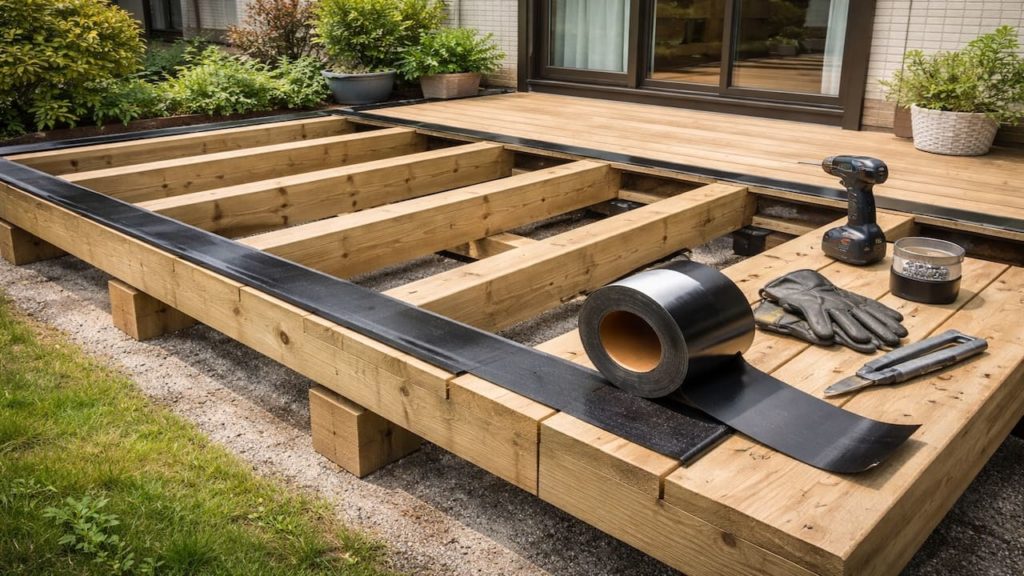
The safest approach is often capping joist tops, not sealing the whole underside like a bathtub. Use narrow joist tape or strips on the top surface, keep seams tight, and avoid creating dams that hold water. If you are buying tape, rollers, and replacement screws, plan roughly ¥2,000–6,000 for a small deck refresh, depending on coverage and hardware quality—no need to overspend. Practical fix.
- Cap only joist tops instead of full sheets
- Overlap seams so water sheds away clean
- Leave side edges able to breathe and dry
- Clear debris so drainage gaps stay open
- Design panels so you can inspect yearly
You may want a perfect sealed look. That is how you hide problems until boards feel soft and smell sour. If you cannot inspect and dry the framing, do not seal it in. Protect the vulnerable top surface and keep the system breathable.
5. FAQs
Q1. Is a full waterproof sheet under boards ever a good idea?
It can work on specific designs with managed drainage and strong ventilation, but it is easy to get wrong. On many Japanese decks with limited airflow, it increases hidden damp risk.
Q2. What is the safest “membrane” option for most decks?
Joist-top tape or narrow strips are usually safer than full sheets. They shed water off the joist top while still letting the cavity dry.
Q3. How do I tell if mold is already growing under the deck?
Musty odor after rain is a common early clue. Look for dark staining, slimy film, or spots that never dry, and check the dampest corners first—then act.
Q4. Will sealing the underside stop rot completely?
No, because trapped humidity can still rot wood from the inside. Rot prevention is mostly dry time, not just water blocking.
Q5. Do I need to remove boards to install protection?
For proper joist-top protection, yes, you need access to the joists. Patching from the side rarely covers the true wet zones.
Pro's Tough Talk

I’ve spent 20+ years working around Japanese homes, so I’ve seen what tends to work—and what tends to go wrong—in everyday use. A membrane can be a raincoat, or it can be a plastic bag you tied around wet wood in the rainy season.
Here is the cold breakdown: water gets in through gaps, then it needs a way out and a way to dry. If you seal a cavity with weak airflow, you trap vapor and create mold city. You are not dumb for wanting protection, and the products are not scams, but the physics is brutal.
Right now, check where water would exit and where it would pool. Today, clear debris and open airflow under the deck. This weekend, cap joist tops with tape instead of sealing the whole underside.
If you cannot inspect the framing yearly do not fully sheet it. That is the rule, because hidden damp always wins when you stop looking.
Nice job building a sauna for your joists.
Summary
A waterproof membrane under deck boards can help, but it can also trap moisture and grow mold. In Japan’s humid seasons, drainage and airflow matter more than the word waterproof.
Check water exit routes, airflow paths, and low pockets before you cover anything. If you cannot inspect or the cavity will stay damp, avoid full sheeting and choose targeted protection.
Inspect one damp corner today and decide based on drying. Once you keep joist tops protected and the cavity breathable, your deck lasts longer with fewer surprises.