Your fence looks dirty, but every time you clean it, it ends up with dull streaks or tiny scratches. Now you are searching because you want it clean without ruining the finish.
In Japan, pollen, road dust, and humid rainy season grime stick hard, especially on fences that dry slowly in shaded narrow lots. The wrong brush or cleaner turns simple dirt into permanent marks.
In this guide, you’ll learn 5 ways to clean a fence without scratches using gentle tools so the surface stays smooth and the color stays even. You will also learn how Japan weather and housing layouts affect grime buildup and drying.

Hi, I’m Ken — I’m Japanese, and I live in Malaysia long-term, so I explain everyday life in Japan from a practical ‘from abroad’ perspective.
I hold a building design qualification and I’ve been on site for 20+ years across hundreds of jobs. I turn Japan’s unspoken rules into simple checks, so you can avoid costly mistakes and take the next step with clear actions that feel safe.
1. Fence cleaning without scratches: 5 tips
Start soft and go step by step—most scratches come from rushing.
Fence dirt often sits on the surface like sandpaper. If you scrub hard first, you grind grit into the finish and leave trails. In Japan, rainy season grime dries and re-wets, so it becomes sticky and holds grit longer, especially on the lower sections.
- Rinse loose grit off before any brushing
- Use a soft brush not a hard pad
- Work top to bottom so dirt does not drag
- Clean in straight lines not tight circles
- Stop and rinse when suds turn dark
Some people think stronger scrubbing means faster cleaning. It usually means faster damage, so treat it like face skin, not like a driveway.
2. 【Soft brush mild soap rinse】
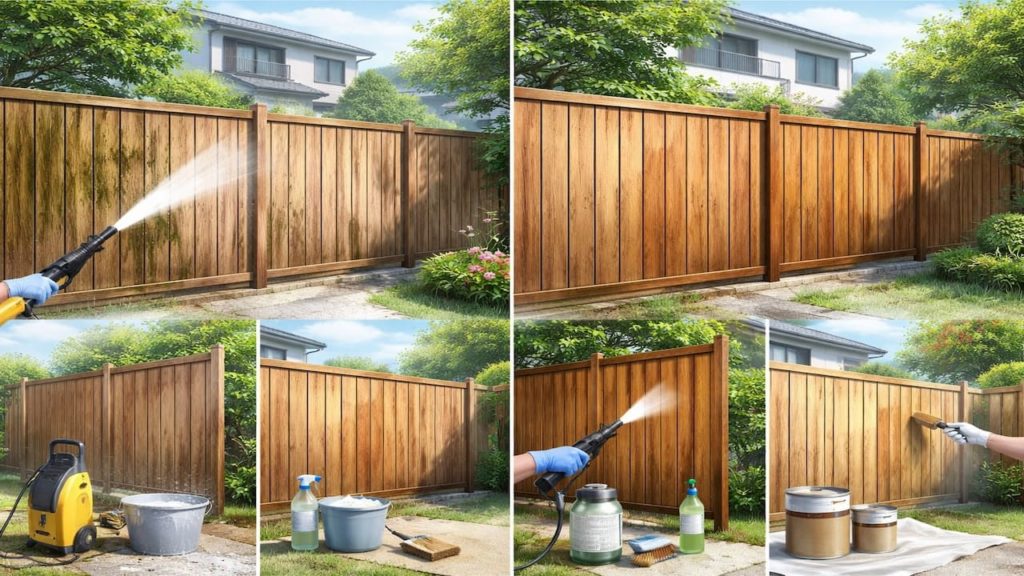
Soft brush plus mild soap plus full rinse is the safe combo—it cleans without grinding grit.
Soft bristles lift dirt while keeping pressure low. Mild soap helps release oily film from pollution and pollen without etching the surface. A full rinse matters because leftover soap traps new dirt, and in Japan humidity that turns into streaks.
- Soak the area so dirt loosens first
- Use mild soap in a bucket not sprayed
- Brush gently with light pressure only
- Rinse until water runs clear with no suds
- Dry with microfiber cloth on glossy surfaces
If you think pressure washers are always better, that is how you peel coatings and drive water into gaps. Gentle first, stronger only if you must.
3. Why fences get scratched during cleaning
Grit plus pressure equals scratches every time—the tool is not the only culprit.
Most scratches are not from the brush itself but from trapped sand and dust acting like abrasive. Lower fence sections collect more grit from splashback and wind. In Japan, heavy rain and humid air keep that grit stuck to the surface longer, so it does not fall off on its own.
Basic cleaning guidance is to start with water and mild detergent and avoid abrasive tools on finished surfaces.
- Dry dust sticks like paste after rainy days
- Sand from shoes splashes onto lower panels
- Hard pads grind grit into coatings quickly
- Cleaning in circles makes swirl marks easier
- Soap residue grabs new dirt in humidity
Some people blame cheap fence materials. Sometimes that is true, but even a tough finish will scratch if you rub grit into it with pressure.
4. How to clean safely and avoid swirl marks
Rinse first then wash gently then rinse again—do not skip the first rinse.
Do the job in two rinse steps, not one. First rinse removes abrasive grit. Then mild soap wash lifts film. Final rinse removes detergent so it does not dry into streaks. Cost is mostly time/effort.
Moisture and damp surfaces can support mold and grime buildup, so proper rinsing and drying helps keep surfaces cleaner longer. According to epa.gov.
- Use a hose shower spray not jet stream
- Wash small sections so soap never dries
- Use two buckets one soap one rinse water
- Wipe edges and grooves where dirt hides
- Finish with a final rinse from top down
If you think more soap means more cleaning power, it often means more residue. Residue becomes streaks, and streaks look like scratches from a distance.
5. FAQs
Q1. What is the safest tool for cleaning a fence without scratches?
A soft brush or microfiber sponge is the safest. The key is rinsing grit off first so you do not grind it into the surface. In Japan, lower panels collect more sand from splashback, so rinse longer there.
Q2. Can I use a melamine sponge on fence stains?
It can act like very fine sandpaper, so treat it as a last resort on small spots. Test in a hidden area and use almost no pressure.
Q3. Is a pressure washer safe for fences?
Sometimes, but it is easy to damage coatings or force water into joints. If you use one, keep distance, use a wide fan tip, and avoid edges and seams.
Q4. Why do I see streaks after cleaning?
Usually it is soap residue or dirty rinse water drying on the surface. Rinse until water runs clear and do not let soap dry in the sun or wind.
Q5. How often should I clean a fence in Japan?
Light rinsing a few times per year helps, especially after pollen season and after typhoon dust. Deep scrubbing should be rare if you rinse gently and early.
Pro's Tough Talk

I’ve spent 20+ years working around Japanese homes, so I’ve seen what tends to work—and what tends to go wrong—in everyday use. In humid seasons, fence grime turns into sticky film, and people panic scrub like they are sanding a table.
Here is the cold breakdown: grit is the real enemy, not the dirt color. If you rub grit with pressure, you are literally polishing scratches into the finish. Strong cleaners can also dull coatings, and then you blame the brush, but the damage already happened.
Rinse the fence first. Wash gently with mild soap. Rinse again until clear.
If the stain does not move with gentle washing stop and change tactics. Spot treat, soak longer, or call it weathering, but do not grind it in. You want clean, not a fence that looks sanded.
You scrub harder and it gets duller. You call it cleaning and the fence calls it injury.
Summary
Most fence scratches come from grinding grit into the surface with pressure. In Japan, rain and humidity keep grit stuck longer, so rinsing first matters more.
Use the safe routine: rinse, mild soap with a soft brush, then a full rinse. If a stain survives gentle washing, stop and switch to soaking or spot treatment.
Do the gentle rinse first and you prevent most scratches. After it looks good, move on to other maintenance like checking caps and clearing drainage lines.