Your gate hinges are sagging, and now the gate drags, rubs, or will not latch cleanly. You can feel it getting worse every time you open it.
In Japan, tsuyu rain and humid summers swell wood and soften ground around posts, and that makes hinge problems show up faster. Tight yards also mean you notice small rubbing right away.
In this guide, you’ll learn 5 checks to stop hinge sag by fixing weight screws and post strength so the gate swings clean again. You will also learn how Japan weather and fence layouts affect hinge alignment over time.

Hi, I’m Ken — I’m Japanese, and I live in Malaysia long-term, so I explain everyday life in Japan from a practical ‘from abroad’ perspective.
I hold a building design qualification and I’ve been on site for 20+ years across hundreds of jobs. I turn Japan’s unspoken rules into simple checks, so you can avoid costly mistakes and take the next step with clear actions that feel safe.
1. Fence hinges sagging: 5 checks
Hinge sag is usually a support problem not a hinge problem—start at the post.
A hinge can be perfect and still sag if the post flexes or the screws are biting weak material. In Japan wet months, wood fibers soften and screws lose grip, and a heavy gate becomes a lever. Check the simple things first before you buy new hardware.
- Lift gate by hand and feel vertical play
- Check if latch side drops more after rain
- Inspect hinge screws for loosened heads
- Look for post movement when gate swings
- Confirm hinge alignment is still square
Some people replace hinges immediately and get the same sag again. If the post or screw bite is weak, new hinges just follow the same failure path.
2. Gate weight screws and post strength
Gate weight plus weak screws plus a flexing post causes sag—fix those three and it stops.
Gate weight pulls on the top hinge, and that torque tries to twist the post. If screws are short or stripped, the hinge shifts little by little. In Japan humidity, wood movement repeats with seasons, so a small shift becomes a big drag.
Expect ¥500–6,000 for longer exterior screws, washers, and a basic latch or hinge reinforcement plate, depending on what you need.
- Weigh the gate feel by lifting latch side
- Replace short screws with long exterior screws
- Add washers to stop screw heads sinking
- Brace the post if it flexes under load
- Adjust latch height after hinge tightening
You might think the hinge metal is bending. Sometimes, but most sag is wood and fastener movement, so you win by improving bite and stiffening the support.
3. Why sagging gets worse in Japan rainy seasons
Moisture cycles loosen fasteners and shift alignment—then the gate drags.
When wood absorbs moisture, it swells, then dries and shrinks later, and screws can loosen in that cycle. Wet soil can also reduce post stability if the base area washes out. In Japan, repeated rain plus humidity can keep things in the soft zone longer, so sag accelerates.
Fasteners in wood can loosen over time with movement and weathering, and stronger connections help reduce shifting.
- Wood swells and shrinks around screw threads
- Downspout splash softens soil at post base
- Gate weight acts like a lever on hinges
- Hinge shifts create latch misalignment fast
- Dragging wears the bottom edge into a ramp
Some people keep forcing the gate shut and call it fine. Forcing turns small sag into hardware damage and splits wood, so fix alignment before you force anything.
4. How to fix sag without replacing the whole gate
Rebite the hinges and stiffen the post—then adjust the latch last.
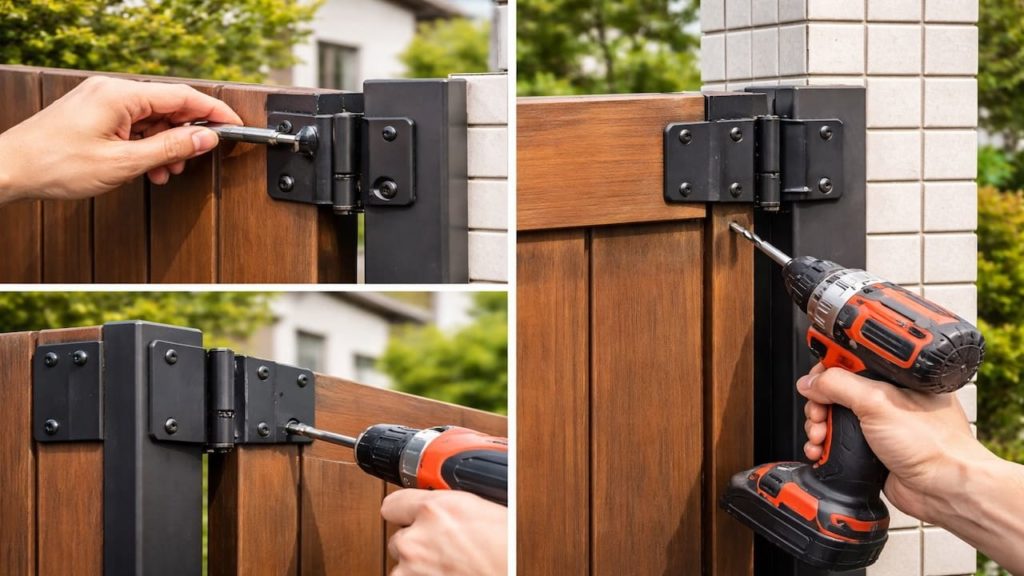
Start by tightening hinges with longer screws into solid material, not just the surface. If the post is weak, add a brace or reinforcement, because no screw trick beats a flexing post. Cost is mostly time/effort if you already have tools and only need adjustments.
Gate sag fixes often involve reinforcing hinges and using longer fasteners into solid framing to restore alignment.
- Remove one hinge screw at a time safely
- Drill pilot holes to prevent splitting
- Drive long screws into the post core
- Add diagonal brace if gate frame is flexible
- Rehang then adjust latch strike plate height
You might want to shim the latch and ignore the hinge. That works for a week, then sag continues and the rub returns, so always fix hinge bite and post strength first.
5. FAQs
Q1. How do I know if the post is the real problem?
If the post moves when the gate swings it is the problem. Watch the hinge side while you open the gate, and if you see flex, no hinge swap will fix it long term.
Q2. What screw length should I use for hinges?
Long enough to bite into solid post material, not just the surface board. Use exterior rated screws and predrill to avoid splitting, especially in dry winter months.
Q3. Can humidity alone cause hinge sag?
Humidity speeds loosening because wood moves with moisture cycles. It usually exposes weak screws or a weak post rather than creating sag from nothing.
Q4. Should I add a diagonal brace to the gate?
Yes if the gate frame itself is flexing. A brace reduces twist, which reduces hinge load and keeps the latch aligned longer.
Q5. When should I replace the gate or post?
If the post is rotted soft, if the hinge side splits deeply, or if the gate frame is warped beyond adjustment. If you keep tightening and it keeps falling, the structure is telling you the truth.
Pro's Tough Talk

I’ve spent 20+ years working around Japanese homes, so I’ve seen what tends to work—and what tends to go wrong—in everyday use. In rainy season humidity, a heavy gate turns into a slow-motion crowbar on your post.
Here is the cold breakdown: weight pulls, screws slip, and posts flex. You tighten it once, it feels good, then the next wet week loosens it again because the bite was never solid. It is like hanging a backpack on a weak hook, or carrying groceries in a torn plastic bag, you know how it ends.
Lift the gate and feel the play now. Today, replace the worst screws with longer exterior screws. This weekend, brace the post or add a diagonal gate brace.
If the post flexes you fix the post before anything else. If the post is solid and the hinge bite is deep, sag stops and the latch stays aligned. Stop forcing it shut like you are wrestling a door.
Nope.
You push the gate up as you close it and pretend it is normal. Then one day it scrapes like a horror movie sound effect. Yeah, you trained it.
Summary
Hinge sag comes from gate weight, weak screw bite, and post flex, and Japan moisture cycles make it worse. Check movement, screw condition, and post strength before buying new hardware.
Fix sag by using longer exterior screws into solid material and stiffening the post or gate frame. If the post is soft or the gate keeps dropping after fixes, that is your line to replace.
Rebite the hinges today and the gate will swing clean again. After it is stable, keep water away from the post base so the problem does not return next rainy season.