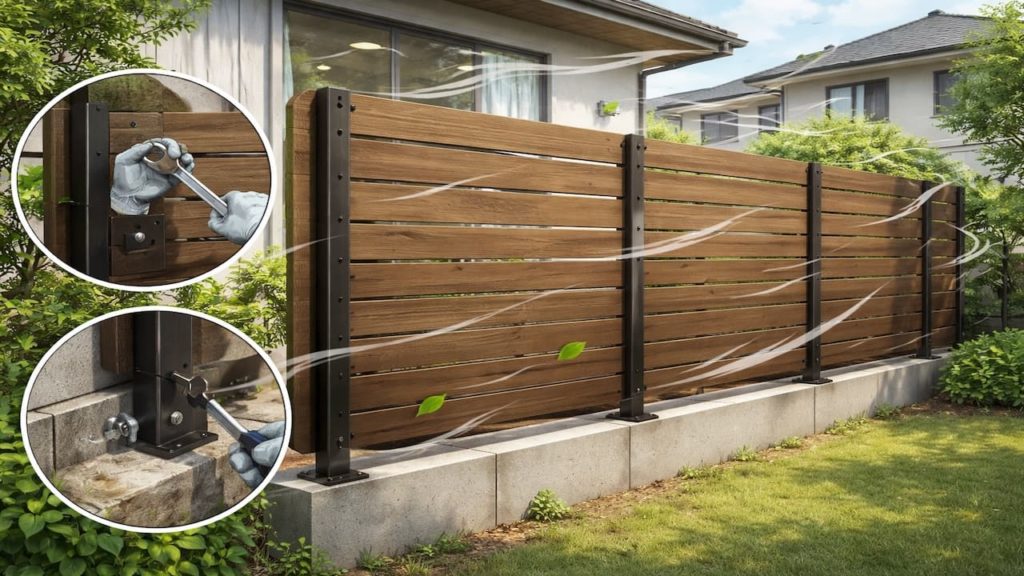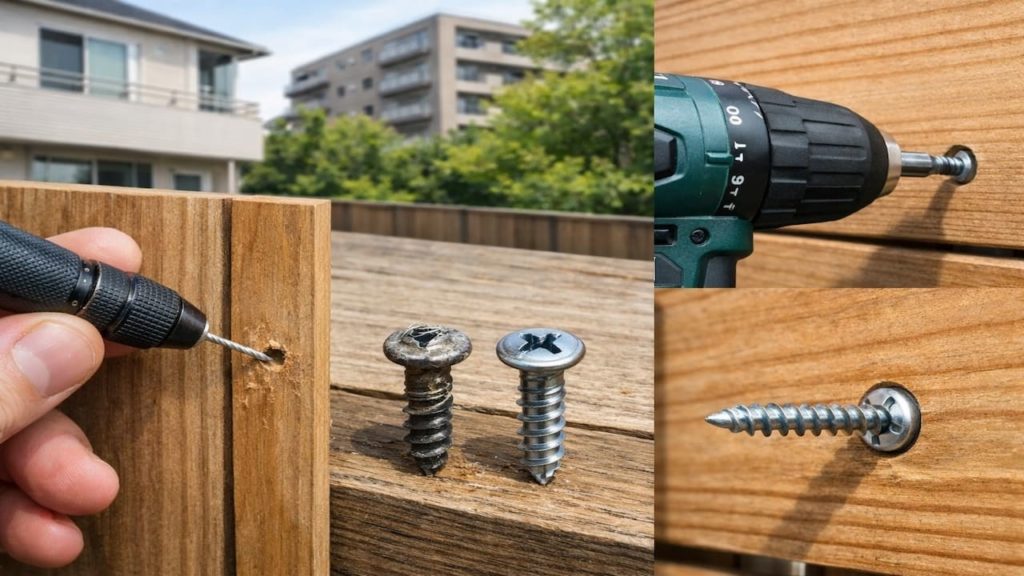
You try to tighten a fence screw and the head strips, so the job stops right there. It feels like every small repair turns into a bigger mess.
In Japan, humid summers and rainy seasons swell wood, then winter dryness shrinks it back, so screws can bind and strip in tight side yards.
In this guide, you’ll learn how to stop fence screws from stripping again. You’ll set pilot holes, use the right bits, and control torque so screws bite clean.

Hi, I’m Ken — I’m Japanese, and I live in Malaysia long-term, so I explain everyday life in Japan from a practical ‘from abroad’ perspective.
I hold a building design qualification and I’ve been on site for 20+ years across hundreds of jobs. I turn Japan’s unspoken rules into simple checks, so you can avoid costly mistakes and take the next step with clear actions that feel safe.
1. Fence screws keep stripping: 5 fixes
Stripping stops when the screw and the tool match perfectly — and you control resistance.
Most stripped heads happen from bit mismatch, too much force, or no pilot hole in tough wood. In Japan’s moisture swings, wood can be harder than it looks, so screws bind and you instinctively push harder. That is when the head gets chewed. Fastener work is precision, not rage.
- Use the exact bit size and seat fully
- Drill pilot holes before driving any screw
- Switch to higher quality exterior rated screws
- Drive straight to avoid cam out slipping
- Stop at snug then finish by hand
You might think stripping means “bad screws,” but it is often setup and technique. Fix the method and even cheap screws behave better. Fix the screws too and the job becomes easy.
2. Pilot holes bits and torque
Pilot holes and correct bits reduce stripping dramatically — torque control finishes the job.
Pilot holes lower the driving force so the bit stays engaged instead of skipping. Correct bits matter because even a small mismatch rounds the head under load. Torque matters because drills can overdrive fast, especially when wood suddenly softens or the screw hits a knot. If you buy supplies, plan ¥500–5,000 for a small bit set, pilot drill bits, and a few better exterior screws.
- Match bit type to screw head style exactly
- Use fresh bits not worn shiny ones
- Drill pilot hole slightly smaller than screw core
- Set drill clutch low then increase slowly
- Finish final quarter turn with hand driver
You might want maximum power to “get it done,” but power is what strips heads. Think of torque like salt, add slowly, do not dump. The screw will seat clean and you keep the head intact.
3. Why fence screws strip so often
Stripping happens when cam out meets high resistance — wet wood and knots amplify it.
Cam out is when the bit climbs out of the head under load and starts grinding it. Wet wood increases friction and can swell around the shank, while knots act like hard spots that spike resistance. Japan’s seasonal cycle makes wood density feel inconsistent, so your drill torque that worked last month suddenly fails now. This is why stripping can feel random.
For this section, cost is mostly time/effort because you are diagnosing resistance and tool fit.
- Worn bits slip and chew screw heads fast
- No pilot hole makes screw bind in dense wood
- Driving at an angle increases cam out risk
- Over torque crushes wood and strips the head
- Cheap screw heads deform under high resistance
You might blame your hands, but the setup is usually the culprit. Once you reduce resistance and stop cam out, stripping becomes rare. That is the whole lesson.
4. How to remove stripped screws and refasten correctly
Remove cleanly then reset the hole so the next screw holds — do not just force it.
Start by trying a fresh bit with hard pressure, then use pliers or a screw extractor if needed. After removal, you must restore the hole strength because a chewed hole will never hold torque again. In Japan’s humid outdoor air, use exterior coated screws so the head stays sharp and does not corrode into the wood. Plan ¥1,000–8,000 for an extractor set, replacement screws, and wood plugs or filler if you need to rebuild the hole.
One common method to avoid stripped fasteners is using the correct driver bit and applying steady pressure to keep full engagement. According to milwaukeetool.com.
- Hammer the bit in to seat deeper
- Use locking pliers when the head stands proud
- Extract with screw extractor for flush heads
- Plug damaged holes with wood dowel and glue
- Redrill pilot and drive new screw gently
You might want to reuse the same hole, but stripped holes are like loose teeth, they never get strong by wishing. Plug and reset, then the next screw bites like new. One extra step saves repeat failures.
5. FAQs
The fastest fix is a pilot hole and a fresh bit — that solves most stripping.
Q1. Should I use Phillips or Torx for fence screws?
Torx often resists cam out better under high torque. If you can choose, Torx exterior screws are usually easier for fence work.
Q2. How deep should a pilot hole be?
Deep enough for the screw to travel without binding, especially through dense boards. A pilot hole that matches the screw core length reduces driving force.
Q3. Why do my screws strip near knots?
Knots are harder than surrounding wood and spike resistance suddenly. Lower torque and a pilot hole help prevent stripping in those spots.
Q4. Can I fix stripping by pushing harder?
Sometimes you need steady pressure to keep the bit engaged, but pushing harder with wrong bit or high torque strips faster. Reduce resistance first.
Q5. What if the screw hole is already loose?
Plug the hole with a dowel or wood plug and glue, then redrill. A loose hole will keep stripping and loosening over time.
Pro's Tough Talk

I’ve spent 20+ years working around Japanese homes, so I’ve seen what tends to work—and what tends to go wrong—in everyday use. In humid seasons, wet wood grips screws like it is holding a grudge.
Here’s the cold breakdown. If your bit is wrong, the head gets chewed like a soft candy. If you skip pilot holes, the screw binds and your drill turns into a stripping machine. If you run full torque, the head loses the fight and you pretend it was the screw’s fault. Tools do what you tell them.
Change the bit now.
Drill the pilot holes today.
Reset torque and refasten this weekend.
If you strip two screws in a row you stop and change the method. If the screw comes out clean and the new one seats with low torque, you are back in control. If holes are chewed, plug and redrill instead of chasing failure.
Come on.
Classic scene: you squeeze the trigger harder, the bit slips, and you invent new words. Another one: you finally get the screw in, then the next rainy week the board swells and the head strips when you touch it.
Summary
Fence screws strip when the bit does not match, resistance is too high, or torque is uncontrolled. Japan’s moisture swings make wood grip and knots spike resistance, so stripping feels frequent.
Use pilot holes, fresh correct bits, and a low clutch setting to prevent cam out. If a screw strips, remove it cleanly, repair the hole, and refasten with better exterior screws.
Do one test screw today and lock in a pilot hole and torque routine so fence repairs stop turning into a stripping battle.