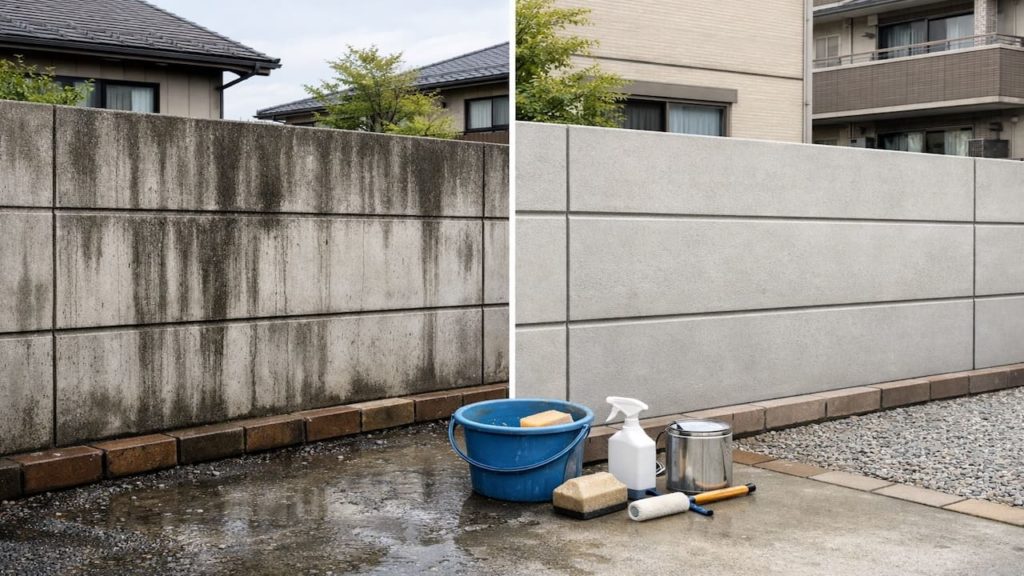
You look at your fence base or nearby concrete after rain and see dark streaks or white marks. It feels like the stain appears overnight.
You might blame the concrete mix, but stains can come from runoff lines, minerals, or dirt that keeps re-depositing. The pattern matters more than the color.
In Japan, humid summers, long rainy seasons, and tight exterior drainage make runoff marks common. In this guide, you’ll learn how to clean the stain seal the surface and stop repeat marks.

Hi, I’m Ken — I’m Japanese, and I live in Malaysia long-term, so I explain everyday life in Japan from a practical ‘from abroad’ perspective.
I hold a building design qualification and I’ve been on site for 20+ years across hundreds of jobs. I turn Japan’s unspoken rules into simple checks, so you can avoid costly mistakes and take the next step with clear actions that feel safe.
1. Fence concrete stain after rain: 5 tips
Match the stain pattern to the water path first.
Most “mystery stains” follow gravity — the streak shows you where water traveled and where it dried last. Japan’s summer humidity slows drying, so dirty water sits longer and leaves sharper edges. Concrete is porous, so it grabs fine soil and metal particles like a sponge. No mystery.
- Trace streaks upward to the drip source
- Check fence caps for overflow during storms
- Look for gutters dumping near the fence line
- Test if stain lightens when surface dries fully
- Note if marks repeat after every heavy rain
You may think “just scrub harder” — but if runoff keeps feeding the stain, it comes back. Fix the water path first, then clean. That order saves time and keeps the finish looking even. Clean once, solve twice.
2. Clean seal and stop runoff marks
Clean removes the current mark sealing blocks the next one.
Cleaning lifts dirt, minerals, and organic film from the pores. Sealing reduces absorption so the next rainy streak cannot bite as deep. In Japanese homes with narrow side yards, splashback from hard ground is constant, so an unsealed surface keeps collecting a new “skin.” Think of it as a raincoat for concrete.
- Rinse loose grit off before any scrubbing
- Use mild cleaner first then escalate carefully
- Dry fully before judging what still remains
- Seal only after stains stop bleeding back
- Redirect runoff so stains cannot return
Some people seal a dirty slab — and lock the stain in forever. Clean and dry first, then seal when the surface is stable. If you cannot stop runoff, sealing alone is a bandage. Do both, and it stays clean.
3. Why concrete stains show up after rain
Rain stains are usually minerals dirt or efflorescence on a schedule.
Runoff drags dust and fine soil from the fence, cap, or top rail, then drops it where flow slows. White haze is often salts moving through concrete and drying on the surface, and it can be more noticeable in cool damp conditions. In Japan, slow drying in rainy stretches makes that film more visible. According to concretesouth.com.
- Dirty runoff dries and leaves a sharp outline
- Metal fasteners drip rust tinted streaks downward
- Hard water splashes and deposits mineral rings
- Algae film darkens where shade stays wet
- Soil splash creates peppered spots near grade
You might assume the concrete is “bad” — but water behavior is the real driver. Fix the drip source, reduce splash, and the stain rate drops fast. If you ignore flow, the stain becomes a seasonal routine. Same rain, same marks.
4. How to clean and seal concrete to stop repeat marks
Clean in layers then seal only when fully dry.
Start with water and a mild detergent scrub, then rinse well and let it dry completely before deciding the next step — rushing makes you chase ghosts. If you need supplies, plan ¥800–4,000 for a brush, mild cleaner, and a basic concrete sealer. Use the gentlest method that works, because harsh acids can etch and change the color. For light dirt, simple detergent-and-water scrubbing is commonly recommended. According to quikrete.com.
- Wet the slab first so cleaner stays even
- Scrub with a stiff brush not metal wire
- Rinse twice until water runs clear
- Dry for a full day before sealing
- Add splash gravel strip to reduce new marks
People say “pressure wash everything” — sometimes it helps, sometimes it drives dirt deeper and roughens the finish. Keep pressure moderate and keep the nozzle moving if you use it. If stains keep returning, redirect the runoff with caps, drip edges, or a small slope correction. Once water stops feeding the mark, sealing actually lasts.
5. FAQs
Q1. What are the white stains on concrete after rain?
They are often salts drying on the surface. They can come and go with wet-dry cycles, especially when drying is slow. Clean gently first and focus on stopping repeated wetting.
Q2. Can I seal concrete if it still looks slightly stained?
It depends on the stain type and depth, but sealing can trap discoloration. Clean, rinse, and let it fully dry before deciding. If the pattern follows a drip line, stop runoff first.
Q3. Why do stains show more during rainy season?
Rainy season—surfaces stay wet longer, so dirt and minerals have more time to settle and dry into pores. Shade and tight side yards also slow evaporation. That makes outlines and streaks look darker.
Q4. Will bleach remove the dark marks near the fence?
Bleach can lighten organic growth, but it will not fix mineral deposits or rust. It can also affect nearby plants and hardware. Try mild cleaner first, and escalate only if you know the stain type.
Q5. How do I stop drip lines from fence caps?
Check if caps are flat and holding water, then add a drip edge effect with a small overhang or change the cap detail. Keep soil from splashing onto the wall and base. Small runoff control beats endless cleaning.
Pro's Tough Talk

I’ve spent 20+ years working around Japanese homes, so I’ve seen what tends to work—and what tends to go wrong—in everyday use. In humid summers, concrete stains don’t “happen,” they get invited. And they never leave quietly.
Three causes keep showing up. Runoff drags dirt, then dries like it’s signing its name. Salts move through concrete and bloom when drying is slow, like chalk that refuses to erase. And algae loves shade, turning your nice base into a damp doormat.
Trace the drip path now. Clean with mild scrub today. Seal after a full dry on the weekend.
If the same line returns after you clean you must change the runoff. Add a drip edge, add splash gravel, or adjust the slope so water does not wash that spot. If the stain keeps bleeding back, hold off on sealing and diagnose the type first.
Yeah, the stain is not a “feature.”
Summary
Rain stains on concrete are usually runoff patterns, minerals, or organic film. The fastest win is tracing the water path before scrubbing.
Clean in gentle layers, rinse well, and let it dry fully before sealing. If marks repeat after every storm, fix runoff and splash first.
Stop the runoff today then clean once the surface dries. After that, keep improving the fence edge details so your exterior stays easy to maintain.


