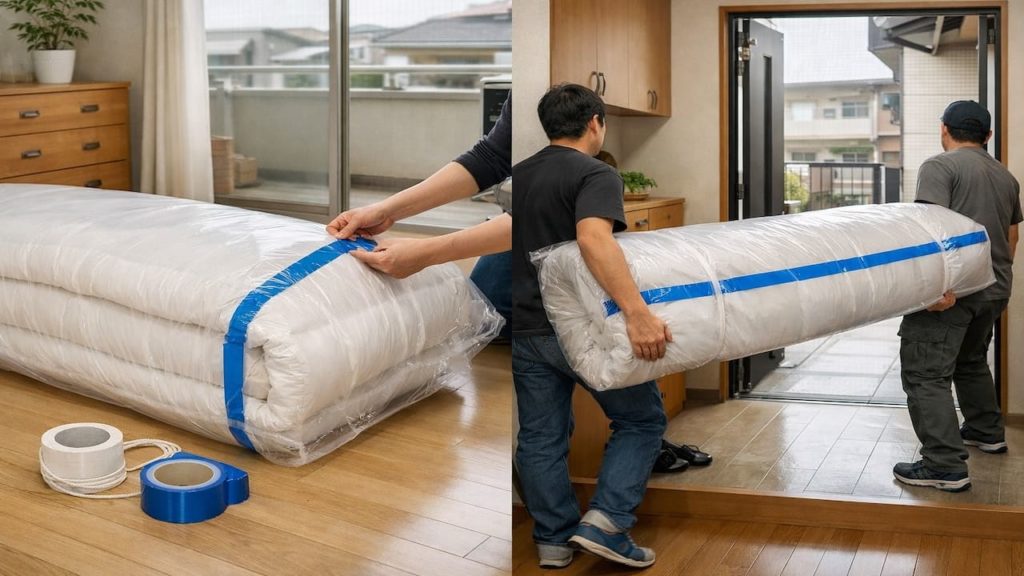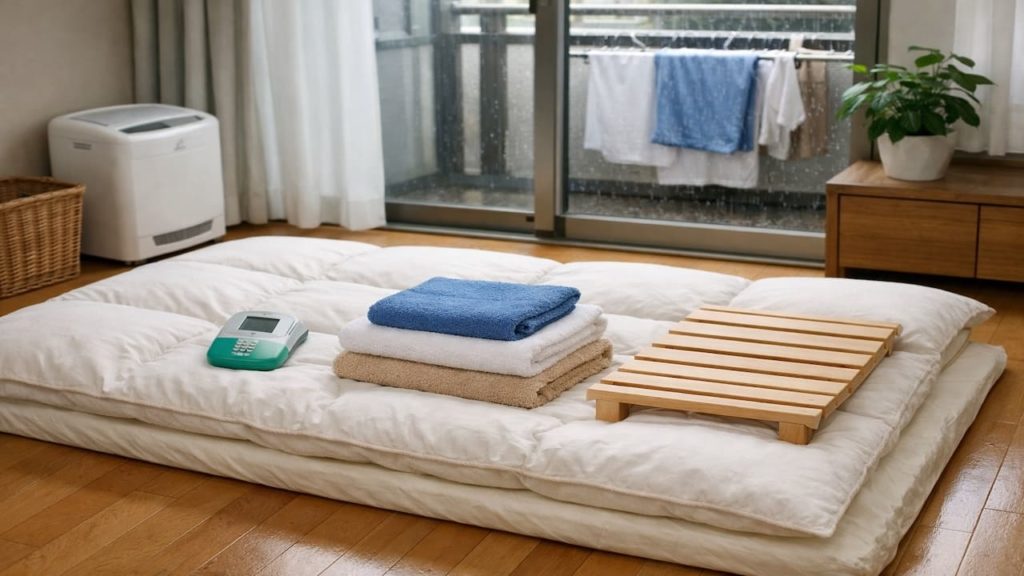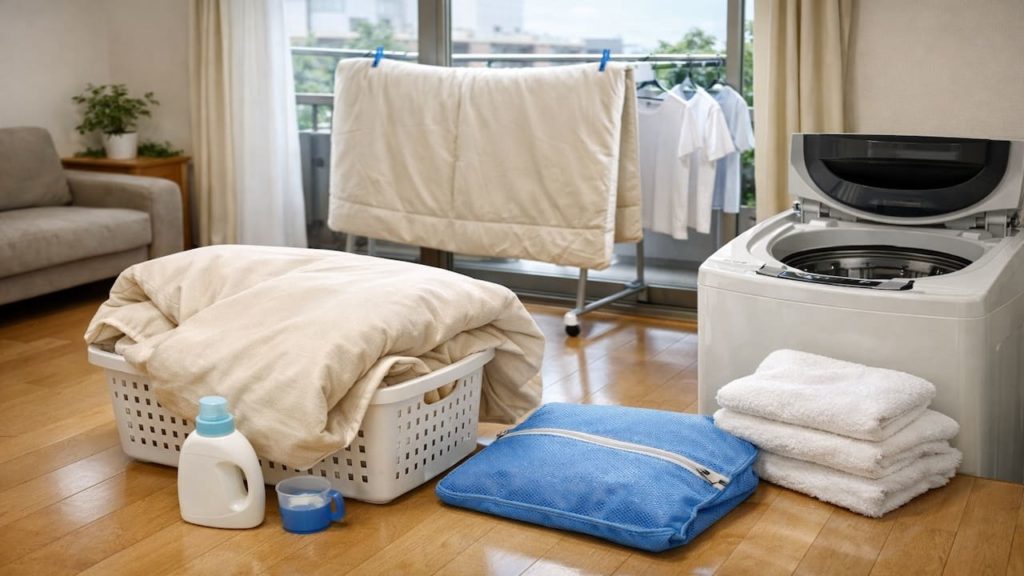
You searched because your futon cover smells like sweat, or it feels dusty even after you “wash it sometimes.”
In Japan, tsuyu humidity makes fabric stay damp longer, and small apartments mean covers pick up dust from closets and floors faster.
In this guide, you’ll learn how to wash futon covers safely without shrinking or trapping odors using light routines you can keep.

Hi, I’m Ken — I’m Japanese, and I live in Malaysia long-term, so I explain everyday life in Japan from a practical ‘from abroad’ perspective.
I hold a building design qualification and I’ve been on site for 20+ years across hundreds of jobs. I turn Japan’s unspoken rules into simple checks, so you can avoid costly mistakes and take the next step with clear actions that feel safe.
1. Futon cover washing: 5 tips
Wash the cover in a way that protects fabric and zipper so it stays smooth and lasts.
Most damage comes from friction, twisted zippers, and mixing heavy laundry in the same load—then the cover comes out stretched. In Japan, many people wash fast between rainy days, so small mistakes repeat. Keep it simple, and the cover stays breathable. Clean starts before the machine.
Close the zipper, remove dust from corners, use a laundry net, and wash covers separately from regular laundry. According to nishikawa1566.com.
- Close zipper fully before washing every time
- Shake out corner dust inside the cover
- Turn cover inside out to reduce rubbing
- Use laundry net to protect fabric surface
- Wash covers alone not mixed with jeans
You might think “it’s just a cover” and treat it like a towel. But covers have long seams and zippers that hate rough loads. One bad wash can make fitting annoying for months. Light care—then the cover stays easy.
2. Clean sweat and dust the safe way
Remove sweat first then remove dust after drying to stop that stale closet smell.
Sweat is water plus oils, and oils hold odor even when the fabric looks clean. Dust is a separate issue, and in Japanese apartments it collects inside corners and along the zipper line. During tsuyu, damp air makes dust cling harder, so rinsing well matters. Simple routine beats random panic washing.
Frequent cover changes, airing futons, and vacuuming after airing are common steps for keeping bedding cleaner. According to Tokyo Metropolitan Government.
- Pre rinse sweaty zones with lukewarm water
- Use mild detergent and avoid heavy softener
- Run extra rinse if odor tends to linger
- Dry fully before putting cover back on
- Vacuum futon surface after cover is removed
You may think stronger fragrance means cleaner. It often masks sweat and mixes with old odor. In Japan’s humid months, perfume plus moisture turns weird fast. Clean and dry—then the smell has nothing to feed on.
3. Why futon covers start smelling even after washing
Odor returns when oils stay in fabric and moisture stays in storage.
If you wash in a crowded load, detergent cannot flush through the weave, so oils remain. If you dry the cover but put it back on a damp futon, the odor restarts in one night. In Japan, closets are still-air boxes, and damp pockets form at the bottom. That is why “washed” can still smell.
- Smell inside corner seams right after drying
- Check zipper tape for sticky sweat residue
- Touch futon surface for cool damp areas
- Notice odor spikes after rainy day storage
- Compare smell after extra rinse once
You might blame your body or the fabric quality. Often it is just washing flow and drying timing. No drama. Fix rinse and dryness, and the cover stays neutral.
4. How to wash a futon cover without shrinking
Follow label care and avoid high heat drying so the cover keeps its shape.
Start with the care label, then choose a gentle cycle and avoid overload. If you need basic supplies like a laundry net or mild stain remover, ¥100–500 for basic supplies is enough. Japan’s winter heaters can tempt you to blast heat, but steady drying is safer. Slow and clean.
- Wash in cool to warm water only
- Keep machine load under half full
- Use laundry net to reduce zipper snagging
- Air dry flat then finish hanging fully
- Fit cover only after it feels room dry
You may think hot water is always best. It can help in special cases, but it can also shrink some covers and stress elastic edges. Use heat only when the label allows it. Safe washing—then easy fitting.
5. FAQs
Q1. How often should I wash a futon cover in Japan?
Weekly is a solid baseline if you sweat, have pets, or live in a humid room. During tsuyu, shorter cycles more often can feel better than rare deep washes.
Q2. Should I use fabric softener on futon covers?
Softener can trap odor if sweat buildup is strong so keep it light or skip it. If you want softness, focus on good rinsing and full drying instead.
Q3. Can I dry a futon cover on the balcony?
Yes, but avoid flapping in wind and keep it secure and inside the railing line. In close apartments, quiet drying timing helps avoid stress.
Q4. What if the cover still smells after washing?
Run one extra rinse, dry longer, and check if the futon itself is damp. If the futon is the source, the cover will keep picking it up.
Q5. Is it okay to wash the cover with other laundry?
It is safer to wash it alone or with light items so it can move and rinse well. Heavy jeans and towels increase friction and leave residue.
Pro's Tough Talk

I’ve been on site for 20+ years. I’ve worked on hundreds of jobs. In Japan, tsuyu humidity turns a “fine” cover into a stink trap if you get lazy.
Cause 1, you overload the machine, so sweat oil never rinses out. Cause 2, you leave the zipper open, and it chews the fabric like a saw. Cause 3, you dry it “enough” then wrap a damp futon, so the smell just respawns. It’s like washing a frying pan without removing the grease. It’s like sealing wet shoes in a locker.
And you call that clean?
Do this: inside out, net, light load, extra rinse if needed, then full dry. Clean plus dry beats fragrance every single time in small Japanese rooms.
Keep half-washing it and your closet will keep roasting you at night.
Summary
Futon cover washing works when you protect fabric, rinse well, and dry fully. That is the whole formula.
If smell returns, it is usually leftover oils or a damp futon underneath—fix the source before you keep rewashing.
Wash one cover load this week the safe way and keep the routine light. Your room stays fresher through tsuyu and winter.