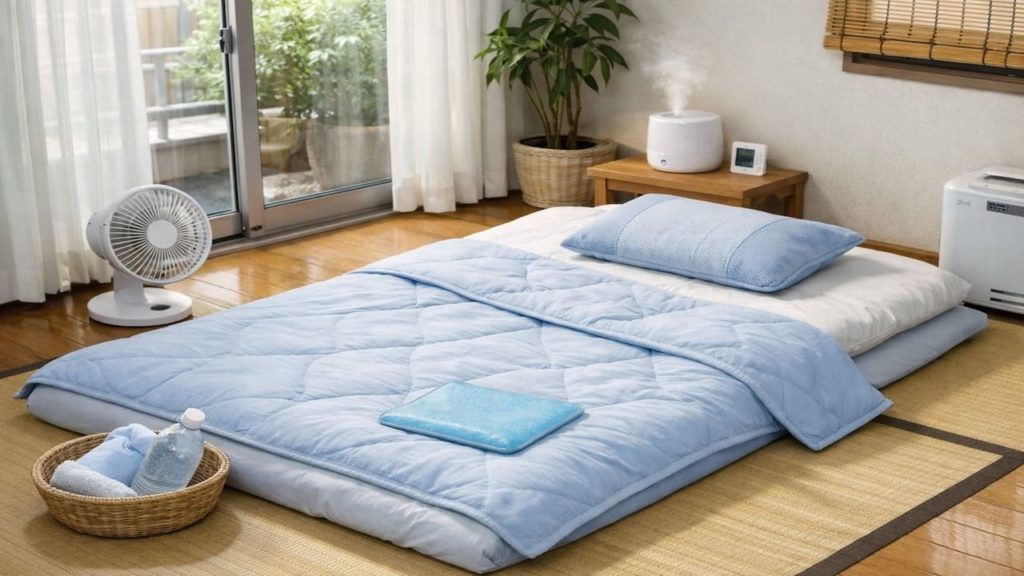
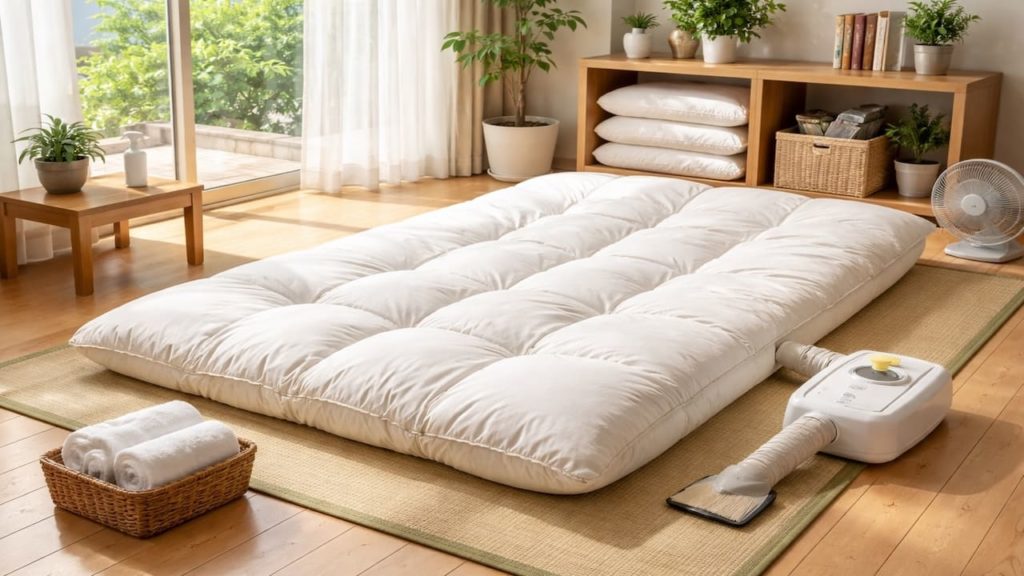
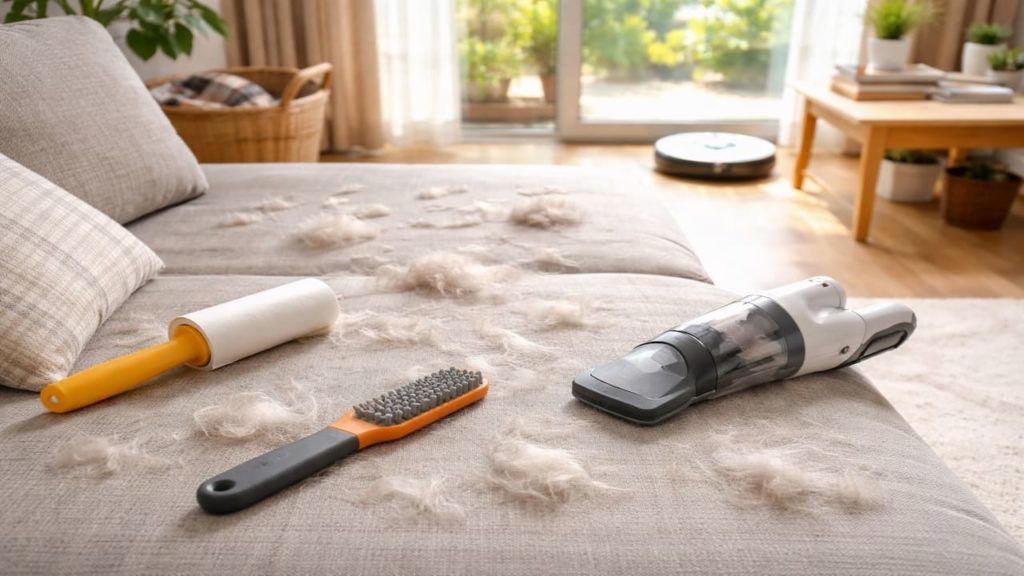
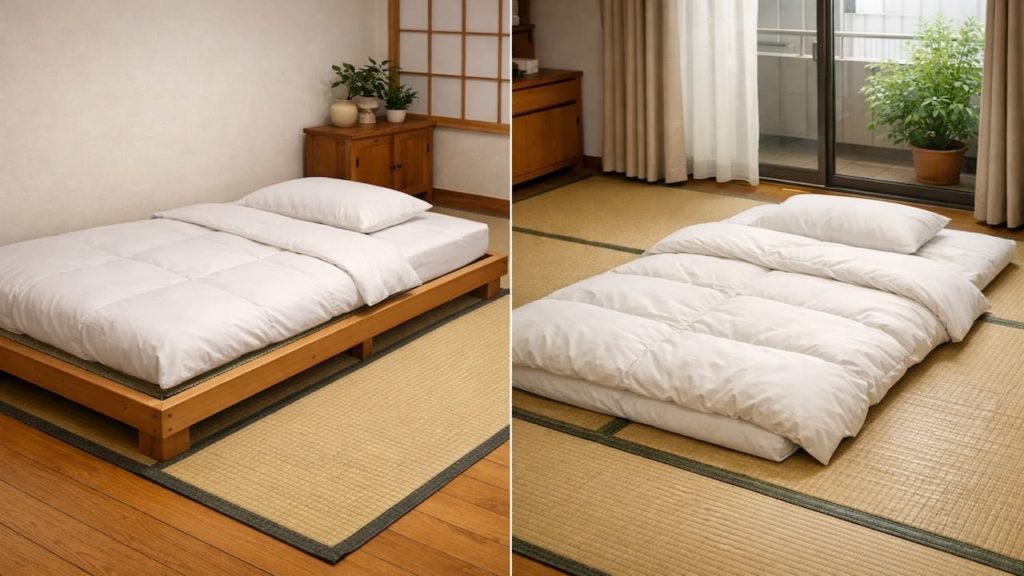
You searched because your futon room feels dusty, and you want fewer sneezes without turning life into cleaning duty.
In Japan, spring pollen, tsuyu humidity, and small apartments make dust and allergens settle fast in bedding and closets.
In this guide, you’ll learn simple futon dust control habits that reduce allergens without big effort.

Hi, I’m Ken — I’m Japanese, and I live in Malaysia long-term, so I explain everyday life in Japan from a practical ‘from abroad’ perspective.
I hold a building design qualification and I’ve been on site for 20+ years across hundreds of jobs. I turn Japan’s unspoken rules into simple checks, so you can avoid costly mistakes and take the next step with clear actions that feel safe.
You will also learn how to keep dust from coming back when you store futons in tight Japanese homes.
1. Futon dust control: 5 tips
Dust control works when you remove dust without making it airborne—that is the core rule.
Futons sit close to floors, so they catch fine dust, pollen, and skin flakes quicker than bed frames. In Japan, you also fold and store bedding daily, which can puff allergens into the air if you rush. A calm sequence matters, especially during spring pollen and tsuyu. Small room reality.
Keeping humidity at or below 50% helps limit dust mites, and weekly hot-water bedding washing is commonly advised. According to National Institute of Environmental Health Sciences.
- Vacuum futon surface slowly using upholstery nozzle
- Wipe nearby shelves with damp microfiber cloth
- Air futon upright before you fold it
- Wash cover weekly and dry fully
- Open window briefly to swap indoor air
You might think dry dusting is “faster.” It is, but it throws dust back into your breathing zone and into the futon weave. In Japan’s compact layouts, that airborne loop is brutal. Slow vacuuming and damp wiping win—then your futon stays calmer between cleanings.
2. Reduce allergens with simple habits
Simple habits beat one big cleaning day—especially through Japan’s humid and pollen seasons.
Allergen control is mostly timing: do small removal before dust settles deep again. If you wait, you end up shaking covers and blasting allergens into the room. In Japan, rainy days keep windows closed, so indoor dust lingers longer. Consistency.
Tokyo’s guidance emphasizes cleaning, humidity control, and regular bedding care to reduce mites and mold indoors. According to Tokyo Metropolitan Government.
- Change pillowcase twice weekly during pollen weeks
- Brush lint lightly before vacuuming futon fabric
- Keep closet door open ten minutes daily
- Reduce floor clutter to shorten cleaning time
- Clean air conditioner filter on a fixed day
You may think you need fancy gear to “really” reduce allergens. Not always. A tight routine that fits Japanese apartment life is stronger than expensive stuff you stop using. Keep it light, keep it repeatable, and symptoms often ease.
3. Why allergens build up fast in futon rooms
Allergens build up because futons collect dust low and store it folded—and Japan’s seasons amplify that.
Dust mites like warmth and humidity, and tsuyu pushes indoor moisture up even when the room looks clean. Pollen sneaks in on clothes in spring, then settles into futon fibers when you sit or fold. When you store a futon in a still closet, dust stays trapped and comes out as a puff later. Quiet cycle.
- Notice sneezing right after unfolding futon quickly
- Smell closet air puff when doors open
- See dust line along baseboard near futon spot
- Check underside cool damp feel after sleep
- Track symptoms worsening during tsuyu weeks indoors
You might blame your body or “Japan air” in general. But the pattern is usually local: bedding, floor zone, and closet airflow. Once you see the cycle, you can break it with simple steps.
4. How to run a low effort dust control routine
Run a routine that pairs airflow with gentle removal, so dust and moisture do not get locked in.
Do it right after waking, before you fold the futon and seal yesterday’s dust inside. In Japan’s rainy season, use indoor airflow instead of waiting for a sunny balcony day. If you need basics like a microfiber cloth or a simple mask, ¥100–500 for basic supplies is enough. Short routine.
- Stand futon upright and fan air underneath
- Vacuum futon slowly along seams and edges
- Wipe floor area where futon usually rests
- Fold futon after it feels room dry
- Store futon with small airflow gap behind
You may think you must do this daily forever. You do not need perfection, you need rhythm. If symptoms flare, tighten the routine during pollen season and tsuyu, then relax in drier weeks. Japan life is seasonal, so your routine should be too.
5. FAQs
Q1. Is futon dust mostly from the futon itself?
Some is lint and skin flakes, but a lot is floor dust and pollen that settles into the fabric. In Japan, folding and storage can trap it and release it later.
Q2. Should I beat a futon to remove dust?
Beating can throw dust into the air and make symptoms worse in small rooms. If you do anything, air it first, then vacuum slowly for control.
Q3. What is the fastest habit that helps allergies?
Slow vacuuming after a short air out cuts the dust puff loop—do it more in spring and tsuyu. Keep the window slightly open if your building rules allow it.
Q4. Do I need an air purifier for futon dust?
It can help some people, but it does not replace removing dust from the futon and floor zone. Try habits first, then decide if a purifier fills the gap.
Q5. How do I stop closet dust from sticking to futons?
Vent the closet briefly and avoid packing futons tight against the wall. If the closet smells damp, fix airflow first because dust sticks more in humidity—Japan closets do that.
Pro's Tough Talk

I’ve been on site for 20+ years. I’ve worked on hundreds of jobs. In Japan, tsuyu humidity and tiny rooms turn “a little dust” into a daily allergy trigger.
Cause 1, you fold the futon fast and trap dust inside like closing a sandwich with crumbs everywhere. Cause 2, you dry dust the shelf, then the dust just floats and lands back on the futon like snow. Cause 3, you store it in a still closet, so humidity makes dust stick like tape. You unfold the futon at night and sneeze twice before your head hits the pillow. You open the closet and that stale puff hits your face like a cheap prank.
Seriously?
Step 1, stand it up and move air under it. Step 2, vacuum slow, seams first, edges next. Step 3, damp wipe the floor zone, then store with a gap.
Make dust removal boring and consistent, and your room stops fighting you in spring and tsuyu.
Keep “cleaning” by launching dust into the air, and your nose will keep filing complaints at midnight.
Summary
Futon dust control is mostly gentle removal and airflow, not harsh chemicals or big weekend projects. Japan’s seasons make timing matter.
If symptoms flare, tighten the routine during pollen season and tsuyu, and focus on the futon underside and closet airflow. If musty smell appears, treat it as moisture first.
Do one slow vacuum after a short air out tomorrow, then keep the habit light and repeatable. Next, explore storage airflow and cover washing routines for a cleaner sleep setup.