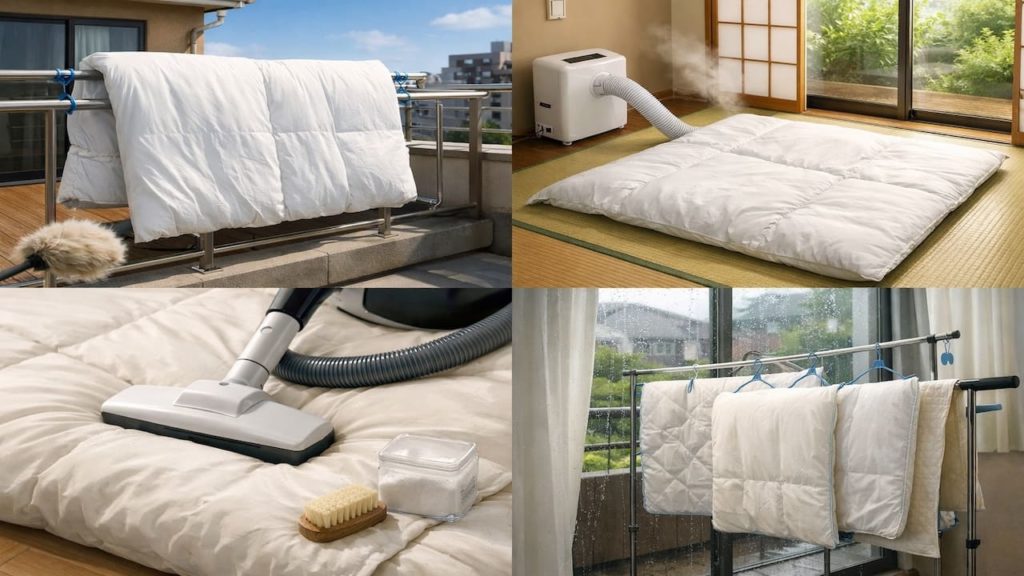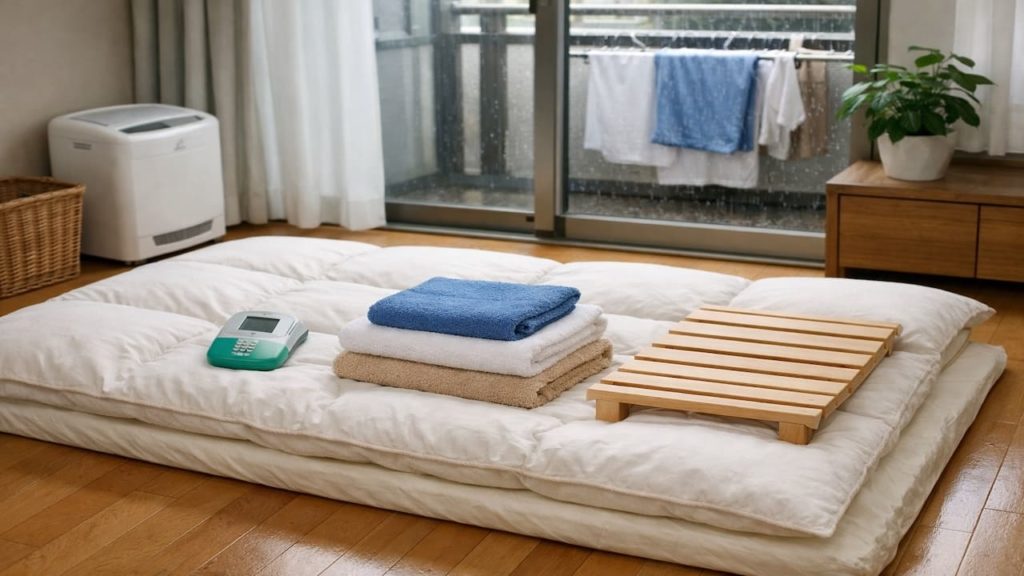
Rainy season makes futon care feel like a race you cannot win. You air it, it still smells, and you start to worry about mold.
In Japan, tsuyu humidity and compact rooms let moisture sit low near the floor and inside closets. A futon can look fine on top while staying damp in the core.
In this guide, you'll learn how to prevent futon mold with simple checks that stay calm and realistic. You will know what matters during rainy weeks and what you can safely ignore.

Hi, I’m Ken — I’m Japanese, and I live in Malaysia long-term, so I explain everyday life in Japan from a practical ‘from abroad’ perspective.
I hold a building design qualification and I’ve been on site for 20+ years across hundreds of jobs. I turn Japan’s unspoken rules into simple checks, so you can avoid costly mistakes and take the next step with clear actions that feel safe.
1. Futon mold prevention: 5 checks
Mold prevention starts by controlling moisture before storage.
In Japan's rainy season, the danger is not one wet day, it is repeated damp nights plus weak airflow. If you store a futon while the core is still cool and slightly damp, the closet becomes a moisture trap. Closet physics. Keep indoor moisture under control, because mold needs moisture to grow. According to EPA.
- Check futon core coolness near seams by touch
- Check closet air smell before putting futon inside
- Check floor humidity after showers and indoor laundry
- Check underside airflow by lifting futon off floor
- Check room humidity before folding for storage
You might feel you need to scrub everything. But the best move is to stop sealing dampness inside—do the checks, then store only when the futon feels neutral.
2. Handle rainy season without panic
Use a calm routine so humidity stops surprising you.
Japan's tsuyu weeks are long, so panic cleaning burns you out and changes nothing. The goal is steady moisture control: vent after bathing, move air across the futon, and keep the closet from staying stale. Rainy-season rhythm. Mold is linked to damp indoor environments, so reduce dampness rather than chasing invisible spots. According to CDC.
- Open two vents or windows to create cross breeze
- Run fan across futon underside for thirty minutes
- Keep bathroom door closed until steam clears
- Delay folding until room air feels stable
- Store futon loosely to keep airflow in closet
It can feel too slow. Yet a repeatable routine beats fear scrolling—once you control the air each day, rainy season becomes boring.
3. Why futon mold starts during rainy season
Mold starts when warmth moisture and still air overlap.
A futon absorbs sweat and ambient humidity, then dries slowly when it sits flat on tatami or flooring. In Japan, floor level air can stay wetter than mid room, especially in one room layouts with indoor laundry. Moisture layering. When you fold and compress the futon, you reduce airflow and trap that moisture right where mold likes to grow.
- Sleep on futon and trap sweat in core
- Dry only top surface and ignore underside
- Fold futon early and compress damp layers
- Push futon against wall and block airflow
- Store futon in closet with closed doors
People blame the futon material. But the real trigger is the environment—Japan humidity plus low airflow creates the overlap, and the overlap creates the smell.
4. How to prevent futon mold during rainy weeks
Follow one drying sequence and keep storage breathable.
Start with airflow, then confirm dryness, then store, in that order, because Japan rainy season punishes shortcuts. Do not try to dry with heat alone, because warm damp air still feeds the core. Practical sequence. If you are not buying anything, cost is mostly time/effort, and the payoff is fewer resets and less stress.
- Stand futon on edge near open window
- Run fan along futon length for even airflow
- Flip futon after thirty minutes to dry underside
- Wipe closet shelf dust and let it air
- Fold futon only after two hours stable air
You might think "two hours stable" is strict. But it prevents the classic rainy season rebound—once the room stops rewetting the futon, storage stops creating mold problems.
5. FAQs
Q1. Do I need direct sun to prevent mold on a futon?
No, airflow matters more than sun during Japan's rainy season. You can dry indoors by standing the futon up and pushing air across the underside.
Q2. How do I know my futon is dry enough to store?
It should feel neutral, not cool and clammy, especially near seams and the center. If the room humidity rebounds quickly after you stop airing, wait longer before folding.
Q3. Is a musty smell always mold?
Not always, because sweat and trapped humidity can smell musty before visible mold appears. Still, treat repeating odor after storage as a warning and improve airflow.
Q4. What is the biggest waste of effort during rainy season?
Folding early to make the room look tidy. That one habit traps moisture and creates the perfect still zone for mold—so fix timing first.
Q5. Should I keep the closet doors open all day?
You do not need all day, but a short daily vent helps a lot in small Japan apartments. Open the doors for a few minutes after bathing or indoor laundry to clear stale air.
Pro's Tough Talk

I’ve been on site for 20+ years. I’ve worked on hundreds of jobs. Japan’s rainy season humidity is the kind that clings to everything, including your futon.
Three causes, no drama: you dry the top and ignore the underside, you store it while the core is still cool, and you keep the closet sealed like a treasure chest. It is like drying a towel then stuffing it in a jar, and like trying to air a wet shoe inside a box. You fold fast because the room looks messy.
Three-step fix: stand it up, push airflow through the underside, then store only after the room stays stable. You do one quick flip and call it victory. Really.
Stop chasing mold and start managing air every day. When you do the same sequence through tsuyu, the smell stops coming back and you sleep without that nagging worry.
Keep panic-folding and your closet will start producing its own horror soundtrack.
Summary
Preventing futon mold in Japan is mainly about moisture and airflow, not constant scrubbing. Check the core dryness and avoid sealing damp layers inside the closet.
Use a steady rainy season routine: airflow first, confirm stability, then store with breathing room. If musty odor repeats after storage, treat it as a moisture rebound signal.
Do the 5 checks this week and keep the sequence. Once rainy season becomes predictable, you can relax and focus on better sleep instead of worry.