If your futon smells, it can ruin sleep even when the room looks clean. You want the real cause gone, not covered with perfume.
In Japan, tsuyu humidity, small rooms, and closet storage make odor return easily. Sweat can sit in the core and wake up again on rainy days.
In this guide, you'll learn how to remove futon odor at the source with simple steps you can repeat. You'll know when drying is enough and when cleaning is necessary in Japan.

Hi, I’m Ken — I’m Japanese, and I live in Malaysia long-term, so I explain everyday life in Japan from a practical ‘from abroad’ perspective.
I hold a building design qualification and I’ve been on site for 20+ years across hundreds of jobs. I turn Japan’s unspoken rules into simple checks, so you can avoid costly mistakes and take the next step with clear actions that feel safe.
1. Futon odor removal: 5 steps
Remove the smell by drying the core and clearing residue.
Odor usually means moisture and body oils stayed in the futon, which is common in Japan during rainy season and in tight apartments. A musty or earthy smell can also be a sign of hidden mold even if you cannot see it. According to NIH.
Do a fast sequence and avoid half fixes—half fixes just reset the problem next week.
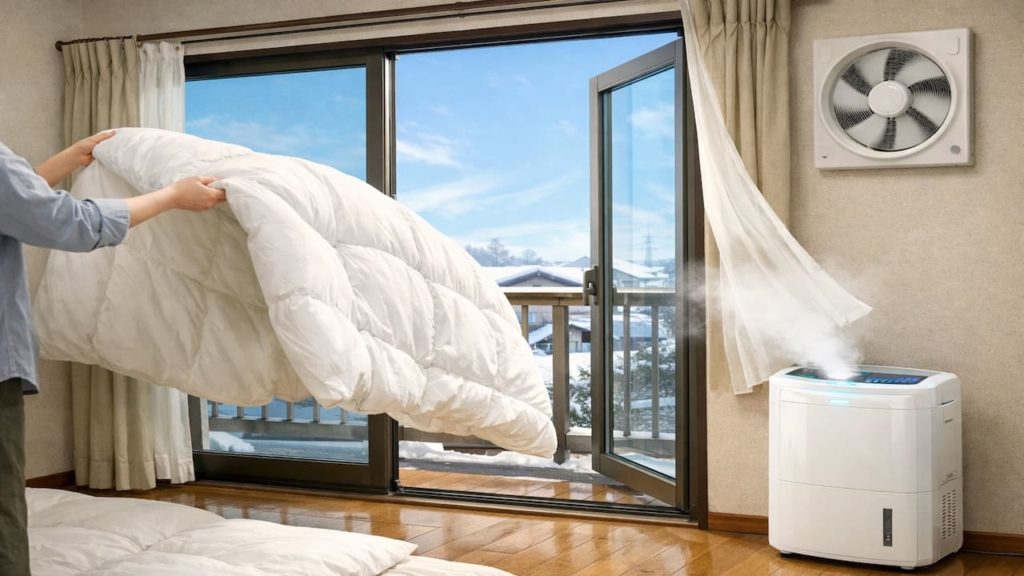
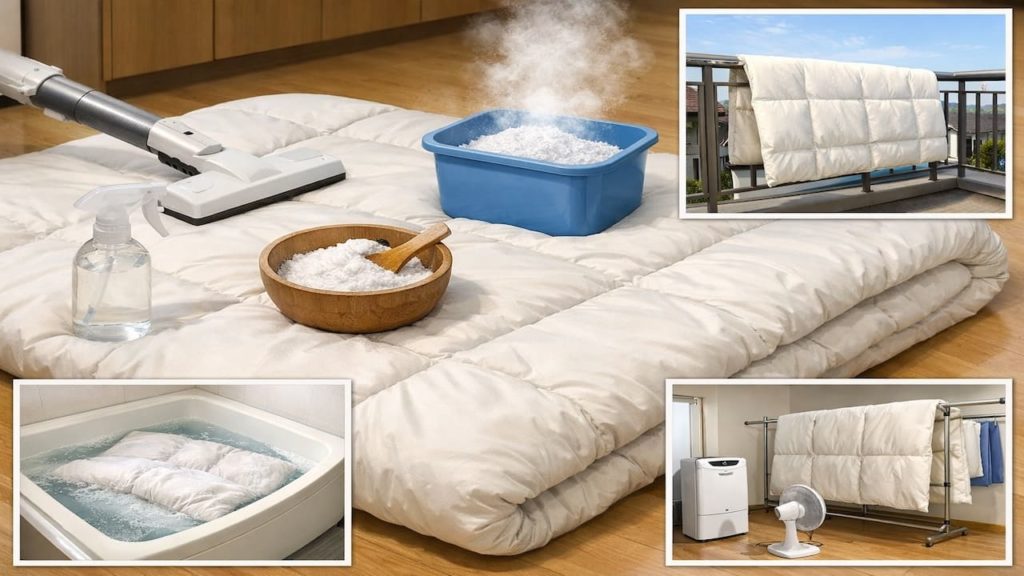
- Air futon upright near window with fan daily
- Wash cover and sheets on hot cycle weekly
- Sprinkle baking soda then vacuum after hours carefully
- Wipe spot areas with mild soap cloth gently
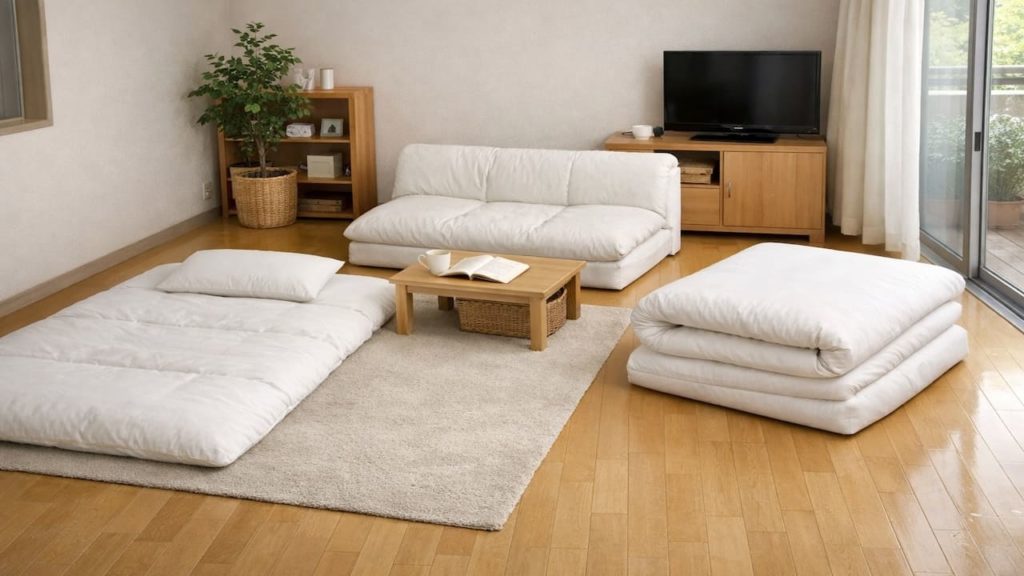
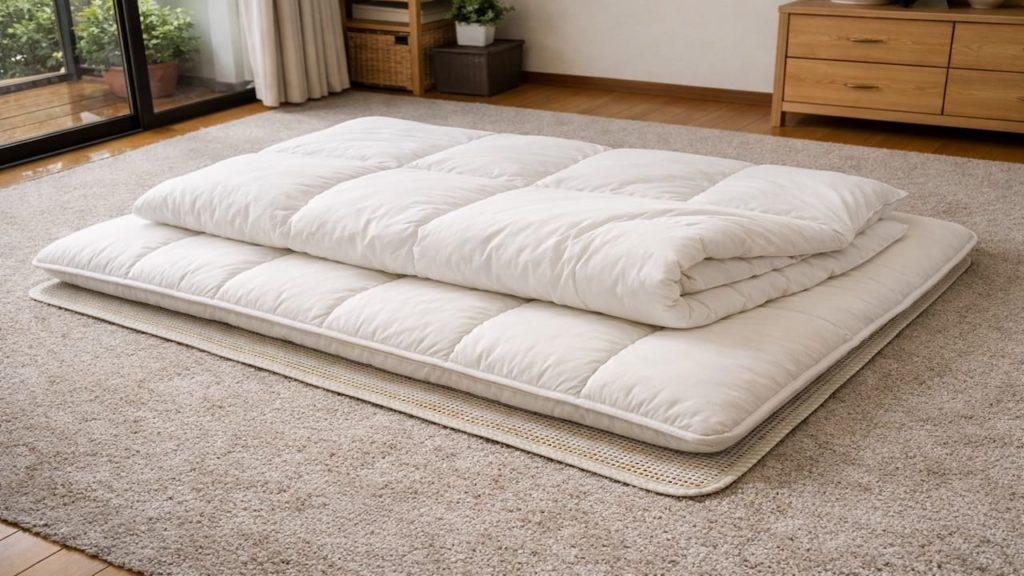
- Vent closet and store futon loosely folded only
Some people jump straight to spray deodorizer. That only mixes scents and often adds moisture, especially in Japan’s humid weeks. Do the sequence once, then wait a day and smell test again. If the odor rebounds, you still have moisture trapped inside.
2. Fix the smell instead of masking it
Masking fails because moisture stays and feeds the odor.
In Japan, the futon sits close to floor humidity, and that moisture keeps odor compounds active. If indoor humidity stays high, drying takes longer and smells return after folding. Indoor relative humidity should be kept below 60%, ideally between 30% and 50%, when possible. According to US EPA.
Use scent only after the source is removed—otherwise you just buy yourself one night.
- Find odor type by sniffing cover and core separately
- Remove wet sources like towels near sleeping zone
- Dry underside airflow to stop core dampness
- Clean oils from cover to reduce sticky buildup
- Use fresh air exchange after bathing and cooking
You might think the futon fabric is the issue. Often it is the room routine and storage timing in Japan apartments. If the core stays damp, odor returns no matter what you spray. Keep the goal simple: dry core, clean residue, then store.
3. Why futon odor keeps coming back in Japan
Odor returns when the futon gets rewetted after cleaning.
Japan’s tsuyu weeks can push humidity back into the futon within hours, even if you aired it earlier. Sweat and skin oils sink into the center, and the center dries slow when the futon stays flat on tatami or flooring. Small closets also trap stale air, so a “clean” futon can pick up odor again after storage. Same loop.
- Store futon while center still cool and damp
- Sleep on same lane and compress wet fibers
- Dry top only and ignore underside ventilation
- Keep laundry drying beside futon all afternoon
- Seal closet doors and stop air movement
It is not your nose being too sensitive. Japan’s housing layout makes moisture rebound common, so your smell test keeps failing. Break the rebound and the odor stops “mysteriously” returning. Your effort finally sticks—then maintenance becomes easy.
4. How to remove futon odor step by step
Do drying first then cleaning then final drying.
In Japan, you need a method that works even on rainy days, so build airflow indoors and finish with a stability check. For basic supplies like baking soda, mild detergent, and disposable wipes, plan ¥300–1,500 one time, then reuse the routine. Keep water minimal, because soaking drives odor deeper into the filling. Work in short cycles and let air do most of the job.
- Stand futon and run fan along length
- Vacuum surface slowly to remove dry dust
- Spot clean cover areas with mild soap cloth
- Apply baking soda layer and wait overnight
- Air futon again before folding into closet
Some people try vinegar or strong sprays right away. That can leave a second smell and add moisture, which is risky in Japan rainy season. If odor is sour or ammonia like, focus on washing fabrics and drying the core longer. If odor is musty and keeps returning, treat humidity and storage as the main fix.
5. FAQs
Q1. Is futon odor always mold in Japan?
No, it can be sweat, body oils, or stale closet air, especially during tsuyu. Still, musty odor that returns after storage should be treated seriously.
Q2. Can I remove odor without sun drying?
Yes, indoor airflow works if you lift the futon and dry the underside too. A fan plus short ventilation windows can beat waiting for sun.
Q3. What is the biggest waste of effort for odor?
Spraying fragrance on a damp futon core. It adds moisture, mixes smells, and the musty note returns when the scent fades.
Q4. How do I know drying is enough before storage?
The center should feel neutral, not cool and clammy, and the smell should not rebound the next day. If it rebounds fast, dry longer and vent the closet.
Q5. When should I replace instead of cleaning?
If odor persists after repeated dry and wash cycles, the core may be contaminated or permanently damp. Replacement can be cheaper than endless stress.
Pro's Tough Talk

I’ve been on site for 20+ years. I’ve worked on hundreds of jobs. Japan’s rainy season air is sneaky, and futon odor is usually a moisture problem wearing a perfume mask.
Three causes, no blame: you fold it while the core is still cool, you try to “freshen” with spray instead of removing oils, and you store it in a closet that never breathes. One common scene is sniffing it, shrugging, folding fast, then getting punched by the smell at bedtime. Another common scene is spraying deodorizer and thinking you won, until the room smells like wet flowers and regret.
Three-step fix: move air through the underside, wash what touches skin, then store only when the room stays stable. It’s like taping over a warning light, and like stuffing wet laundry into a drawer.
Come on.
Fix the air and the core first, then the smell stops coming back and you stop losing sleep to it.
If you keep masking it, your closet will start acting like it owns the place.
Summary
Real odor removal comes from drying the futon core and removing sweat residue, not from adding scent. Japan’s tsuyu humidity and small closets make rebound the main trap.
Use a repeatable sequence—airflow, clean fabrics, then final drying before storage. If the smell returns the next day, treat it as moisture still inside.
Do the 5 steps today and keep it boring. Once your routine matches Japan seasons, futon care stops feeling like a battle.