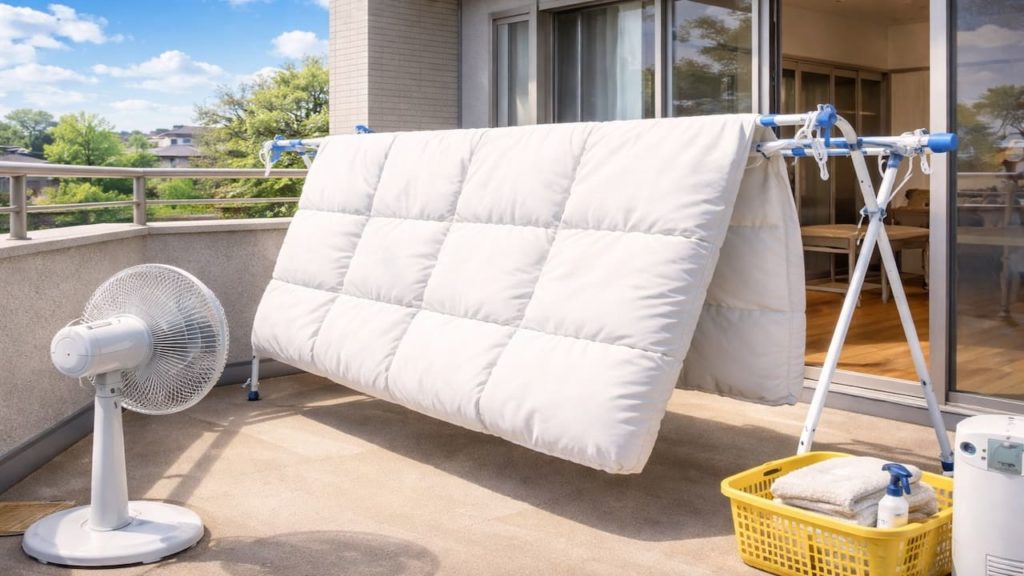
If your futon smells after rain, it is usually not “dirt,” it is trapped moisture. The odor can lock in fast if you fold and store too soon.
In Japan, tsuyu humidity and small apartments make air stay heavy near the floor. A futon can feel dry on top while the core stays damp.
In this guide, you’ll learn how to dry a futon before rain odor sticks with simple steps you can repeat. You will know what to do today and what to change for the next rainy week in Japan.

Hi, I’m Ken — I’m Japanese, and I live in Malaysia long-term, so I explain everyday life in Japan from a practical ‘from abroad’ perspective.
I hold a building design qualification and I’ve been on site for 20+ years across hundreds of jobs. I turn Japan’s unspoken rules into simple checks, so you can avoid costly mistakes and take the next step with clear actions that feel safe.
1. Futon smell after rain: 5 tips
Stop the smell by drying the core not the surface.
After rain, indoor air in Japan often stays humid even when the room feels cooler. That humidity rewets a futon fast, especially if it sits flat on tatami or flooring. Musty odor often starts when moisture stays and airflow stops, then storage compresses the damp layers. Mold and odor risk rise in damp conditions, so moisture control matters first. According to EPA.
- Stand futon upright to open inner layers
- Run fan across underside to push damp air
- Crack two openings to create cross ventilation
- Flip futon halfway through to dry both sides
- Delay folding until smell does not rebound
You might think the smell will fade if you wait. But rainy season air keeps feeding the core in Japan—so the odor stays ready to return after storage. Dry first, then tidy, and you win without panic.
2. Dry it before the odor locks in
Drying is done when the air stays stable afterward.
Do not judge by touch alone, because the surface lies when the core is damp. In Japan apartments, humidity spikes after baths, cooking, and indoor laundry, so the futon can reabsorb moisture right after you stop airing. If the room stays damp, odor can come back even after a “good” session. Damp indoor environments are tied to mold problems, so reducing dampness is the real prevention. According to CDC.
- Wait one hour after drying then smell test
- Check center seam area for cool damp feel
- Vent bathroom air before starting any drying
- Keep futon away from walls and curtains
- Store only after room feels neutral and dry
It feels slow when you are busy. But Japan rainy weeks punish shortcuts—if you fold early, you trap the odor chemistry inside. Give it one extra stability check, and you stop repeating the same problem.
3. Why rain makes futon odor appear fast
Rain odor appears when moisture stays trapped in layers.
Rain does not need to touch the futon for odor to start, because indoor humidity climbs and evaporation slows. Floor level air in Japan homes is often wetter, so the underside becomes the problem zone. Sweat from sleep adds more moisture, and a flat futon cannot vent it quickly. Then the closet compresses everything and locks the smell in place.
- Notice underside dampness after rainy humid nights
- Check tatami area for cool moisture each morning
- Track odor rebound after folding and closet storage
- Limit indoor laundry near the sleeping zone
- Move futon position to avoid stagnant corners
You may blame the futon material. The bigger driver is the environment in Japan—wet air, low airflow, and fast storage. Fix those, and odor stops “suddenly” appearing.
4. How to dry a futon after rain step by step
Use airflow first then confirm dryness before storage.
Set up the room like a drying lane, because Japan rainy air needs a path to leave. Lift the futon, run a fan along the length, then stand it upright so the core vents. If you need basics like clips, a small towel barrier, or disposable wipes, plan ¥100–500 for basic supplies once. Keep water minimal and focus on moving air.
- Lift futon on chairs to expose underside
- Run fan along length for thirty minutes
- Flip futon and repeat the fan pass
- Stand futon upright near cracked window opening
- Smell test next hour before folding and storing
Some people try deodorizer sprays for speed. That often adds moisture and makes Japan rainy season worse—so you get a second smell with the first. Do the sequence, confirm stability, then store loosely, and the odor stops locking in.
5. FAQs
Q1. Why does my futon smell only after rainy days?
Rain raises indoor humidity, so the futon dries slower and can reabsorb moisture quickly. In Japan, small rooms and floor sleeping make the underside stay damp longer.
Q2. Can I dry a futon indoors without sunlight?
Yes, if you lift it and move air across the underside. A fan plus a small cross breeze often works better than heat alone during Japan rainy weeks.
Q3. What is the fastest way to stop the odor from returning?
Do not fold until the smell stays gone after one hour. If the odor rebounds after you stop drying, keep airflow going and delay closet storage.
Q4. Should I use baking soda or sprays after rain odor?
Baking soda can help on surface odor, but it does not replace drying the core. Sprays often add moisture, so use them only after the futon is truly dry.
Q5. When should I worry about mold instead of just smell?
If you see spreading spots or the musty odor returns every day after proper drying, treat it as a moisture problem that is not being solved. Improve airflow and storage, and consider replacement if it never improves.
Pro's Tough Talk

I’ve been on site for 20+ years. I’ve worked on hundreds of jobs. Japan rainy season humidity is the kind that sneaks into bedding like it owns the place.
Three causes, blunt: you dry the top and ignore the underside, you fold while the core is still cool, and you store it in a closet that never breathes. It’s like stuffing a wet towel into a bag, and like painting over a damp wall.
Here are the two scenes I see all the time: you rush out, fold fast, and promise yourself you will air it later. You smell something odd at night, then tell yourself it is “just the room.”
Airflow first then storage last, every time, no exceptions.
Keep folding it damp and congrats, you just adopted a smell that follows you like a clingy ex.
Summary
Rain smell on a futon is mostly trapped moisture that gets sealed by early folding. Japan’s humid seasons and small rooms make the underside the real problem.
Use airflow, lift the futon, and confirm stability before storage to stop odor rebound. If the smell keeps returning, treat it as a routine issue, not a mystery.
Dry it once the right way and stop repeating the cycle. Then keep exploring related futon airflow and storage tips on this site for rainy season living in Japan.


