If your futon care keeps falling apart, it is not because you are lazy. The routine is probably too big to survive a normal week.
In Japan, tsuyu humidity, winter heaters, and small rooms make bedding maintenance feel constant. When you miss a few days, odor and dampness return fast.
In this guide, you’ll learn how to reset futon care into a weekly habit you can actually keep. You will build a simple rhythm that matches Japan seasons and small-home life.

Hi, I’m Ken — I’m Japanese, and I live in Malaysia long-term, so I explain everyday life in Japan from a practical ‘from abroad’ perspective.
I hold a building design qualification and I’ve been on site for 20+ years across hundreds of jobs. I turn Japan’s unspoken rules into simple checks, so you can avoid costly mistakes and take the next step with clear actions that feel safe.
1. Futon routine reset: 5 steps
A weekly reset works when it is short and scheduled.
Most futon problems in Japan come from two things: storing damp bedding and letting one “sleep lane” take all the pressure. A weekly reset prevents both without daily stress. You are not aiming for perfect care, just a repeatable baseline—then rainy season and winter become manageable.
Keeping indoor humidity below 60% helps reduce moisture and mold issues that can cause musty odors. According to EPA.
- Pick one fixed reset day and set reminder
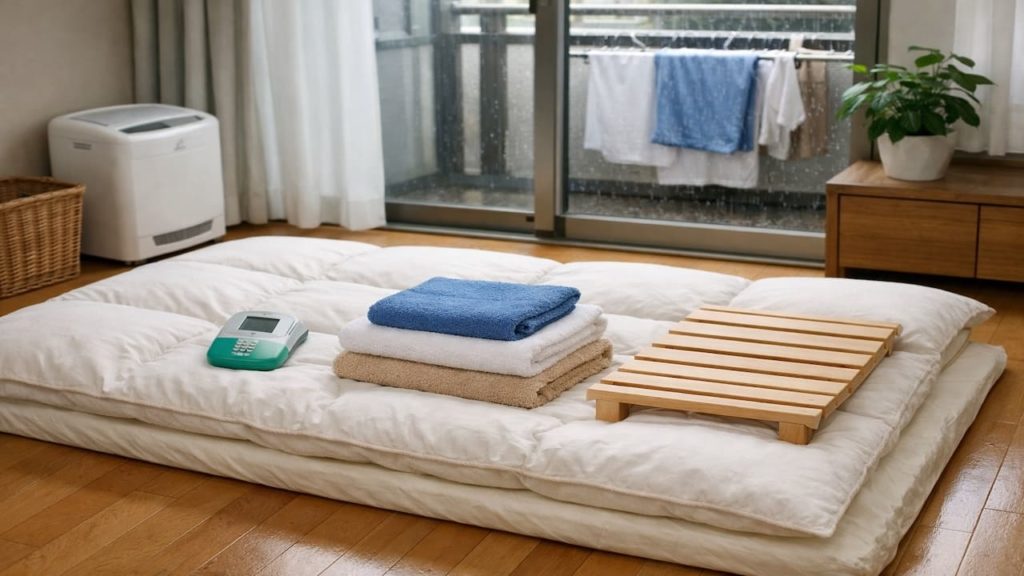
- Air futon upright with fan for one hour
- Rotate head to foot and flip once weekly
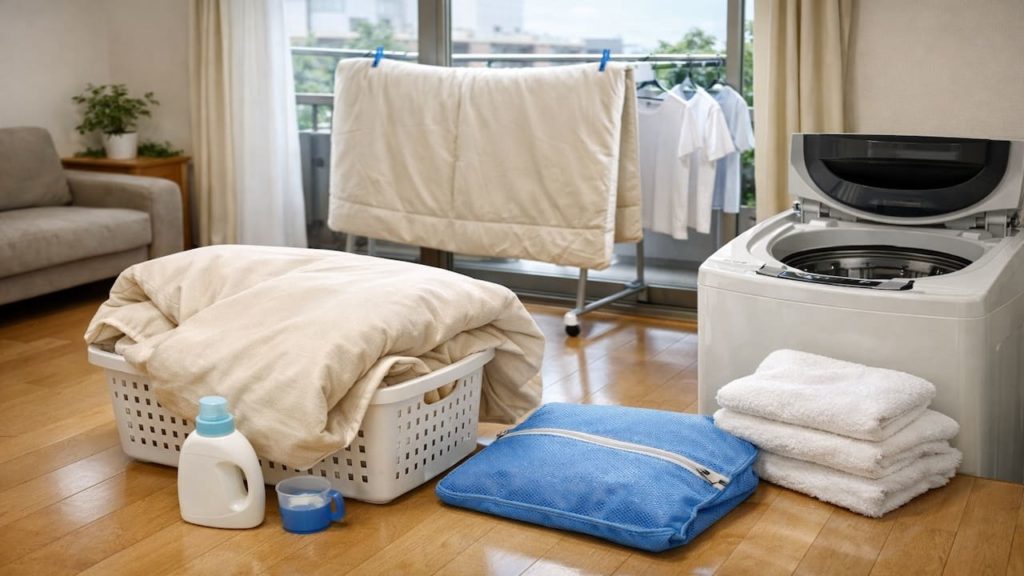
- Wash covers and pillowcases on hot cycle
- Vent closet and store futon with airflow gap
You might think this is too simple. But simple is the point—Japan humidity punishes skipped basics more than fancy extras. Do the five steps weekly and you stop needing panic cleaning.
2. Build habits you can keep weekly
Attach the reset to something you already do.
Habits stick when they ride on an existing routine, like laundry day or trash day in Japan apartments. Choose a time you are already home and moving around, then make the reset a short loop with a clear finish line. A stable routine also helps you notice changes earlier, like odor rebound after rainy nights.
Moist indoor environments are linked to mold problems, so the goal is steady moisture control, not occasional deep cleaning. According to CDC.
- Link reset to laundry cycle start every week
- Keep tools near closet so setup is instant
- Use timer for one hour airflow session
- Do the same order to avoid decision fatigue
- Stop after baseline is done no extra tasks
You may feel guilty if you do not “do more.” Skip that feeling. Weekly baseline is what survives Japan rainy season, and survival beats perfection every time.
3. Why futon care routines fail in Japan?
They fail when the routine depends on perfect weather.
Many people plan futon care around sunlight, but Japan has long cloudy weeks and sudden rain, especially during tsuyu. If your plan only works on sunny days, you will stop, then odor and dampness return. Small rooms also create friction: you need the space, so you rush folding and storage. That is the failure loop.
- Rely on sun drying and skip on rainy days
- Fold futon early to tidy small room fast
- Ignore underside moisture on tatami and flooring
- Store futon in sealed closet with stale air
- Add sprays instead of removing moisture source
It is not a motivation issue. It is a system issue. Build a routine that works indoors with airflow and a fan, and Japan weather stops controlling you.
4. How to reset your futon routine in one week
Use one short sequence and repeat it four times.
For one week, run the reset sequence on your chosen day, then do mini checks on three other days. Keep it small so it survives work and family life in Japan. If you need basic supplies like a clip, a strap, or a lint roller, budget ¥100–500 once and store them beside the futon. The goal is zero setup friction.
- Day one run full reset and set baseline
- Day two do ten minute airing and odor check
- Day four rotate and flip without washing
- Day six vent closet and check core damp feel
- Day seven repeat full reset and compare smell
You might worry you will forget the mini days. That is fine, because the full weekly reset still carries most of the value. The mini days just help during Japan tsuyu weeks when moisture rebounds faster.
5. FAQs
Q1. What if I do not have time to air a futon for long?
Do shorter airflow sessions more often, especially during rainy season in Japan. Standing the futon upright with a fan can work even without sunlight.
Q2. Should I reset weekly even in winter?
Yes, because winter heaters dry surfaces but sweat can still stay in the core. Weekly rotation and cover washing prevent uneven wear and odor rebound.
Q3. What is the single best habit to keep?
Do not store the futon while it is still damp. If you must fold, air it first until it feels neutral and the smell does not rebound.
Q4. Can I skip vacuuming and still keep it fresh?
You can if you keep covers washable and remove dust in other ways, but vacuuming tatami edges helps a lot in small Japan rooms. Focus on washing and drying first.
Q5. How do I know the routine is working?
You should notice less musty odor after storage and fewer flat spots. If odor returns quickly after rain, increase airflow time and vent the closet more often.
Pro's Tough Talk

I’ve been on site for 20+ years. I’ve worked on hundreds of jobs. Japan’s tsuyu humidity doesn’t care about your motivation, it cares about your routine.
Three causes, no shame: you make a routine that needs sunshine, you add too many steps, and you fold it damp because the room is small. It’s like building a schedule that only works on holidays, and like stuffing wet laundry into a drawer. One scene is “I’ll air it tomorrow” for five straight tomorrows. Another scene is doing a huge cleanup once, then quitting for two weeks.
Three-step fix: pick one day, do one short sequence, repeat until it is boring. Airflow, rotation, washing. That is it. Stop negotiating with yourself every morning.
Make the reset small enough that you cannot fail.
If your routine needs perfect weather and perfect energy, congrats, it’s a fantasy novel, not a habit.
Summary
A futon routine reset works when it is short, scheduled, and not dependent on sun. Japan’s seasons make moisture rebound common, so weekly consistency beats occasional big cleaning.
Use a weekly reset day for airing, rotation, washing, and closet ventilation. Add small mini checks during tsuyu weeks if odor rebounds fast.
Choose your reset day today and do the 5 steps once. When the habit sticks, futon care stops stealing your time and sleep.