You might love the idea of a futon, but a mattress feels safer for your back. Japan life makes that choice harder than it looks.
Small rooms, daily folding, and humid summers can change how bedding feels and how it ages. Your best option depends on your space, not just comfort.
In this guide, you’ll learn how to choose futon or mattress for Japan daily life using clear checks that match floor sleep, storage, and humidity. You will avoid buying comfort that fights your routine.

Hi, I’m Ken — I’m Japanese, and I live in Malaysia long-term, so I explain everyday life in Japan from a practical ‘from abroad’ perspective.
I hold a building design qualification and I’ve been on site for 20+ years across hundreds of jobs. I turn Japan’s unspoken rules into simple checks, so you can avoid costly mistakes and take the next step with clear actions that feel safe.
1. Futon vs mattress: 5 checks
Choose based on your room routine not on one test lie-down.
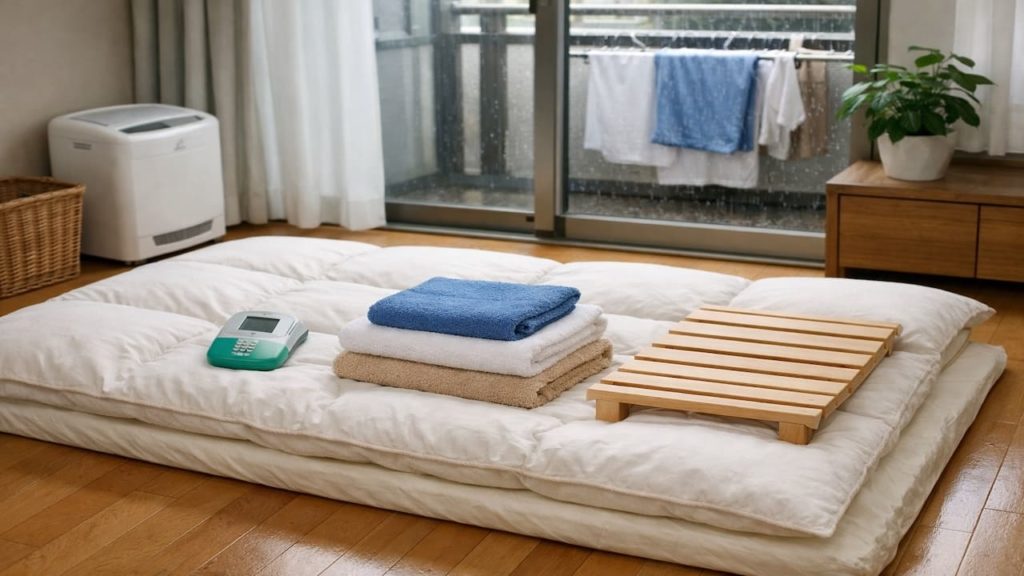
Japan apartments often need daytime floor space, so folding and storage can matter as much as softness—especially in humid baiu weeks. A futon can dry faster if you lift it daily, while a mattress is stable but harder to air. If dust and mites bother you, slow vacuuming and humidity control help your bedding stay cleaner. According to Tokyo Metropolitan Government.
- Measure floor space you need in daytime
- Check closet height for daily folded futon
- Test back comfort on hard floor surface
- Plan weekly airing time in humid season
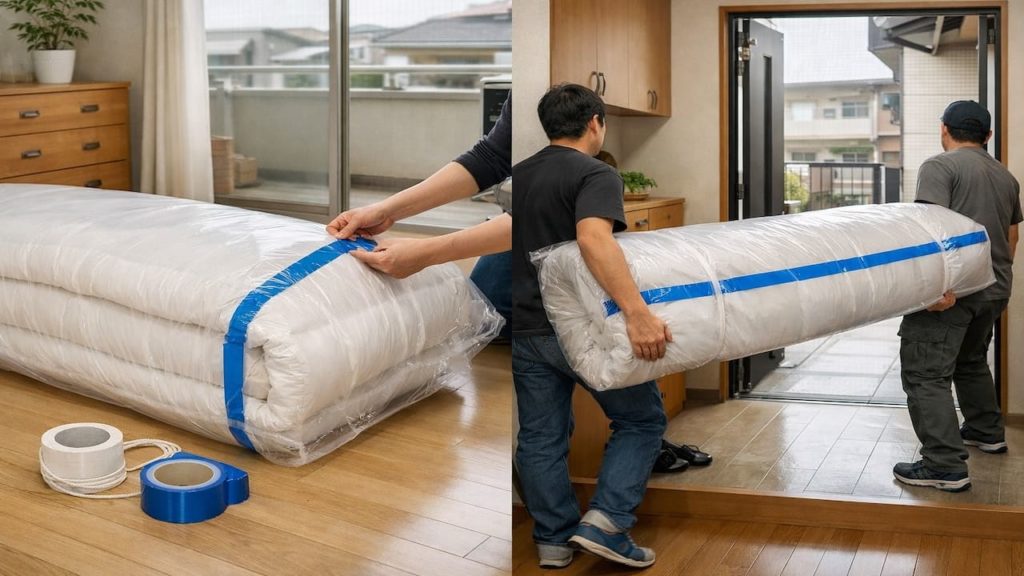
- Confirm moving stairs and door width clearance
You might think comfort is only about thickness, but Japan living is also about what you can maintain. If you will not lift and air a futon, it can get musty faster. If you cannot fit a bed frame, a mattress can block airflow. Pick the option you can actually handle.
2. Choose what matches Japan life
Match bedding to humidity and storage because Japan seasons punish lazy setups.
Baiu is a long rainy period in early summer, and many areas stay cloudy and humid for weeks—so bedding dries slower in small rooms. A futon suits people who can air it and store it, while a mattress suits people who want stable support and do not move it often. If you have neighbors close by, daily folding can reduce noise and clutter in tight housing. According to Japan Meteorological Agency.
- Decide if you will fold bedding daily
- Check if your room traps humidity overnight
- Choose airflow plan for floor level sleeping
- Confirm cleaning method you can repeat weekly
- Pick setup that fits future room moves
You may assume a mattress is always better, but a bed can dominate a Japan one-room layout. You may assume a futon is always simpler, but it needs daily discipline in humid months. The right choice is the one that matches your habits. Routine beats theory.
3. Why bedding comfort changes in Japan homes
Floor sleep amplifies pressure and humidity more than people expect.
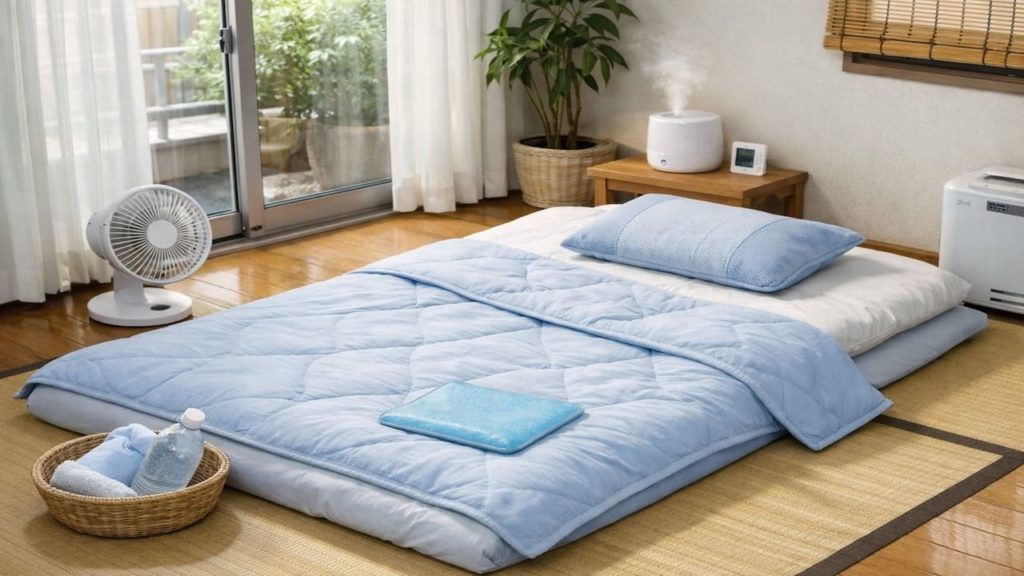
When you sleep closer to the floor, air can stay warmer and wetter near the surface in Japan summer nights. Tatami can hold moisture, and vinyl flooring can trap heat under bedding. That means a futon can feel clammy if you never lift it, and a mattress can feel hot if airflow is blocked. Floor microclimate.
- Notice shoulder numbness after side sleeping
- Check hip pressure when lying on back
- Feel for dampness under bedding each morning
- Track sweat levels during humid night weeks
- Compare comfort after three consecutive nights
You might blame your body or age, but the room environment is often the driver in Japan. Humidity reduces evaporation, so sweat stays in fabric longer. Floor contact reduces airflow, so heat pockets form. Fix the setup and comfort often improves fast.
4. How to choose between a futon and a mattress
Use a simple decision ladder
Start with space, then maintenance, then support, in that order—Japan homes reward practical choices. If you are buying, a basic futon setup or entry mattress can cost around ¥15,000–60,000 depending on size and whether you add a base for airflow. Choose what you can lift, clean, and dry in your real room, not an imaginary one.
- Choose futon if you need daytime floor space
- Choose mattress if you need stable back support
- Add breathable base to improve under-bedding airflow
- Set weekly airing schedule during rainy season
- Pick washable covers to manage sweat buildup
You may want one perfect answer, but Japan living changes with season and room size. If you move often or live compact, futon flexibility wins. If your back needs consistent support, mattress stability wins. Decide, then commit to maintenance.
5. FAQs
Q1. Is a futon bad for your back?
A futon can be great if it is firm enough and you do not bottom out on the floor. If hips sink and spine twists, add support or switch setups.
Q2. Is a mattress too big for Japan apartments?
It depends on your room layout and whether you need daytime open space. If you rarely move furniture, a mattress can be fine and easier for consistent support.
Q3. Which is better for humid summers?
A futon dries faster if you lift and air it—while a mattress may hold heat if airflow is blocked. Choose the one you will actually dry and clean weekly.
Q4. Can I use a futon on tatami every day?
Yes, but rotate position and lift it daily so tatami can breathe. In Japan rainy weeks, trapped moisture is the real enemy.
Q5. What is the easiest setup to maintain?
A simple futon with daily folding is easy if you have a routine. A mattress is easier if you prefer stable placement and consistent cleaning habits.
Pro's Tough Talk

I’ve been on site for 20+ years. I’ve worked on hundreds of jobs. Japan humidity turns “fine” bedding into a damp sandwich if you ignore airflow.
Three causes: you buy comfort for the shop, you skip drying because mornings are rushed, and you block floor airflow with clutter. Nobody is lazy, life is busy. But moisture is like rust, it never sleeps.
Three steps: choose the setup you can lift, keep a weekly cleaning rhythm, and build airflow under the bedding. Think of it like a jacket in rain, not a magic shield. This is not a wrestling match.
Pick what you can maintain daily and comfort stops drifting. You know that scene where you fold a futon fast and trap the warm core. You know that scene where your bed eats the whole room and you live on the edge.
Stop treating bedding like a personality test and start treating it like a tool.
Summary
Futon fits Japan life when you need space and can air it often. A mattress fits when you need stable support and can keep airflow and cleaning consistent.
If comfort changes by season, humidity is the hidden switch—fix airflow and routine before you blame your body. Choose once, then maintain it.
Match bedding to your daily habits and your sleep gets simpler fast. Keep browsing for the next small upgrade that makes Japan home life easier.