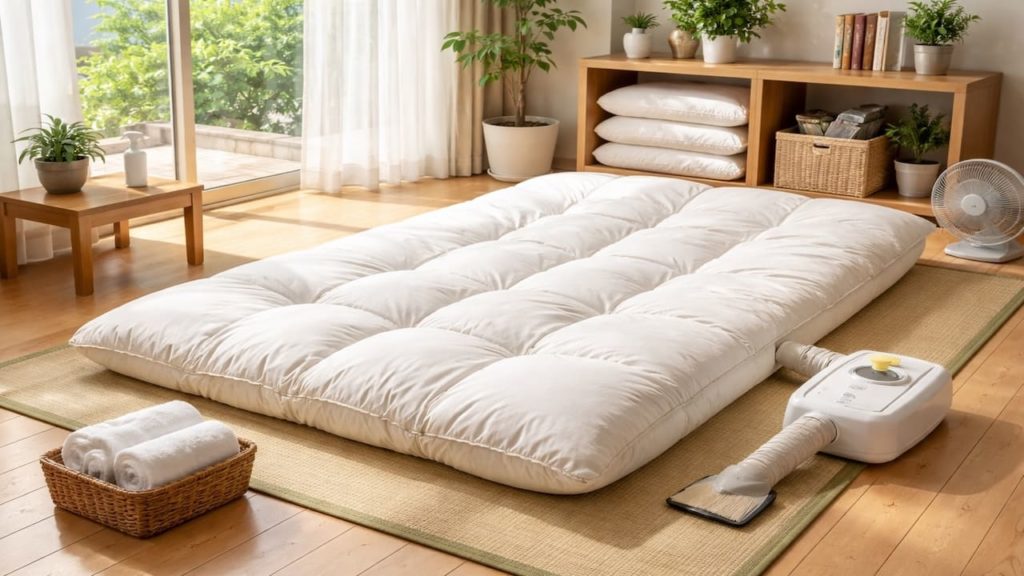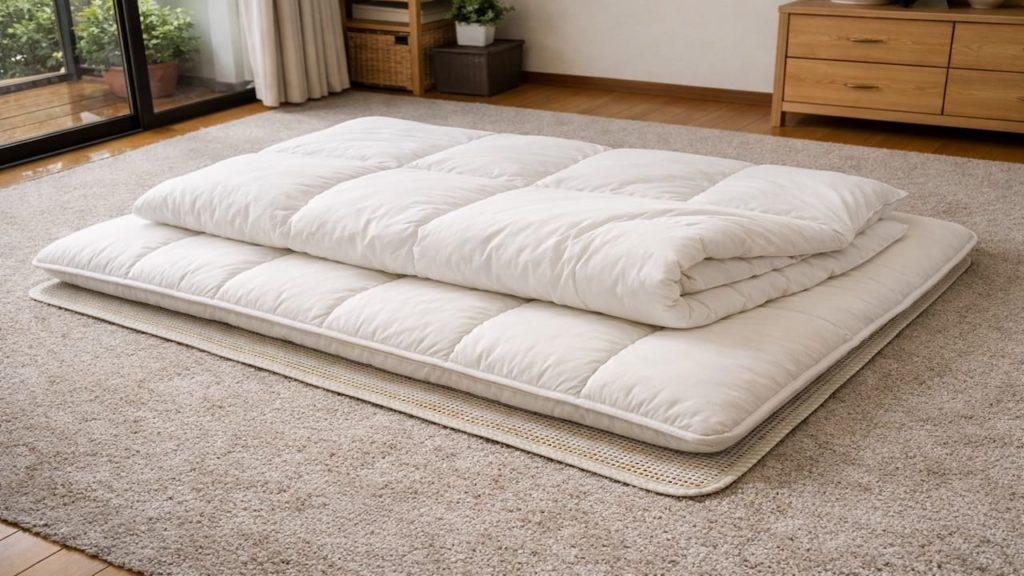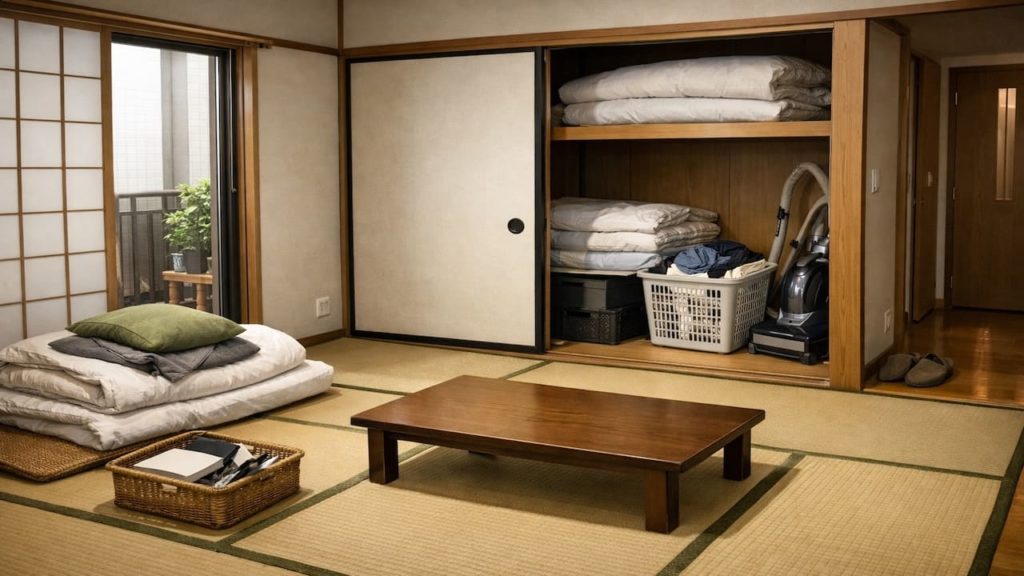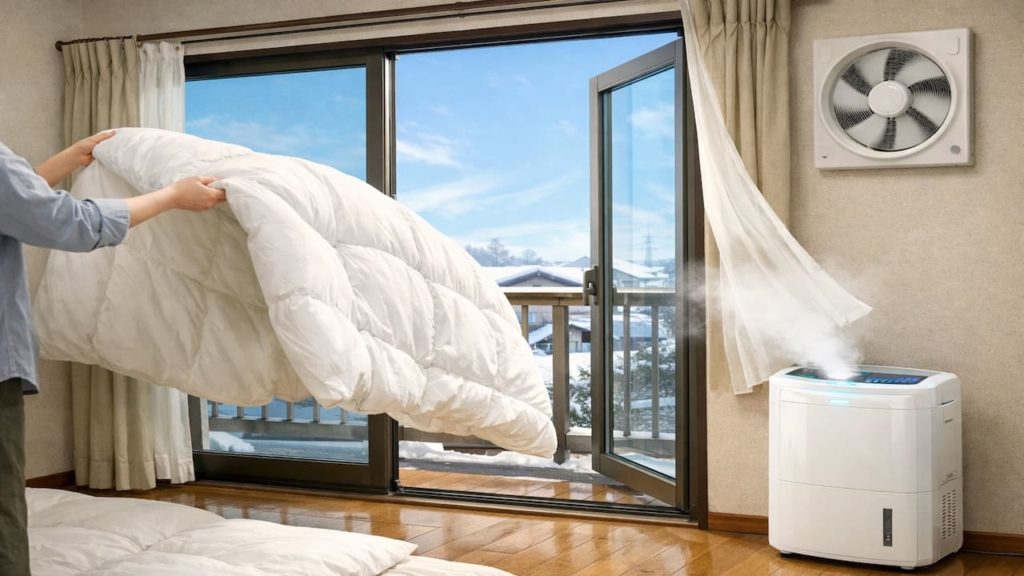
Winter futon smell is frustrating because the room feels clean, yet the air feels stale when you open the closet. If you keep windows shut for warmth, it can sneak up fast.
In Japan, heated rooms dry the air but also trap body odor, cooking smells, and closet damp pockets. Condensation around windows can add a quiet musty note.
In this guide, you’ll learn how to stop futon odor in winter without freezing your room using small ventilation and drying habits that fit Japan apartments. You will also know when airing alone is not enough.

Hi, I’m Ken — I’m Japanese, and I live in Malaysia long-term, so I explain everyday life in Japan from a practical ‘from abroad’ perspective.
I hold a building design qualification and I’ve been on site for 20+ years across hundreds of jobs. I turn Japan’s unspoken rules into simple checks, so you can avoid costly mistakes and take the next step with clear actions that feel safe.
1. Futon smell in winter: 5 tips
Fix winter futon smell by breaking stale air loops before the odor sinks into the fill.
In Japan winter, windows stay closed and heaters run, so yesterday’s moisture and smells linger in the room. Stale air. A futon absorbs sweat even in cold nights, then dries slower when airflow is weak—especially near closets and outer walls. Keep indoor humidity in a safe range, because damp pockets still happen even when the room feels “dry.” According to Tokyo Metropolitan Government.
- Lift futon each morning and expose underside
- Air room briefly twice daily for exchange
- Keep futon away from cold exterior walls
- Dry pillow area where breath moisture gathers
- Store futon only after it feels cool
You might think winter air is dry so smell cannot build, but closed rooms trap odor like a sealed lunch box. If the futon goes into storage while warm, the core keeps a sour note. Fix the room rhythm first, then the futon stays fresher. Small daily moves beat rare big cleans.
2. Stop stale air in closed windows
Use the home’s ventilation system correctly so fresh air happens without long window opening.
Many Japan homes have 24-hour ventilation equipment, but people turn it off in winter to “save heat.” Airflow habit. That choice increases indoor odor and moisture buildup in quiet corners, including closets where futons rest. Ventilation is meant to run steadily, not only when the room already smells. According to The Building Center of Japan.
- Turn on 24-hour ventilation and keep running
- Open window slightly for five minutes only
- Run bathroom fan after showers even in winter
- Keep closet door ajar during daytime hours
- Move air with fan across floor level
You may worry you will lose warmth, but short exchange plus steady fans often keeps comfort while reducing stink. In Japan apartments, the “air feels fine” moment is misleading when windows stay shut. Keep ventilation on, then do quick bursts. Warm room, clean air.
3. Why winter futon odor returns
Odor returns when moisture stays in the futon core and stale air keeps feeding it.
Winter smell is often not “mold,” but a mix of sweat salts, skin oils, and humidity that never fully leaves the fill. Hidden moisture. Breath moisture around the pillow zone and neck area is a common source, because it stays warm and damp longer. In Japan, drying laundry indoors and cooking with closed windows adds extra odor particles too—then the futon absorbs them like a sponge.
- Smell the fold center right after unfolding
- Check pillow zone for damp cool feeling
- Notice odor spike after cooking heavy meals
- Look for window condensation near sleep area
- Track if smell returns within two days
You might blame the futon fabric, but the real driver is the room cycle. If air never exchanges, every night adds another thin layer of odor. Fix the moisture source and airflow, and smell often fades fast. Blame the system, not yourself.
4. How to refresh a winter-smelling futon
Dry the core, then protect it from re-absorbing odor with a simple winter routine.
Start by airing the futon longer than you think, because winter sun can be weak and the core dries slowly. Core drying. Use short ventilation bursts while heating, and keep the closet from becoming a cold damp box. If you buy basic supplies like a small moisture absorber or a simple scent-free cover, plan ¥100–500 once and keep it minimal.
- Stand futon on edge for one hour
- Run fan across futon surface without pressure
- Ventilate room briefly before bedtime each night
- Wipe condensation and dry window sill daily
- Store futon upright to keep airflow inside
You may want to mask smell with spray, but that often adds moisture and makes odor cling. Dry first, always. In Japan winter, the goal is steady dryness plus small air exchange, not long cold drafts. Once the core stays dry, odor stops returning. Routine wins.
5. FAQs
Q1. Is winter futon smell always mold?
No it is often trapped sweat and stale air even when you see no spots. If you smell a sharp earthy note plus dampness, treat it like moisture and dry deeper.
Q2. How long should I air a futon in winter?
Longer than summer, because the core can stay cool-damp even when the surface feels dry. Aim for steady airflow and check the fold center by touch.
Q3. Should I open windows if it is very cold?
Yes, but do short bursts and keep ventilation fans on—five minutes can be enough for exchange. If you cannot open windows, increase fan airflow and reduce indoor moisture sources.
Q4. Does a heater make futon smell worse?
Heat can intensify existing odor and dry your nose so you notice smell more later. Heaters are fine, but pair them with ventilation and moisture control.
Q5. What if the smell returns the next day?
That usually means the core never fully dried or the closet is damp. Repeat core drying, then keep the closet door open in daytime.
Pro's Tough Talk

I’ve been on site for 20+ years. I’ve worked on hundreds of jobs. Japan winter makes people shut everything tight, then act surprised when the room smells like yesterday.
Three causes, simple and mean: you fold the futon while it is still warm, you turn off ventilation to “save heat,” and you let window condensation drip into the room cycle. Not your fault. It is a system that keeps recycling stink like a closed rice cooker.
Three steps: stand the futon up so the core can breathe, run the fan low and steady, and do short air exchanges twice a day. Kid-level simple. It is like drying a wet umbrella instead of stuffing it into a bag.
Stop trying to perfume stale air and start moving it. You know that scene where you crack the window for ten seconds and call it “ventilation.” You know that scene where you sniff the closet and blame the futon like it offended you.
Yeah, that is not fresh air.
Summary
Winter futon smell usually comes from trapped moisture and stale air, not a “dirty” home. Short ventilation and core drying fix most cases.
If odor returns fast, the fold center and closet air are still damp—change the routine before you buy anything. Keep the system steady, not random.
Stand it up and exchange air twice daily and your futon will smell calmer through winter. Keep exploring related futon care guides to make Japan floor sleep easier.