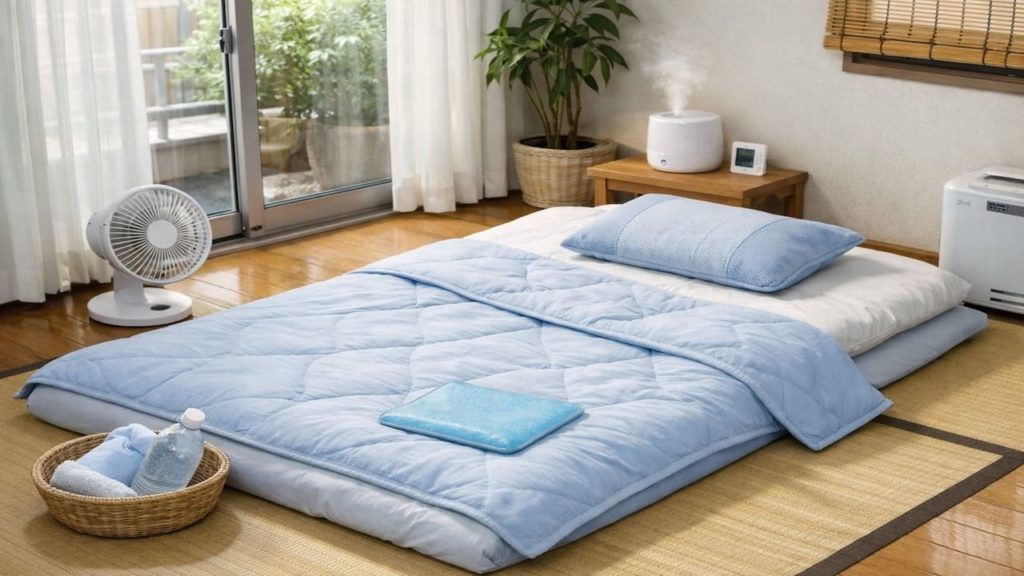
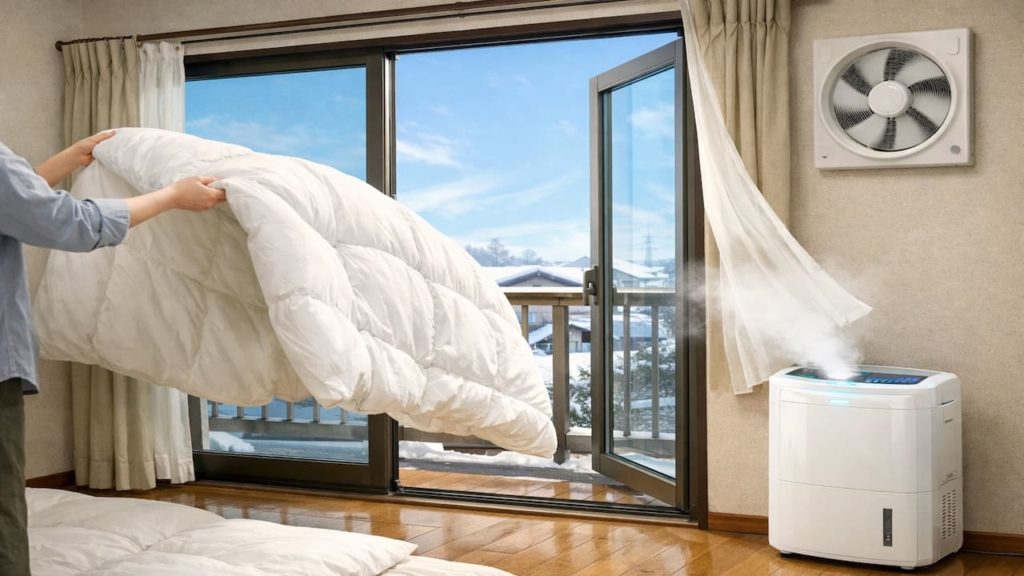
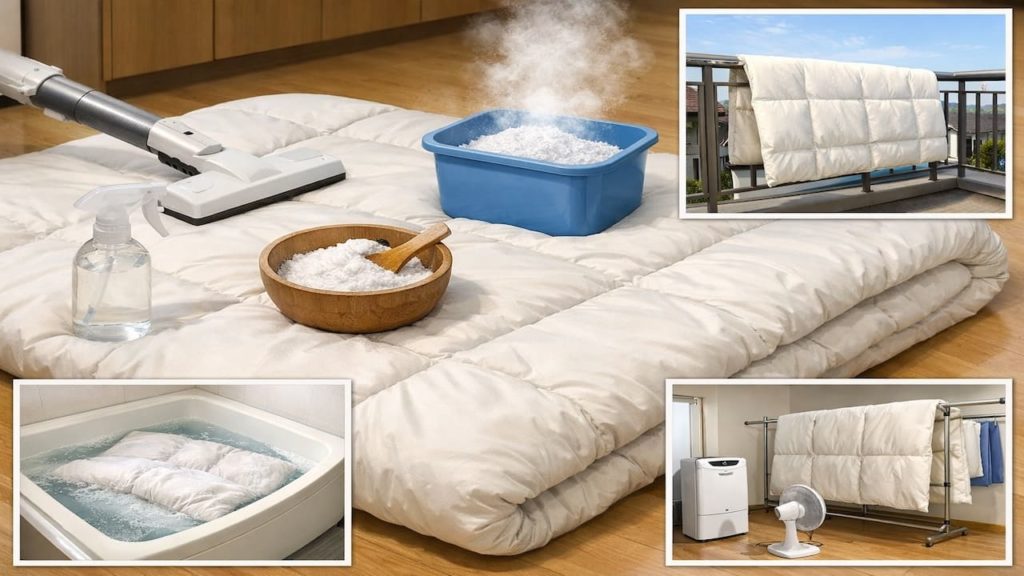
Winter futon sleep can feel cozy at first, then you wake up cold with a damp heavy feeling. If you keep windows closed, stale moisture and breath odor have nowhere to go.
In Japan, heaters warm the air while tight rooms leave hidden humidity in closets and floors. Tatami and vinyl floors can trap a cool layer under bedding, especially after rainy days.
In this guide, you’ll learn how to stay warm on a futon without trapping dampness using simple routines that fit Japan homes. You will sleep warmer with lighter layers and cleaner air.

Hi, I’m Ken — I’m Japanese, and I live in Malaysia long-term, so I explain everyday life in Japan from a practical ‘from abroad’ perspective.
I hold a building design qualification and I’ve been on site for 20+ years across hundreds of jobs. I turn Japan’s unspoken rules into simple checks, so you can avoid costly mistakes and take the next step with clear actions that feel safe.
1. Futon winter warmth: 5 tips
Warmth comes from dry layers and steady airflow not from piling weight.
Japan winter often means closed windows, so sweat and breath moisture linger around the futon. Warmth feels easy—then odor and clamminess build in the core. Closets get colder than you think. Winter routine.
Running home ventilation helps exchange indoor air in Japan housing. According to Daikin.
- Wear dry socks and keep ankles covered
- Use one light blanket plus breathable throw
- Warm the room briefly before you lie down
- Lift futon each morning to vent underside
- Air pillow zone where breath moisture gathers
You might think heavier is warmer, but weight can trap dampness and make you feel colder later. Focus on dryness first, then add warmth in thin layers. Your body heats air, not wet fabric. Dry fill keeps heat stable all night.
2. Stay cozy without heavy damp bedding
Keep your futon dry first then add warmth so heat does not turn into clammy chill.
In Japan apartments, closets and outer walls create cold spots where moisture sits. If the futon core stays cool-damp, it steals heat from your body—fast. Dryness check.
Lower indoor humidity helps reduce mold and dust mites in living spaces. According to Tokyo Metropolitan Government.
- Store futon only after it feels cool
- Keep futon away from cold exterior walls
- Open closet door during daytime for airflow
- Wipe window condensation before your bedtime routine
- Rotate futon direction weekly to spread moisture
You may think winter air is always dry, but closed rooms create damp pockets. When the pocket sits under bedding, warmth turns into a cold pull. Remove the pocket and the same blanket feels better. This is classic Japan winter housing.
3. Why winter futons feel cold and clammy
Moisture steals heat faster than cold air and a futon holds moisture in the center.
Even in winter, your body sweats and your breath adds water to the pillow area. On the floor in Japan homes, the air layer under bedding can stay cooler and wetter—so heat drains downward. Heat drain.
- Press the fold center and feel cool dampness
- Smell the seam line right after unfolding
- Check underside for sticky cold feeling spots
- Notice chills after sweating under heavy layers
- Track odor return within two days of drying
You might blame the room temperature, but the real enemy is moisture trapped in fibers. Once the center dries, your skin stays drier and you stop shivering. Dry core, calm sleep. Less tossing.
4. How to stay warm with a dry futon setup
Build a dry warm cycle you can repeat so your futon stays light and cozy.
Start by ventilating briefly, then warm the room, then sleep with breathable layers. Drafts matter near the floor. In Japan winter, small timing changes beat big gear—every night. cost is mostly time/effort.
- Ventilate for five minutes before heating the room
- Warm feet with socks not thick sweaty quilts
- Use thin cover to block drafts near floor
- Stand futon on edge for one hour daily
- Dry pillow and cover weekly with gentle wash
You may worry short ventilation wastes heat, but stale damp air makes you feel colder and sleep worse. Keep the cycle simple and repeat it, even on busy mornings. Consistency is the cheat code for Japan winter comfort. It feels boring, and it works.
5. FAQs
Q1. Why does my futon smell more in winter?
Closed windows trap odor particles—then the futon absorbs them while it also holds sweat moisture. If you fold it warm, the smell stays in the core.
Q2. Should I use more blankets to stay warm?
No add warmth without trapping sweat by using breathable layers and keeping feet warm. Heavy quilts can create clammy chills when moisture builds.
Q3. Is a humidifier good for winter futon comfort?
A little humidity can help your throat, but too much makes bedding feel damp. Watch for window condensation and adjust down.
Q4. How can I stop cold air from the floor?
Use a thin draft barrier around the sleep area and keep a small gap for airflow. In Japan apartments, tatami and vinyl floors both benefit from this balance.
Q5. How often should I air a futon in winter?
Aim for daily underside ventilation and a longer airing a few times a week. If the fold center feels cool-damp, air longer.
Pro's Tough Talk

I’ve been on site for 20+ years. I’ve worked on hundreds of jobs. Japan winter makes people seal rooms like a lunch box and wonder why bedding feels weird.
Three causes: you stack heavy layers and sweat inside, you fold the futon while it is still warm, and you let condensation feed damp corners. Moisture is a thief in a dark hallway.
Do this: vent a bit, warm the room, then keep layers breathable and dry. Like drying a wet towel instead of stuffing it in a bag.
Warm sleep is a system you control not a contest of blanket weight. Come on. You know that scene where you wake up at 3 a.m. and flip the futon looking for a dry spot. You know that scene where you sniff the closet and blame winter.
Yeah, stop cooking your bedding in its own steam.
Summary
Winter futon warmth works best when bedding stays dry and breathable. Short ventilation and daily lifting keep the core from turning clammy.
If you still wake up cold, check for hidden moisture in the fold center and around windows. Fix damp pockets before adding more blankets.
Vent warm sleep light and your futon stays cozy without heavy damp layers. Keep browsing for the next small habit that makes Japan floor sleep easier.