You buy an entry mat, and the genkan still feels slippery or dirty.
In Japan, baiu humidity, winter condensation, and windy spring grit hit the doorway first. A small genkan amplifies every wet footprint and every sand grain.
In this guide, you’ll learn how to choose a genkan entry mat that grips and cleans easily so the step line stays safe and tidy in Japan homes.

Hi, I’m Ken — I’m Japanese, and I live in Malaysia long-term, so I explain everyday life in Japan from a practical ‘from abroad’ perspective.
I hold a building design qualification and I’ve been on site for 20+ years across hundreds of jobs. I turn Japan’s unspoken rules into simple checks, so you can avoid costly mistakes and take the next step with clear actions that feel safe.
1. Genkan entry mat choice: 5 checks
Pick a mat that grips the tile and releases dirt fast.
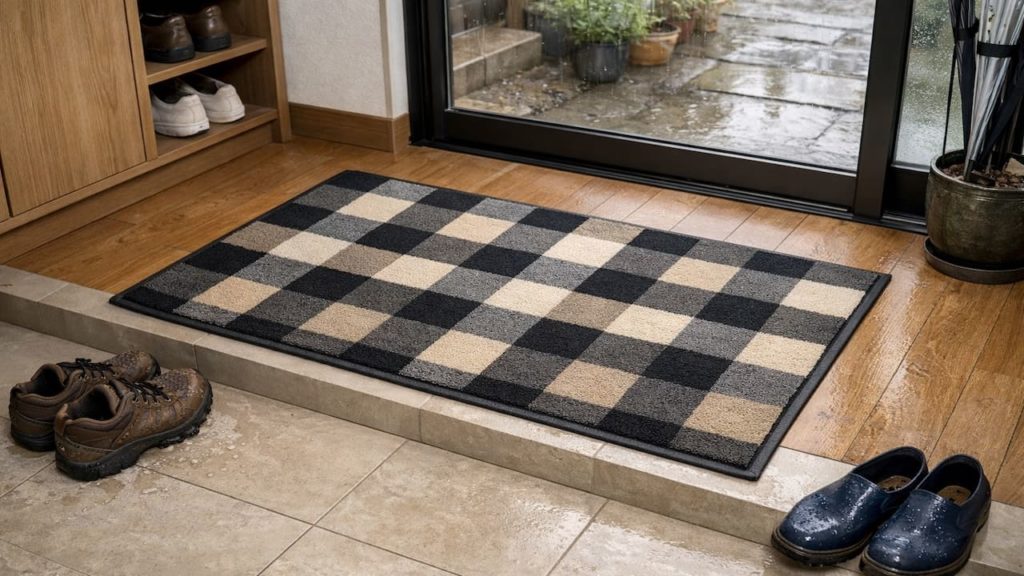
The best mat is not the thickest one, it is the one that stays put and dries quickly. In Japan rainy season, a mat that holds water becomes a smell source. In winter, wet mats chill your feet and make the genkan feel damp. Grip first.
According to HSE, effective cleaning and keeping floors dry helps reduce slip risk.
- Check backing grip by pushing mat with foot
- Choose low pile that does not trap grit
- Confirm mat edge does not curl upward
- Test drying speed after wet umbrella drip
- Pick size that keeps step edge visible
You might think a fluffy mat feels safer. Fluffy often hides sand and stays wet longer, which makes slipping and smell worse in humid Japan months. Keep it thin, stable, and quick to wash. Boring wins.
2. Pick grip that stays easy to clean
Easy cleaning beats fancy texture in a small genkan.
If you cannot clean it fast, you will not clean it often, and that is when grit scratches floors. In windy spring, fine dust sticks to fibers, then becomes paste when rain hits. A mat that can be shaken, rinsed, and dried quickly fits Japan apartment life. Clean routine.
According to Japan Meteorological Agency, Kosa is aeolian dust transported by westerly winds to Japan.
- Shake mat outdoors and knock dust out
- Rinse mat with water and dry fully
- Vacuum under mat once per week
- Wipe tile border after removing the mat
- Replace mat before backing becomes slippery
You may think replacing mats is wasteful. But a worn backing is a safety risk, especially for elders and kids in socks. A mat is a consumable tool, not a forever item. In Japan, seasonal wear is real.
3. Why do genkan mats get slippery or smelly?
Because moisture and grit build layers you do not see.
Wet soles press dirt into fibers, then the mat never fully dries in baiu humidity. The backing can trap water against cool tiles, creating a damp film. In winter, condensation near the door adds more moisture even on dry days. Hidden dampness.
- Smell the mat after it dries overnight
- Check backing for slimy feel on tiles
- Look for dark lines where shoes always land
- Inspect edges for curling and tripping risk
- Notice grit crunch sound underfoot
You might blame the mat material alone. The real issue is drying and maintenance rhythm. Choose a mat that dries fast, and keep the tile under it clean. That combo stops most smell and slip issues.
4. How to choose and maintain a mat in Japan seasons
Match mat type to weather and your cleaning style.
Use a rougher mat outside if you can, and a simpler easy-wash mat inside for the genkan. For basic supplies, ¥500–3,000 covers a good mat and optional anti-slip underlay. In baiu season, prioritize fast drying and mold resistance. In winter, prioritize edges that do not curl and backing that stays grippy. Seasonal thinking.
- Select low pile mat with rubber backing
- Add anti slip sheet if tiles are smooth
- Rotate mat orientation to even out wear
- Dry mat in sun after rainy week entries
- Keep umbrella drip away from mat surface
You may want one mat to do everything all year. You can, but only if you keep it easy to clean and quick to dry. If your mat stays wet overnight, it is the wrong mat for your genkan, not a personal failure. Switch and move on.
5. FAQs
Q1. What mat material works best for a genkan?
Choose a low pile mat that dries quickly and has a backing that grips tile. In Japan humid months, fast drying is more important than softness.
Q2. Should I use a thick fluffy mat for comfort?
Thick mats often trap grit and stay wet longer. If you want comfort, add a thin pad only on the raised indoor side, not on the lower tile.
Q3. How often should I wash the entry mat?
Weekly during rainy or windy weeks is ideal, and less often during calm seasons. The key is drying fully so mold does not start.
Q4. My mat keeps sliding on tiles, what can I do?
Add an anti-slip sheet or switch to a mat with better backing. Clean the tile under it, because dust film can act like ball bearings.
Q5. How do I keep the step edge visible with a mat?
Pick a size that ends before the step line and keep shoes out of the mat zone. A clear edge reduces missteps, especially for elders.
Pro's Tough Talk

I’ve been on site for 20+ years. I’ve worked on hundreds of jobs. Japan’s baiu humidity and winter condensation make genkan mats either your best friend or your hidden enemy.
Three causes make mats fail. One, the backing is weak so it slides. Two, the pile is too thick so it traps grit and water. Three, nobody cleans under it, so a dust film builds and the mat surfs on top.
Three steps fix it. Choose low pile with strong backing. Clean the tile under it weekly. Dry the mat fully after rainy entries.
A good mat is a tool not a decoration. A slippery mat is like a loose floorboard, and a wet mat is like a sponge you keep stepping on. Seriously.
You know the scene where you step in with socks and the mat skates forward like it’s practicing figure skating. And the scene where you lift the mat and find a mysterious damp shadow underneath. Pick the right grip, or keep auditioning for the Genkan Slip Show.
Summary
You learned to check backing grip, pile height, edge curl, and drying speed so the mat stays safe and simple to maintain. Cleaner entry. Fewer slips.
If the mat still gets smelly or slick, treat it as a moisture trap issue and change to a faster-drying type. Then tighten your weekly under-mat wipe.
Test grip with your foot today and choose easy-wash low pile, then explore more genkan routines that keep borders clear through Japan’s seasons.