Your guest rings the bell, and you freeze for a second.
In Japan, the genkan is small and the rules are strict, so timing feels high pressure. Add winter drafts, rainy umbrellas, and thin apartment walls, and even a simple greeting can feel awkward.
In this guide, you'll learn how to greet at the genkan with good timing and zero stress so guests feel welcomed right away in Japan's compact homes.

Hi, I’m Ken — I’m Japanese, and I live in Malaysia long-term, so I explain everyday life in Japan from a practical ‘from abroad’ perspective.
I hold a building design qualification and I’ve been on site for 20+ years across hundreds of jobs. I turn Japan’s unspoken rules into simple checks, so you can avoid costly mistakes and take the next step with clear actions that feel safe.
1. Genkan greeting timing: 5 tips
Great timing is showing up at the door fast and ready.
The first seconds set the tone, especially in small Japan entryways where everyone stands close. If you shout from deeper inside, the guest waits in a cold hallway and feels like a delivery. Thin doors. In winter the outside air rushes in, and in rainy season water drips, so you want smooth, not rushed—calm speed.
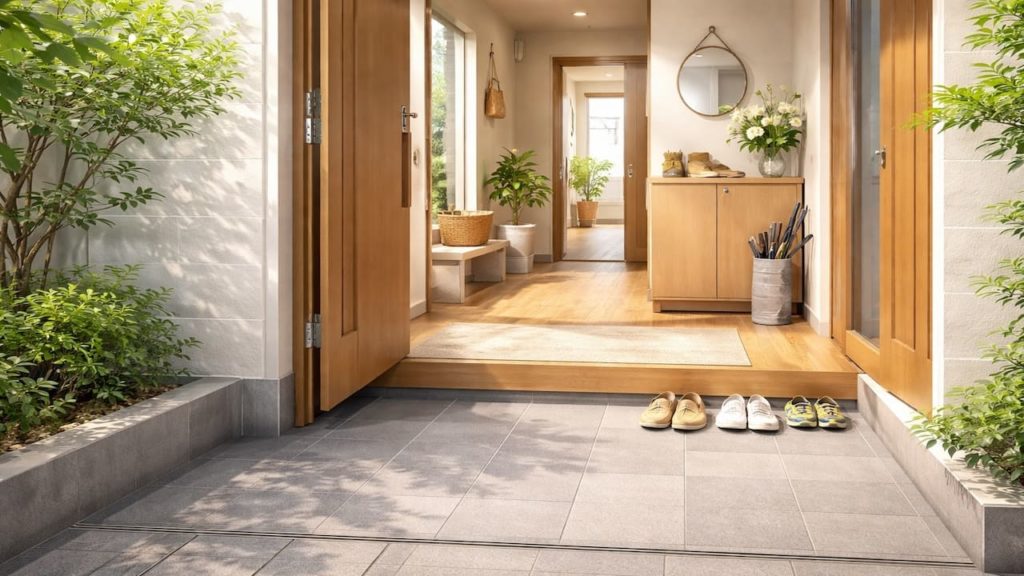
According to Japan Guide, the genkan is where you remove outdoor shoes and avoid stepping onto the raised indoor floor with them.
- Walk to the door within ten seconds
- Open the door fully and step aside
- Give a quick greeting before they enter
- Point to the genkan step and invite entry
- Close the door gently after umbrellas clear
You might think this is overthinking basic manners. But in Japan the doorway is a boundary, so waiting too long feels like rejection, and rushing feels like pressure. Keep the timing simple and repeatable. Fast arrival plus calm cues is what makes a tiny genkan feel welcoming.
2. Make guests feel welcome right away
A warm welcome is two greetings with one smooth pause.
Do the first greeting when the door opens, then pause to let the guest step into the genkan and settle their shoes. That pause matters in Japan homes because the step up is a physical rule, not just a vibe. One beat—then you guide the next step. In wet seasons, guests also need a moment to handle umbrellas without splashing your clean floor.
According to JCB, the genkan is where you greet the host and take off your shoes before going further inside.
- Say hello once when the door opens
- Give them space to enter the genkan
- Wait until shoes are off before talking
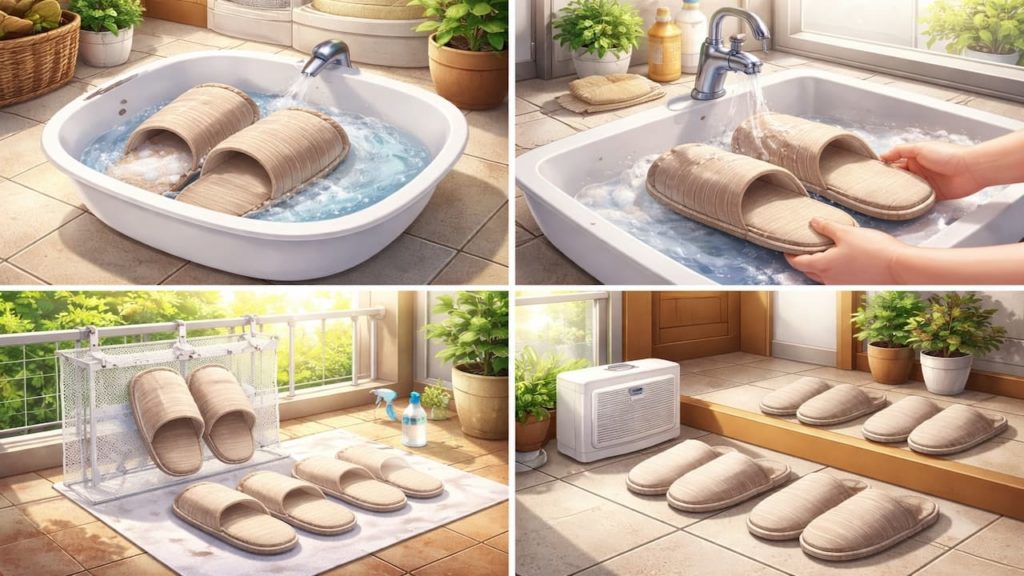
- Offer slippers after they step up inside
- Ask about umbrellas and point to a spot
You may worry the pause feels silent or stiff. It will not if your body language is clear and relaxed. A small nod, a hand gesture to the step, and a brief smile do the work. In compact Japan apartments, this rhythm prevents awkward shuffling and makes guests feel guided.
3. Why does genkan greeting timing feel awkward in Japan?
It feels awkward because the genkan forces everyone into a tiny script.
You cannot just wave from the sofa, because the shoe boundary is right there. The guest is half outside, half inside, and nobody knows where to stand. The space is loud—so timing feels loud too. In winter, the cold air pushes you to close the door fast, but the guest still needs time to remove shoes. In summer humidity, shoes can smell, so people hesitate and stall.
- Set one standing spot on the indoor side
- Leave one clear shoe lane near the step
- Keep a small towel ready for wet soles
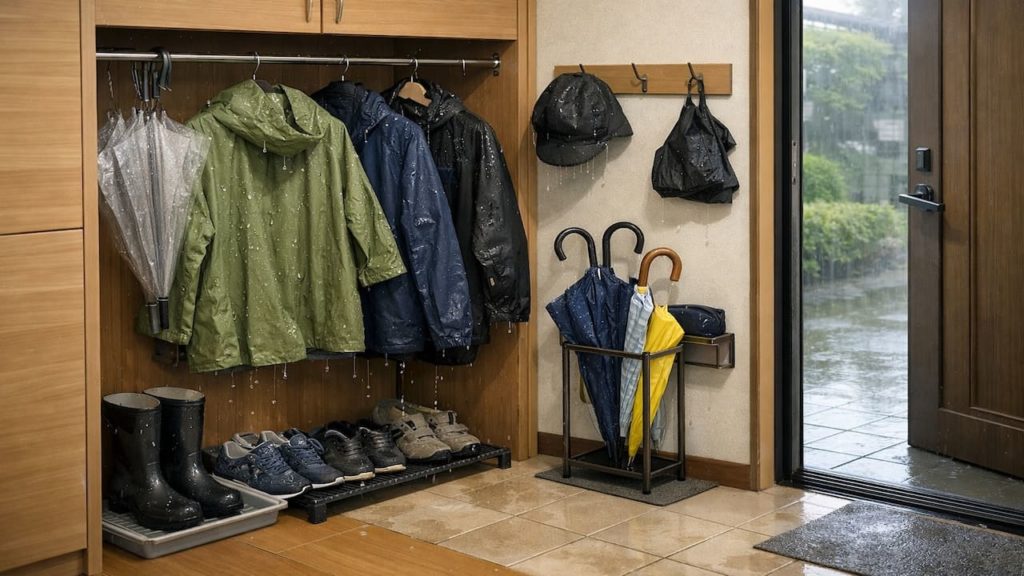
- Designate one umbrella drip corner near door
- Use one simple phrase and stop talking
You might blame yourself for being socially clumsy. Nope. The space is doing this, not your personality. Once you define where you stand and where they stand, the script becomes easy. In Japan homes, space design and timing are the same thing.
4. How to greet guests smoothly at the genkan
The simplest method is open greet guide then step back.
Do it the same way every time, so your brain does not invent new stress. Make it a habit—same steps every time. The cost is mostly time/effort. In Japan, this routine also respects neighbors because you keep voices low near the door and you do not block the hallway. No drama.
- Open the door and make eye contact
- Greet briefly and gesture toward the genkan
- Step back to give them shoe space
- Wait until shoes are off and aligned
- Lead them inside with one short sentence
You may think you need perfect Japanese phrases to pull this off. You do not. Timing and gestures carry most of the meaning, even in a mixed-language home. Keep it consistent, and guests relax because they know what to do in that small Japan entryway.
5. FAQs
Q1. Should I greet before they step into the genkan?
Yes, greet when the door opens, then pause. One hello first then one hello after shoes off feels natural and prevents shoe chaos.
Q2. What if I am busy when the bell rings?
Answer fast with a short voice cue, then come to the door. In thin-walled apartments, loud yelling can feel harsh, so keep it calm.
Q3. Should I offer slippers immediately?
Wait until they step up to the raised floor area. That timing matches the boundary and avoids awkward bending in a tight space.
Q4. What do I do with umbrellas in rainy season?
Point to one drip spot near the door and let them handle it first—rainy season is easier when water stays contained. Keep the door area clear so water does not cross the step.
Q5. How do I handle kids or multiple guests at once?
Send one person in first, then repeat the same rhythm for the next. This prevents blocking the doorway and keeps shoes from mixing.
Pro's Tough Talk

I've been on site for 20+ years. I've worked on hundreds of jobs. Japan houses are tight, and winter air sneaks in the second you crack the door.
Three causes mess up your timing. First, you talk too much before shoes come off. Second, you stand in the only shoe lane. Third, you rush the door because you hate the cold draft.
Three steps fix it. Show up fast. Gesture to the genkan step and shut up. Then talk after shoes are off and the door is closed.
Your genkan is a tiny stage so own the script. It is like a train platform, you need a line and a flow. And it is like a kitchen sink, water must stay in one basin.
One more thing. You know that scene where you keep saying hello while they hop on one foot? Or the moment umbrellas drip and everyone pretends not to see it? Do the rhythm, or keep doing slapstick at your own front door.
Summary
You learned that genkan greeting timing is about arriving fast, guiding the shoe step, and keeping a clear lane. Good rhythm. Small space.
If guests still look confused, your standing spots are not defined or you are talking too early. Fix the lane first, then fix the words.
Open greet guide and pause for shoes tonight, then explore shoe storage habits, umbrella control, and quiet guest routines that fit Japan living.