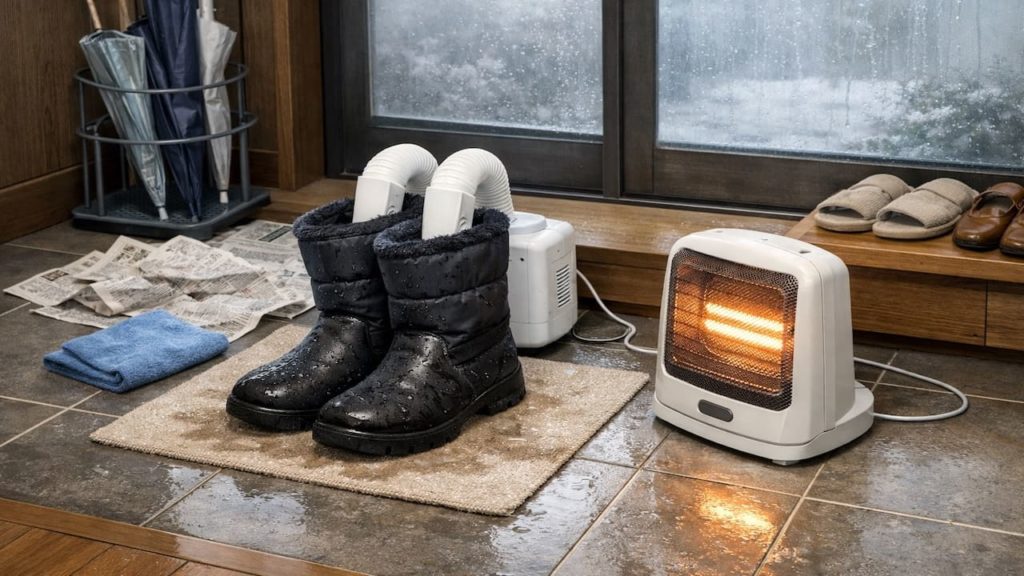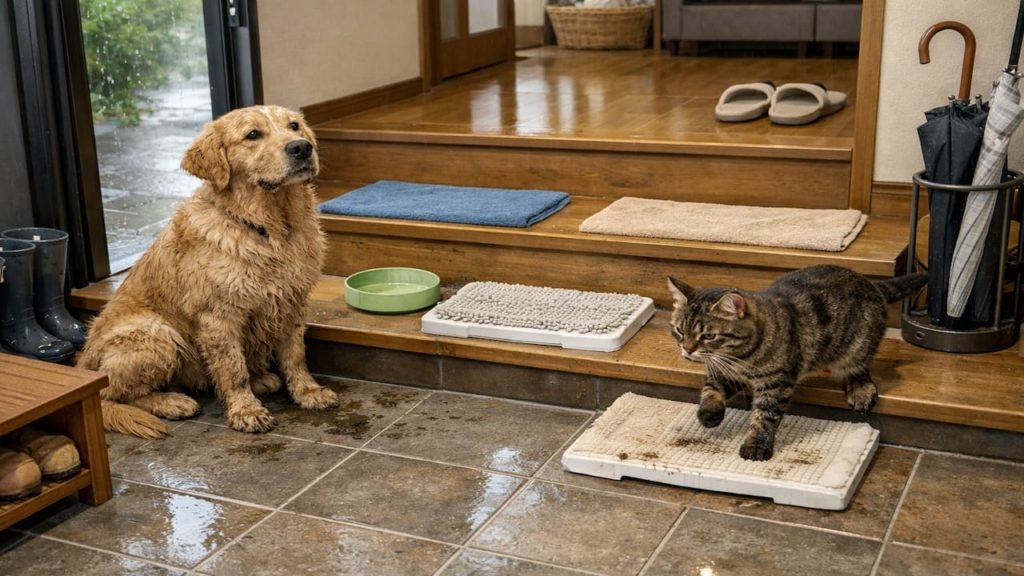
You come home with your pet, and the genkan turns into a mud checkpoint.
On rainy days in Japan, paws pick up grit, wet leaves, and black street water fast. In small apartments, one step past the genkan can mark floors, tatami edges, and light rugs. Many entries get little sun, so damp lasts longer than you expect. You want to be kind to your pet and still keep the home clean.
In this guide, you’ll learn a simple genkan routine that stops muddy paws without making your pet hate coming home.

Hi, I’m Ken — I’m Japanese, and I live in Malaysia long-term, so I explain everyday life in Japan from a practical ‘from abroad’ perspective.
I hold a building design qualification and I’ve been on site for 20+ years across hundreds of jobs. I turn Japan’s unspoken rules into simple checks, so you can avoid costly mistakes and take the next step with clear actions that feel safe.
1. Genkan with pets: 5 steps
Clean paws before your pet crosses the step.
Japan’s genkan is designed as a dirt buffer, but pets do not understand the boundary. If paws touch the raised floor or tatami, the stain sets and the smell lingers. Rainy season humidity keeps surfaces damp longer, so dirt sticks. Muddy paws.
- Clip a towel to the genkan wall hook
- Keep wipes and bags in a small basket
- Ask your pet to sit on the lower floor
- Wipe each paw pad then wipe fur
- Reward with one treat after the last paw
You might think “I’ll wipe later in the living room,” but that is where damage spreads. The genkan is the right place because it is easy to clean and meant for shoes. Keep it routine, not a fight—your pet learns the pattern fast. According to Japan Meteorological Agency.
2. Keep muddy paws out of living space
Build a one-meter “dirty zone” inside the genkan.
Most Japanese homes have a narrow entry, so you do not need a big setup. You need a clear boundary and a stable surface that does not slide when wet. In tsuyu, water drips from umbrellas and raincoats—so the floor gets slick. Small space living.
- Place a rubber mat on the lower floor
- Put a shallow tray for wet paw prints
- Hang a leash where you can grab it
- Store slippers above reach of splashes
- Keep a spray bottle for quick floor rinse
Some people worry this looks “messy” for guests. But a tidy mat and tray look more polite than muddy footprints on the hallway floor. In shared buildings, keeping the entry clean is also manners. According to MHLW.
3. Why muddy paws reach the living room
It happens because pets sprint through the narrowest path.
After a walk, many pets rush to food, water, or their favorite spot. In Japan apartments, that path often goes past the genkan step into the main room in seconds. Add wet fur shaking, and droplets land on walls and shoe cabinets. Rainy day chaos.
- Lead your pet to sit before opening fully
- Use the leash to slow the first step
- Block the hallway with a simple gate
- Place water bowl away from the entry area
- Keep a towel at hand for fur shake
You might say your pet “never listens,” so the routine cannot work. But you do not need perfect obedience—only a repeatable flow that reduces speed. Start with one cue and one reward, then add the gate if needed. In humid Japan, small control saves big cleaning.
4. How to clean paws fast after rain
Use wipe, check, and dry as your default.
Wipe first to remove grit, then check between toes for tiny stones, then dry so the smell does not build. In Japan’s rainy season, damp paws can sour quickly inside warm rooms. Do it at the genkan, not on tatami—your future self will thank you. For basic supplies, plan about ¥300–1,500 once.
- Wipe paw pads with damp cloth first
- Check between toes for grit pieces
- Dry paws with towel until no shine
- Wipe belly fur if it splashed low
- Rinse mat and tray after the walk
Some owners prefer washing paws in the bathroom every time. That can work, but it is slower and can stress pets in winter. A wipe-and-dry routine is usually enough for city walks and rainy sidewalks. Keep it consistent, then escalate only when mud is heavy, and Japan homes stay cleaner.
5. FAQs
Q1. Should I wash my pet’s paws every day?
Not always. If the walk was dry and clean, wiping may be enough. In rainy season, a quick wipe and dry keeps odor down.
Q2. What if my pet hates paw touching?
Start with one paw and one treat, then stop. Keep sessions short and calm. Over a week, most pets accept it as “home routine.”
Q3. Is it rude to do paw cleaning at the genkan?
No, it fits Japanese housing habits and keeps shared spaces clean—neighbors appreciate it. Clean paws are the polite option. Use a mat so it looks tidy, not chaotic.
Q4. How do I stop paw prints on tatami?
Block the first dash with a leash and a small gate. Keep the tatami room door closed until paws are dry. Tatami stains are stubborn.
Q5. What about wet dog smell after rain?
Dry fur well and ventilate for a few minutes. Damp fabric holds odor in Japan’s humid summer. A towel near the genkan helps every day.
Pro's Tough Talk

I’ve been on site for 20+ years. I’ve worked on hundreds of jobs. Japan’s rainy season turns entries into damp boxes, and muddy paws are like bringing a paint roller inside. It gets ugly fast.
Three causes. One, you don’t prepare the genkan, so you scramble with wet hands. Two, you let the first dash happen, and the dirt spreads like gossip in a small building. Three, you dry “a little” and store the towel damp, so the smell grows. Come on.
Three steps. Put the mat and towel ready before the walk. Make your pet sit for 3 seconds, then wipe and dry. Rinse the mat, then hang the towel to dry fully.
Stop the mud at the step. That is the whole game. Classic scene one: you wipe paws, then your pet shakes like a sprinkler. Classic scene two: you forget the towel, so you sacrifice your T-shirt.
If you keep letting muddy paws run free, don’t blame the “dirty city,” blame your lazy genkan management.
Summary
Muddy paws are easiest to handle at the genkan step. Set a small dirty zone, slow the first dash, and wipe and dry every paw. Genkan routine.
If marks keep appearing in the living room, tighten the flow with a gate and move water bowls away from the entry. In rainy season, moisture control matters as much as dirt removal. Less scrubbing.
Do this today: hang a towel and start the sit-and-wipe routine, and your Japan home stays cleaner without daily frustration.