You come home, take off your shoes, and the genkan still feels damp.
After rain, shoe racks and cabinets trap moisture, and that slow dry can lead to musty odor or mold. Japan’s rainy season and humid summers make it worse, especially in tight apartments with little airflow. If shoes stay wet overnight, the next day starts with a bad smell. Small entry.
In this guide, you’ll learn 5 airflow tricks for faster shoe drying so your genkan stays clean even when the weather stays wet in Japan.

Hi, I’m Ken — I’m Japanese, and I live in Malaysia long-term, so I explain everyday life in Japan from a practical ‘from abroad’ perspective.
I hold a building design qualification and I’ve been on site for 20+ years across hundreds of jobs. I turn Japan’s unspoken rules into simple checks, so you can avoid costly mistakes and take the next step with clear actions that feel safe.
1. Genkan shoe rack airflow: 5 tips
Airflow beats heat for daily shoe drying.
Most shoes fail to dry because air around them stays still, not because the room is cold. In many Japan homes, the genkan is shaded and separated from the main room, so humidity sits. Rainy season runs for weeks, so “it will dry later” often means “it will smell later.” Wet shoes.
- Stand shoes heel-up to open toe space
- Pull insoles out to expose inner fabric
- Leave finger space between each shoe pair
- Face shoe openings toward moving fresh air
- Ventilate genkan for 5 minutes after rain
Some people rely on deodorant spray and ignore drying, but damp lining keeps feeding odor. Build a small airflow habit and the smell drops fast — even without fancy gear. The Baiu season affects most of Japan from early June to late July. According to Japan Meteorological Agency.
2. Dry shoes faster and prevent mold
Keep the rack open like a drying shelf.
A shoe rack works best when it behaves like a laundry rack, not storage. If you push shoes deep against a wall, the back stays wet and mold spots can start. In Japan apartments, shoe cabinets often sit near the front door where outside humidity enters on rainy days. Closed cabinet.
- Move rack 10 cm off the wall
- Place shoes on wire shelves not flat boards
- Open cabinet doors during daytime for airflow
- Use a drip tray to protect the floor
- Swap wet pairs with dry pairs daily
You may worry an open cabinet looks messy, but the clean smell matters more than the “perfect” look. Drying first prevents stains, and it also protects wooden shelves from swelling. Keep air moving — mold needs damp still air to win. According to WHO.
3. Why shoe racks stay damp in Japanese entries
Moisture gets trapped in the lowest air layer.
The genkan floor is cooler and closer to outside air, so moisture likes to sit there. When you close the door, that damp air has nowhere to escape, especially in compact mansions with no window at the entry. In Japan’s humid summer, umbrellas and wet bags push humidity higher. Humidity loop.
- Check the floor edge for hidden wet spots
- Wipe puddles before putting shoes on rack
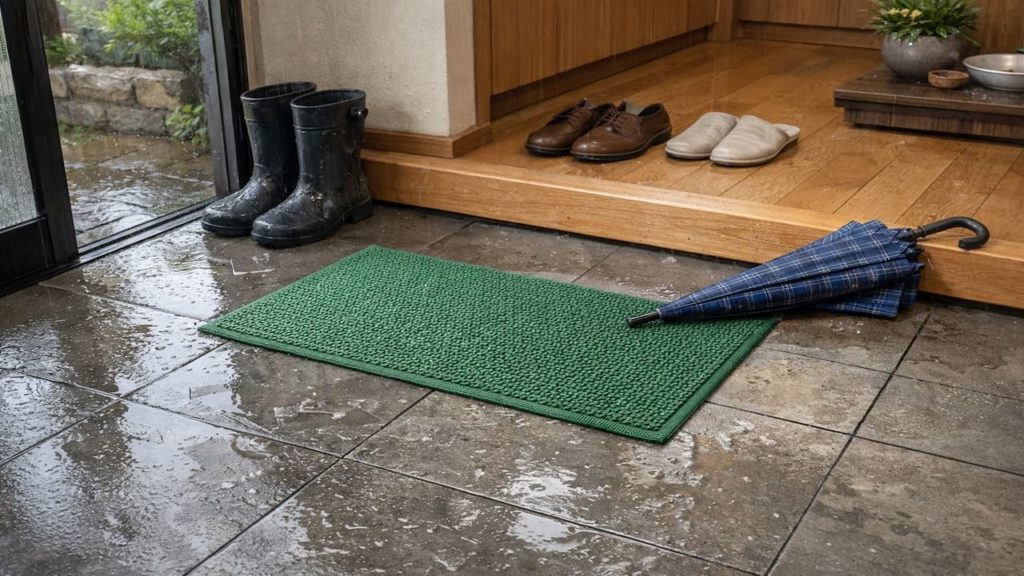
- Hang umbrellas to drip on a towel
- Keep slippers on the upper step area
- Run bathroom fan with door slightly open
It’s easy to blame “old buildings,” but even new places get damp if air never moves. You don’t need constant ventilation, just short bursts at the right times. Once the genkan stays dry, shoe odor drops with it — it’s linked.
4. How to dry shoes overnight without a shoe dryer
Use fan direction and spacing as your main tool.
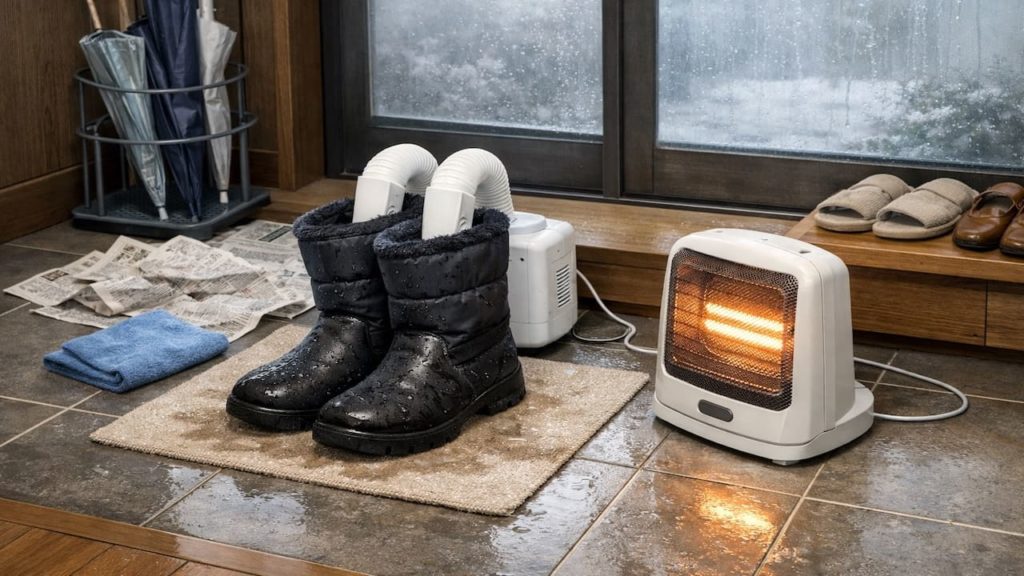
Start by removing insoles and loosening laces, then set the shoes so air can reach inside. A small fan aimed low works better than blasting air from above, because the damp layer sits near the floor in Japan homes. If you buy basics, plan about ¥500–3,000 for a small fan or absorbers. Fast routine.
- Aim fan at shoe openings for 30 minutes
- Place shoes on their side to expose lining
- Insert newspaper inside to absorb moisture fast
- Replace newspaper once before sleep tonight again
- Store only fully dry shoes back inside
“I have no space” is real in Japan, so keep the setup narrow and repeatable. A single row near the door is enough if spacing is correct. If you do this once, you stop waking up to damp shoes — and that’s the goal.
5. FAQs
Q1. Should I keep the shoe cabinet doors open all day?
Open them when you are home — and the weather is dry enough. Close them before you leave if security is a worry. Short airflow is usually enough.
Q2. What is the fastest way to dry sneakers after rain?
Remove insoles, loosen laces, and aim a fan into the opening. Newspaper inside helps a lot. Drying speed changes with humidity in Japan.
Q3. Can I dry shoes with a heater or hair dryer?
Use low heat and keep distance so glue does not weaken. Heat can warp some soles. Air movement is safer than high heat for daily drying.
Q4. How do I prevent mold spots on the rack?
Wipe the shelf weekly and keep it off the wall. If you see black dots, clean early before they spread. Damp plus still air is the trigger.
Q5. My genkan has no window, what can I do?
Borrow airflow from the hallway or main room for a few minutes. Use a fan pointed low at the rack. Small routine beats big cleanup.
Pro's Tough Talk

I’ve been on site for 20+ years. I’ve worked on hundreds of jobs. Japan’s rainy season turns the genkan into a damp pocket, and shoes become little wet sponges stacked in a corner.
Three causes. One, you cram shoes together so air can’t reach fabric. Two, you push the rack against the wall, so the back stays wet like laundry drying in a closet. Three, you close the cabinet to “hide” the problem, and humidity throws a party.
Do this in 3 steps. Pull insoles out and open the shoe mouth. Give each pair finger space and point openings toward air. Run a fan low for a short time, then stop.
Drying is a habit not a gadget. Keep it small and repeat it after every wet walk. Scene one: you line shoes neatly, then step on a slick puddle in socks. Scene two: you spray deodorant, and the next morning it smells like wet perfume.
Yeah, that cabinet is not a magic dryer.
Summary
Faster shoe drying comes from airflow and spacing, not strong perfume. Open the shoe mouth, pull insoles, and keep pairs separated in the genkan.
If the rack stays damp, fix the damp layer at the floor. Wipe puddles, hang umbrellas, and create short bursts of airflow even in small Japan entries.
Start tonight: aim air into the shoe opening for 30 minutes and you wake up to dry shoes and a fresher genkan.