You’re standing in the genkan, trying to put shoes on fast, and the heel keeps folding.
In Japan, entryways are tight, mornings are rushed, and shoes often get worn daily through rain and humidity. If you step on the heel, the counter collapses, the fit gets loose, and odor can build faster because the inside lining breaks down. A small shoehorn habit saves time and saves shoes.
In this guide, you’ll learn how to use a shoehorn like a normal daily move so you can slip shoes on smoothly in Japan’s compact genkan life.

Hi, I’m Ken — I’m Japanese, and I live in Malaysia long-term, so I explain everyday life in Japan from a practical ‘from abroad’ perspective.
I hold a building design qualification and I’ve been on site for 20+ years across hundreds of jobs. I turn Japan’s unspoken rules into simple checks, so you can avoid costly mistakes and take the next step with clear actions that feel safe.
1. Genkan shoehorn habit: 5 tips
Use the shoehorn before your heel touches the shoe.
The shoehorn works only when it guides your heel, not after you have crushed the back. In many Japan homes, you stand near the step line, so balance matters and you want a quick motion. Rainy season also makes shoes softer and easier to deform if they stay damp. Clean motion.
- Place shoehorn at hand height near shoe line
- Hold shoe with one hand to keep shape
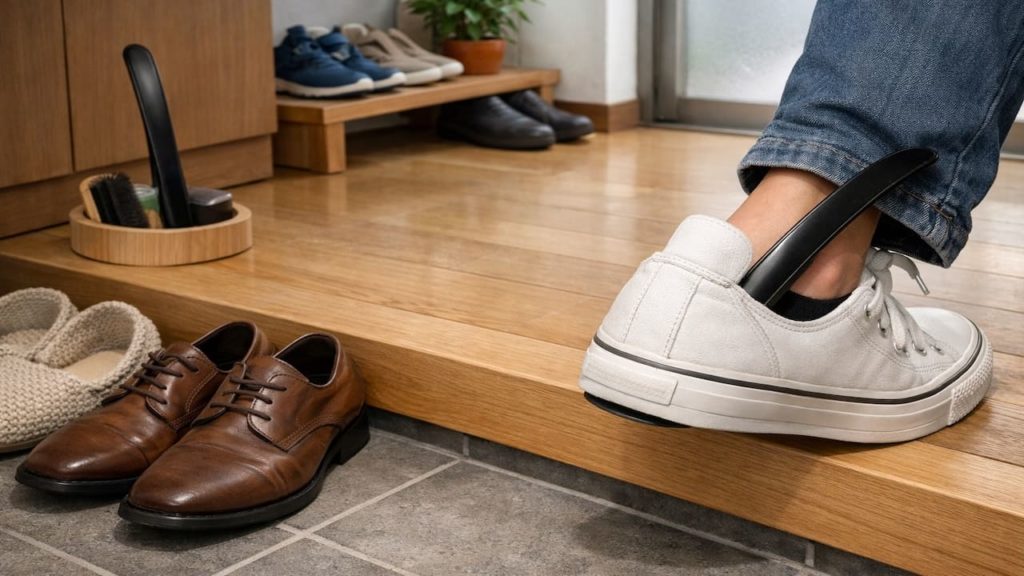
- Insert shoehorn along heel counter smoothly
- Slide foot in then pull shoehorn out
- Tap heel lightly to seat foot fully
You might think a shoehorn is “too formal,” but it is just a tool for speed and shoe life. When the heel stays firm, shoes feel better and last longer. In Japan apartments, quiet quick entry is also polite — no stomping.
2. Put shoes on fast without damage
Choose a shoehorn length that fits your genkan stance.
A tiny shoehorn can still work, but it forces you to bend and twist in a narrow entry. A longer one lets you keep balance near the genkan step and reduces scuffs on the wall. In humid Japan, people also wear shoes that soften and stick, so a smoother slide helps. Balance first.
- Pick long shoehorn if you hate bending
- Pick short shoehorn for travel and small bags
- Store shoehorn where you put slippers each day
- Use one shoehorn for each main shoe spot
- Wipe shoehorn weekly to keep it clean
You may worry a long shoehorn looks strange, but it becomes invisible once it lives in one corner. The “weird” thing is crushing shoe heels daily. A simple tool keeps mornings smoother in Japan’s tight entryways.
3. Why shoes get damaged at the genkan
Damage comes from rushed force at the heel.
When you step on the heel, you break the stiff counter that holds shape. After that, the shoe slides, rubs, and traps moisture in wrinkled lining. In Japan’s rainy months, damp shoes deform faster, so the habit hits harder. Small repeated stress.
- Notice heel counters that feel soft or bent
- Check for inner lining tears near the heel
- Look for uneven creases on the back area
- Feel for looseness when you walk outside
- Stop stepping on heels even once this week
You might blame cheap shoes, but even good shoes die from daily heel crushing. The genkan is where the damage starts, not outside. Fix the entry habit and the shoe lasts longer in Japan’s wet seasons.
4. How to build a shoehorn habit in one week
Make the shoehorn impossible to ignore.
If the shoehorn is hidden, you will forget it when you rush. Place it exactly where your hand reaches when you face the door, and pair it with a tiny cue like “shoehorn first.” In Japan rentals, use removable hooks or a slim stand so you do not drill holes. For basic supplies, plan about ¥100–1,500 depending on the shoehorn type.
- Hang shoehorn near the door at shoulder height
- Put a small tray under it to catch drops
- Practice once at night when not rushed
- Use it for slippers too to build pattern
- Do a Sunday check and reset the spot
You may think habits are hard, but this one is easy because it gives instant reward: faster entry and less struggle. After a week, you will feel weird without it. In Japan’s compact genkan, tiny friction adds up — remove it.
5. FAQs
Q1. Do I really need a shoehorn for sneakers?
If you often crush the heel, yes, it helps. Sneakers still have heel counters that can deform. It also saves time when you are rushing out.
Q2. What if I keep losing the shoehorn?
Give it one fixed home near the shoe line. Do not move it for cleaning day, just wipe around it. Consistency beats memory.
Q3. Is a metal shoehorn better than plastic?
Metal is smoother and lasts longer, but plastic can be fine if it is sturdy. The best shoehorn is the one you actually use. Pick the one that feels good in your hand.
Q4. Will a shoehorn help with tight leather shoes?
Yes, it reduces heel friction and protects the lining. It also helps you avoid pulling the heel tab too hard. In humid Japan, leather can soften and stick.
Q5. Where should I store it in a small genkan?
Near the door, close to where you stand to put shoes on. Avoid placing it behind shoes or inside a cabinet. Keep it visible and reachable.
Pro's Tough Talk

I’ve been on site for 20+ years. I’ve worked on hundreds of jobs. Japan genkan life is about smooth flow, and crushing shoe heels is like bending a door hinge every morning. It will fail.
Three causes. You rush and step on the heel to “save time.” You hide the shoehorn so it never gets used. You wear damp shoes in tsuyu, so the heel counter softens and collapses easier. Then you wonder why the shoes feel sloppy.
Three steps. Put the shoehorn where your hand lands. Use it before your heel touches the shoe. Seat the heel gently and stop stomping like you are killing a cockroach.
Fast and gentle beats fast and brutal. A shoehorn is a ramp, not a luxury. That scene where you mash the heel and walk out with a folded back. That scene where you yank the heel tab until it snaps.
If you keep crushing heels, your shoes will quit before you do.
Summary
A shoehorn habit protects the heel counter and makes shoes easier to wear. In Japan’s tight genkan, it also reduces noise and morning stress.
If shoes keep slipping or smelling faster, check the heel damage and dampness. Stop stepping on heels, dry shoes properly, and use the shoehorn every time for one week.
Start today: hang the shoehorn where your hand reaches and use it before your heel touches the shoe, then your shoes last longer with less effort.