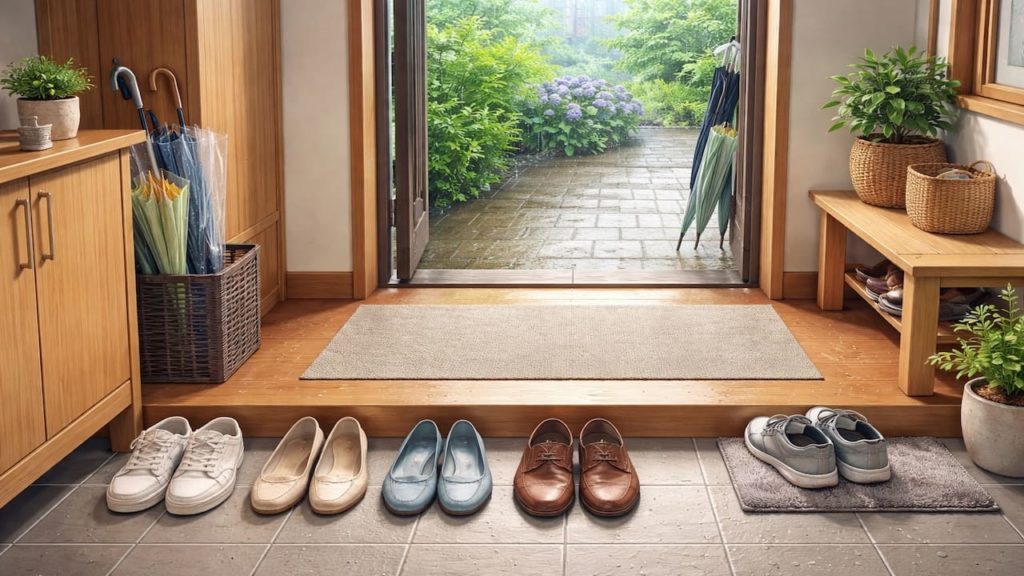
You reach the genkan and your brain pauses for one beat.
You want to follow the shoes off rule, but you also want to sound normal. In Japan, homes are compact and the entry sits right next to the living space. In rainy season humidity, wet soles and umbrellas raise the stakes without anyone saying it. Guests often copy your energy. Awkward silence.
In this guide, you’ll learn simple English shoes off phrases that feel kind so you can enter smoothly and keep the mood light in Japan.

Hi, I’m Ken — I’m Japanese, and I live in Malaysia long-term, so I explain everyday life in Japan from a practical ‘from abroad’ perspective.
I hold a building design qualification and I’ve been on site for 20+ years across hundreds of jobs. I turn Japan’s unspoken rules into simple checks, so you can avoid costly mistakes and take the next step with clear actions that feel safe.
1. Genkan shoes-off phrases: 5 tips
Say one clear line and point to the step.
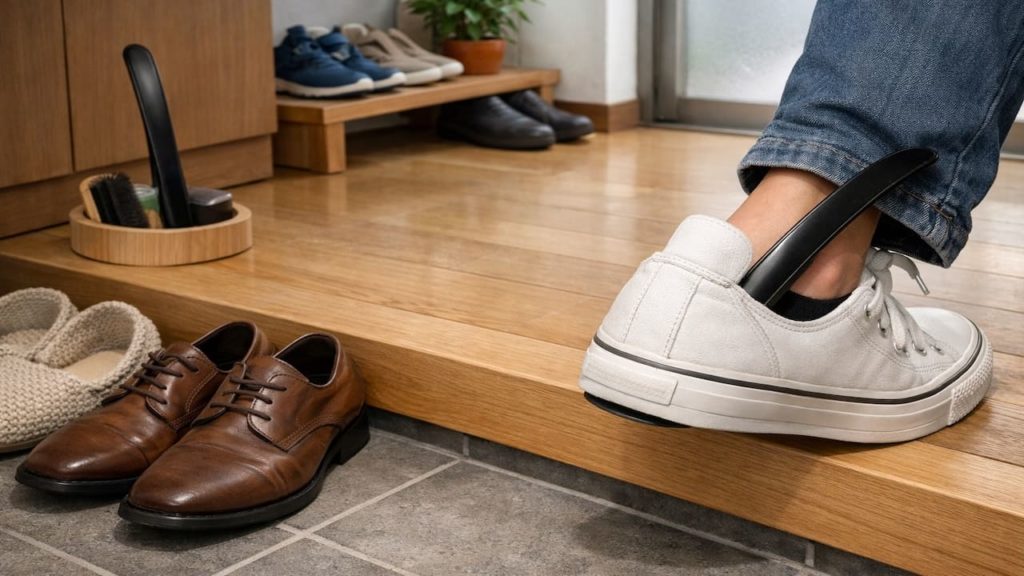
In many Japan apartments, the genkan is narrow, so long explanations feel heavy. A short line plus a calm gesture guides people without making them feel corrected. Quick cue. Shoes are typically removed at the genkan in Japanese homes. According to Kids Web Japan. In humid rainy months, this also prevents wet prints from crossing the step — and that keeps the upper floor clean.
- Say please take your shoes off here
- Point at the step line with open palm
- Offer slippers with a smile and gesture
- Use a soft sorry to interrupt tone
- Thank them after they step up inside
You might worry you sound strict, but clarity feels kinder than confusion. Keep your voice low and your body relaxed. If the guest is carrying bags, step aside and give them space. Tatami peace.
2. Say it kindly in simple English
Use short friendly words that invite not order.
Simple English works well in Japan homes because the action is visual and fast. The best phrases are ones you can say while holding the door and managing umbrellas. Indoor etiquette guides often mention removing shoes neatly. According to Japan-guide. In winter, boots and thick socks slow people down, so keep it gentle and patient. Soft tone.
- Ask would you mind taking shoes off
- Say shoes off please right here thank you
- Say feel free to use these slippers
- Say sorry my floor gets dirty quickly
- Say this area is for shoes only
You may think you need perfect grammar, but you do not. Smile, slow down, and let the gesture do half the work — that is how it feels natural in compact Japan housing. If you forget words, just point and smile.
3. Why shoes-off phrases feel awkward
It feels awkward when the doorway becomes a bottleneck.
People feel watched because the genkan is tight and everyone is close. If it is raining, they juggle bags and umbrellas and want to move fast. In Japan, quiet hallways make small moments feel louder — even a whisper. Doorway tension.
- Notice guests holding bags and blocking doorway
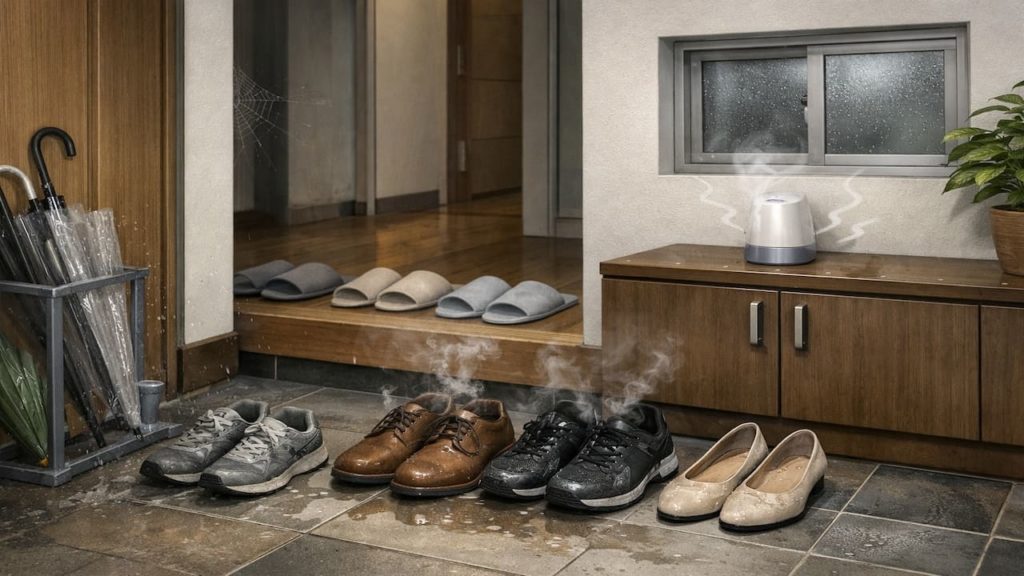
- Watch wet umbrellas drip onto the lower floor
- See hesitation before stepping up to hallway
- Hear socks shuffle on vinyl in rainy air
- Recognize silence when host waits by slippers
You might assume the guest is rude, but most of the time they are nervous. Give them a clear place to stand and a clear next move. On humid days, one drip can spread and smell later. Give them a landing spot for bags.
4. How to ask shoes off without making it weird
Pair one phrase with one repeatable gesture.
Choose a phrase you can say every time, and do not change it by mood. Put slippers where they can be seen from the door, and keep the shoe line clear. cost is mostly time/effort. In Japan rainy months, consistency matters because damp gear adds chaos fast. One script. Say it while you are smiling.
- Choose one phrase and repeat it daily
- Add a gesture toward slippers and step
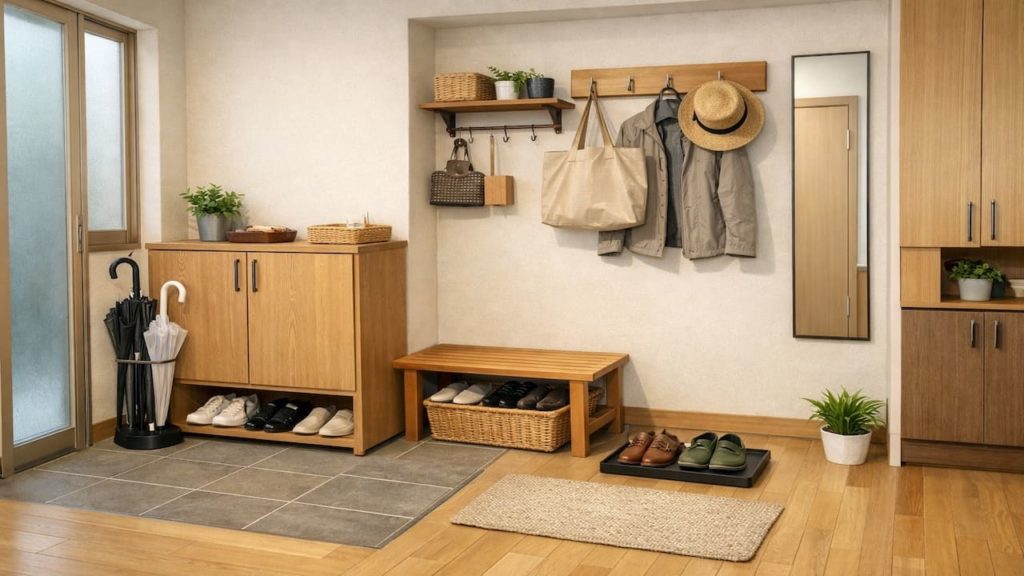
- Place slippers where guests can see them
- Practice line once before guests arrive today
- Switch to shorter words when hallway is tight
You may want to explain the whole culture, but that makes the moment heavier. Keep it short, then move the conversation forward. If they apologize, accept it and move on. Smooth movement is the real politeness — not speeches.
5. FAQs
Q1. What is the safest phrase to use with guests?
Try “Shoes off, please, right here.” Then point at the step line. In Japan apartments, the gesture helps more than extra words.
Q2. What if my guest already stepped onto the upper floor?
Keep it light and redirect them without shame. Say “Sorry, shoes off here” and point back. No shame. On rainy days, wet soles can mark floors fast in Japan.
Q3. How do I sound polite without sounding strict?
Use please plus a smile plus a clear point. Keep your tone low and relaxed. One calm sentence is enough — and the genkan flow stays smooth.
Q4. Should I explain the reason like tatami or cleanliness?
Only if they look confused. A quick “We keep the inside clean” is enough. In Japan, most people accept the rule once they see slippers.
Q5. What if my genkan is too small for two people?
Ask them to step slightly to the side after removing shoes. Keep one buffer space open near the door. Small Japan entryways work best with a simple path.
Pro's Tough Talk

I’ve been on site for 20+ years. I’ve worked on hundreds of jobs. Japan rainy season humidity makes genkan floors slick and cranky, and people rush because they feel the drip.
Three causes. You ramble and the guest freezes. You stay silent and hope they guess. You look annoyed, and the doorway turns into a traffic jam. Words without direction are like oil without a wrench.
Three steps. Pick one short phrase. Add one clear gesture to the step line. Move their body with space and slippers, like guiding water into a drain.
Kind words are a tool not a performance. Keep it steady, then talk about something else. That moment when a guest balances on one foot with an umbrella and panic eyes. That moment when someone steps up in socks, then realizes the shoes are still on.
Come on, stop making guests solve puzzles at the door.
Summary
Genkan awkwardness fades when you use one clear phrase and one calm gesture. Keep wet gear on the lower side during Japan rainy months, and keep the step line obvious.
If it still feels weird, reduce choices and reduce words. Put slippers in sight, keep the floor clear, and guide people to stand where the flow works best in small Japan homes. The best kindness is making the next step obvious.
Next visit, do this: say one line and point to the step, then move on like it was always normal.