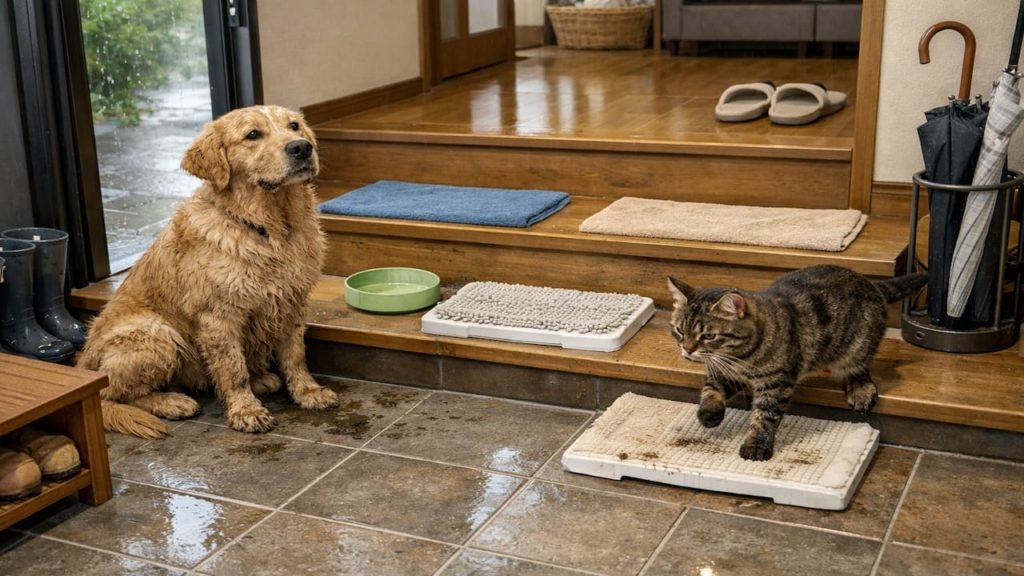
You step into a genkan and everyone pauses for a beat.
You want to offer slippers, but mixed signals can confuse guests and slow the doorway. In Japan, entryways are compact, and rainy season humidity makes wet soles and odor show up fast. If slippers drift into the wrong zone, the whole home feels messy. Small-space etiquette.
In this guide, you’ll learn 5 slipper mistakes to avoid with simple habits so your genkan stays smooth in Japan’s day to day life.

Hi, I’m Ken — I’m Japanese, and I live in Malaysia long-term, so I explain everyday life in Japan from a practical ‘from abroad’ perspective.
I hold a building design qualification and I’ve been on site for 20+ years across hundreds of jobs. I turn Japan’s unspoken rules into simple checks, so you can avoid costly mistakes and take the next step with clear actions that feel safe.
1. Genkan slippers etiquette: 5 mistakes
Slipper confusion starts when zones are not obvious.
In many Japan homes, the genkan step is a clean boundary, but slippers can blur it fast. During tsuyu, damp air lingers — and shared slippers can smell sooner than you expect. When guests hesitate, they block the narrow entry and bump bags into walls. Entryway flow. According to Kids Web Japan.
- Place indoor slippers at upper step edge
- Keep toilet slippers inside bathroom doorway only
- Turn slippers to face room after stepping up
- Wipe wet soles before touching indoor slippers
- Store extra pairs in a labeled basket
You might think guests will guess the rule, but guessing creates awkward moments and mistakes. Clear zones feel kinder than strict words. Set the boundary once, then let the layout teach it. Japan homes reward consistency.
2. Avoid confusion with simple habits
Make the first move obvious and repeatable.
Slippers work best when the action is automatic for the host and the visitor. In Japan apartments, the genkan is often one person wide, so you need a quick routine that does not block the door. Wet umbrellas and coats also compete for space in rainy months. Simple cues. According to Japan-guide.
- Point at slippers with open palm gesture
- Offer one pair and step aside calmly
- Keep slippers lined up in one direction
- Use a tray for wet socks or soles
- Return slippers to spot after each use
You may worry this feels picky, but it removes pressure for everyone. A calm setup reduces the need to explain — and that keeps the visit friendly. Keep the cues quiet and the genkan stays clean.
3. Why genkan slippers etiquette gets confusing
Confusion happens when slipper types mix in one view.
Most people understand shoes off, but slippers add a second decision at the doorway. In Japan, some rooms may have tatami, and many homes use separate toilet slippers, so the rule changes by zone. Humid seasons also make people rush to avoid drips and smell. Decision overload.
- Check if guests hesitate before stepping up
- Notice slippers drifting into hallway corners daily
- Look for toilet slippers near kitchen path
- Watch kids carry slippers into living room
- Smell cabinet air after rainy day returns
You might blame manners, but the system is usually unclear. When slippers look random, visitors choose wrong to avoid slowing others — then the mistake spreads. Show the rule with placement, not lectures. Japan entry life.
4. How to set a simple slipper routine
Build a one path routine from shoes to slippers.
Start by deciding where feet land, then place slippers where the hand naturally reaches. In Japan rainy season, keep wet gear on the lower floor side so the upper step stays dry. Add a quick reset after dinner so the morning entry is smooth. cost is mostly time/effort.
- Mark a shoe line along the lower floor
- Place slippers on upper step near wall
- Assign toilet slippers and keep them inside
- Set a small towel for quick sole wipes
- Do a nightly reset in two minutes
You may think you need special furniture, but routine beats equipment — every time. If the path is clear, guests follow it without thinking. Keep it boring, keep it daily, and confusion disappears. Japan small-home logic.
5. FAQs
Q1. Should I offer slippers to every guest in Japan?
Most homes do, especially in apartments where floors get dirty fast. Keep a few clean pairs ready and easy to grab. If someone prefers socks, do not force it.
Q2. What is the biggest slipper mistake at the genkan?
Mixing toilet slippers with indoor slippers. Keep toilet slippers inside the bathroom zone only. This prevents awkward moments and keeps hygiene clear.
Q3. Do slippers go on tatami?
Many homes avoid slippers on tatami because it can feel disrespectful and can scuff. If you see tatami, pause and follow the host’s lead. Ask once if unsure.
Q4. How do I manage slippers in a tiny entryway?
Keep only one visible line of slippers and store extras in a basket. Step aside after offering a pair so the door area stays clear. Small Japan genkan, big difference.
Q5. What if a guest walks inside with slippers still on?
Stay light and redirect without shame — say “This room is socks only” and smile. Point to a safe spot to leave slippers. Your calm tone sets the mood.
Pro's Tough Talk

I’ve been on site for 20+ years. I’ve worked on hundreds of jobs. Japan’s rainy season makes entry floors slick, and a sloppy slipper setup turns a genkan into a traffic jam. Genkan chaos.
Three causes. You toss slippers anywhere and hope guests read your mind. You mix toilet slippers with indoor slippers and pretend it is fine. You keep wet gear near the upper step, so the clean zone gets dirty fast. Come on.
Three steps. Put indoor slippers on the upper step in one line. Put toilet slippers inside the bathroom doorway and never move them. Reset the entry every night so the morning starts clean.
Slippers are a system not a decoration. Like a lane marker on a narrow road, they guide feet without words. That moment when a guest balances on one foot and the slippers are missing. That moment when a kid brings toilet slippers into the hallway.
Yeah, if your genkan needs a map, you already lost.
Summary
Slipper etiquette problems are usually layout problems. Make zones obvious, keep toilet slippers in the bathroom zone, and keep wet gear on the lower side in Japan’s rainy months. Calm entry.
If confusion keeps happening, your routine is not visible or not repeatable. Shrink the number of slipper choices, line them up, and reset nightly so the genkan always looks ready. Small habits win.
Do it today: set one clear slipper line and reset nightly and the shoes off flow stops feeling awkward in Japan.