Your genkan slippers feel fine until they smell, flatten, or pick up a gray film from rainy-day feet. Then you hesitate to wash them because you fear ruining the pair.
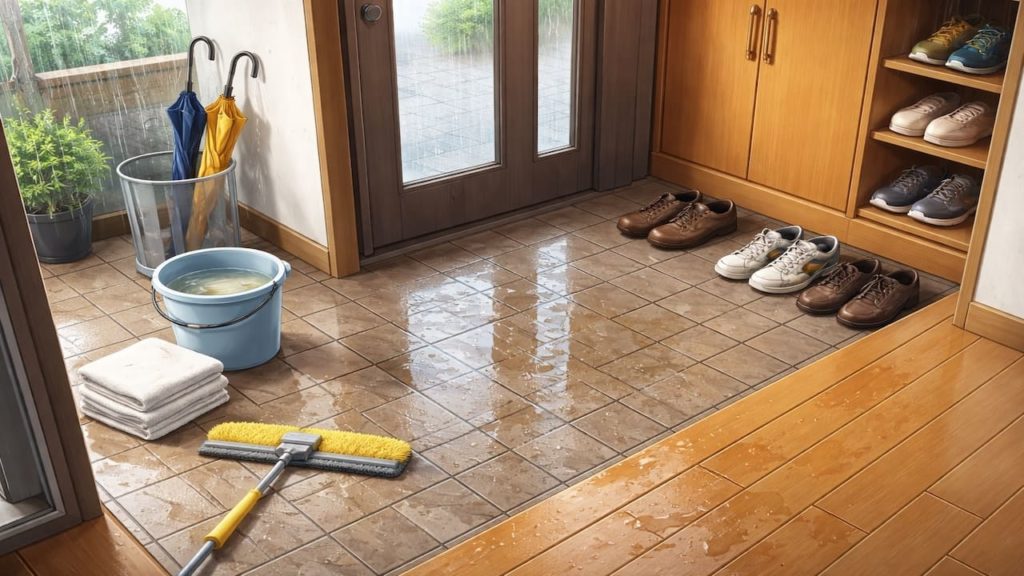
In Japan, tsuyu humidity and winter entry drafts keep slippers damp longer, especially in small apartments with little airflow near the door. Dirt also transfers fast because people change shoes in the same tight spot.
In this guide, you'll learn how to wash genkan slippers safely and keep them fresh while protecting shape and grip through Japan's seasons.

Hi, I’m Ken — I’m Japanese, and I live in Malaysia long-term, so I explain everyday life in Japan from a practical ‘from abroad’ perspective.
I hold a building design qualification and I’ve been on site for 20+ years across hundreds of jobs. I turn Japan’s unspoken rules into simple checks, so you can avoid costly mistakes and take the next step with clear actions that feel safe.
1. Genkan slippers wash: 5 steps
Wash only after you confirm material and weak points—it prevents most damage.
Genkan slippers come in mixed materials, so one method does not fit all. Japan's rainy season adds moisture that loosens glue and holds odor in fabric. Check the care note before you commit to water and spinning. MUJI notes some slippers are machine washable with a laundry net. According to Source.
- Check care label and note water temperature limit
- Inspect sole glue lines for any lifting edges
- Press insole and confirm foam bounce returns
- Smell toe area and spot hidden dampness
- Test colorfastness with damp cloth on seam
You might think slippers are cheap, so damage does not matter, but a ruined sole can turn slippery. Washing without checking also shrinks fabric and twists shape. Confirm the weak points first, then your wash becomes gentle and predictable. No surprises.
2. Keep pairs fresh without ruining them
Use low agitation and slow drying to protect shape—that is the safe combo.
Most slipper damage comes from harsh spin and high heat, not from water alone. In Japan's humid months, people over-dry with heaters, which hardens foam and warps soles. Use a laundry net so pairs do not tumble and scuff. MUJI also suggests putting slippers into a laundry bag for machine wash. According to Source.
- Place each slipper inside a mesh laundry net
- Select cold gentle cycle and mild detergent only
- Skip softener to keep fibers breathable longer
- Rinse twice when sweat smell stays strong
- Air dry with toes open for airflow
You may say hand washing is safer, and it can be, but many people wring too hard and deform the toe box. Gentle machine wash in a net can be less violent than rushed hand work. Choose the method you will do calmly, not angrily. Calm wins.
3. Why genkan slippers get smelly and misshapen
Damp time is the real enemy not dirt—odor and warping follow moisture.
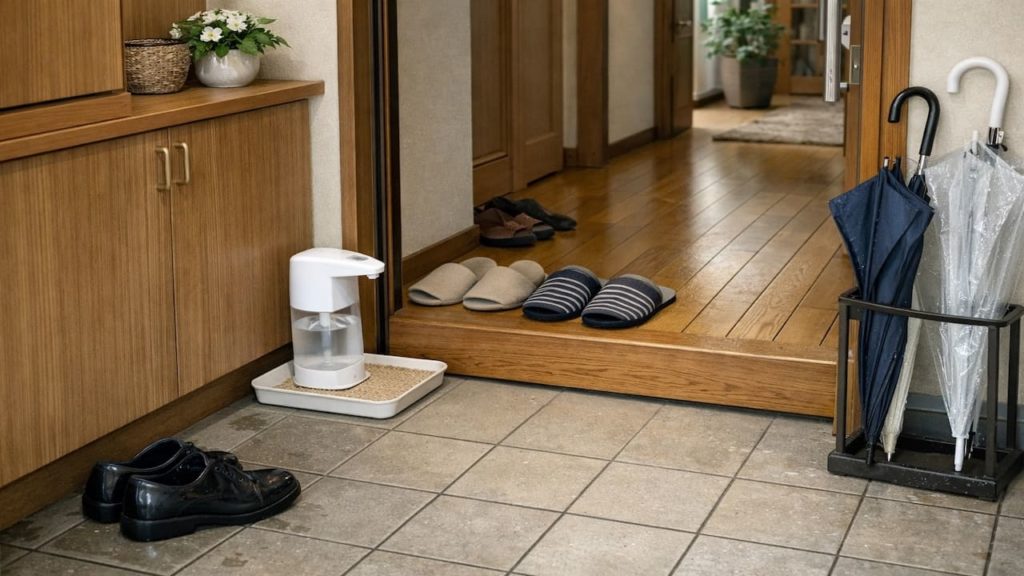
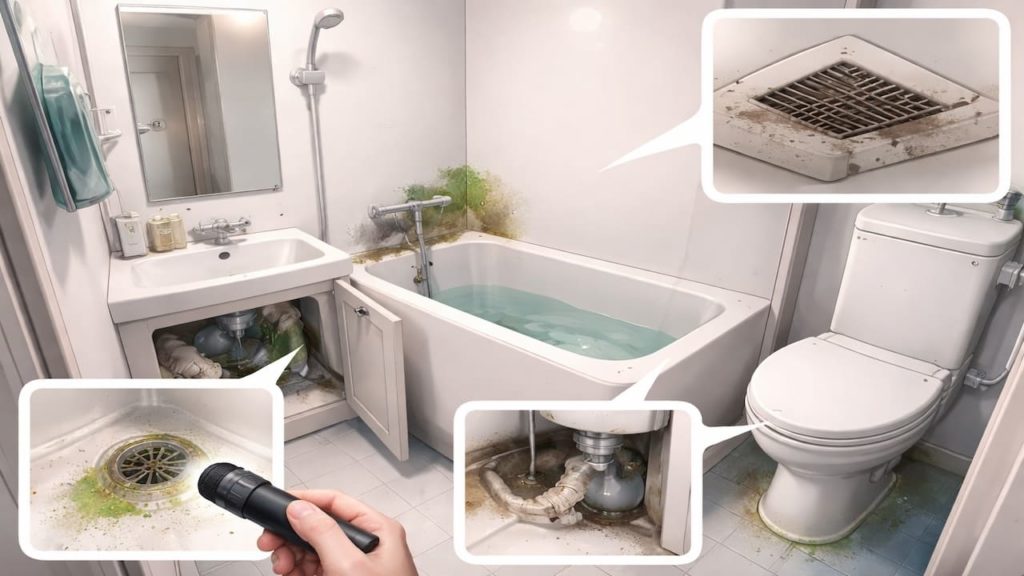
Slippers live near the door, where cold air, wet umbrellas, and muddy socks pass through. In Japan, tsuyu humidity slows drying, so bacteria and musty smell build when pairs stay damp. Misshaping happens when you wear them wet and the foam compresses unevenly. Daily squeeze.
- Notice slippers stored near the wet umbrella corner
- Check if pairs touch walls and block airflow
- Track how long soles stay cool and damp
- Look for toe curl from repeated wet drying
- Watch for slick soles from soap residue
You might blame your feet, but the setup is usually the cause. If slippers dry fully between uses, smell drops fast. If they never dry, even perfect washing cannot save them. Fix drying time and the shape holds longer. Dry time.
4. How to wash and dry slippers the right way
Do a simple wash then reshape and dry with airflow—to keep them comfortable.
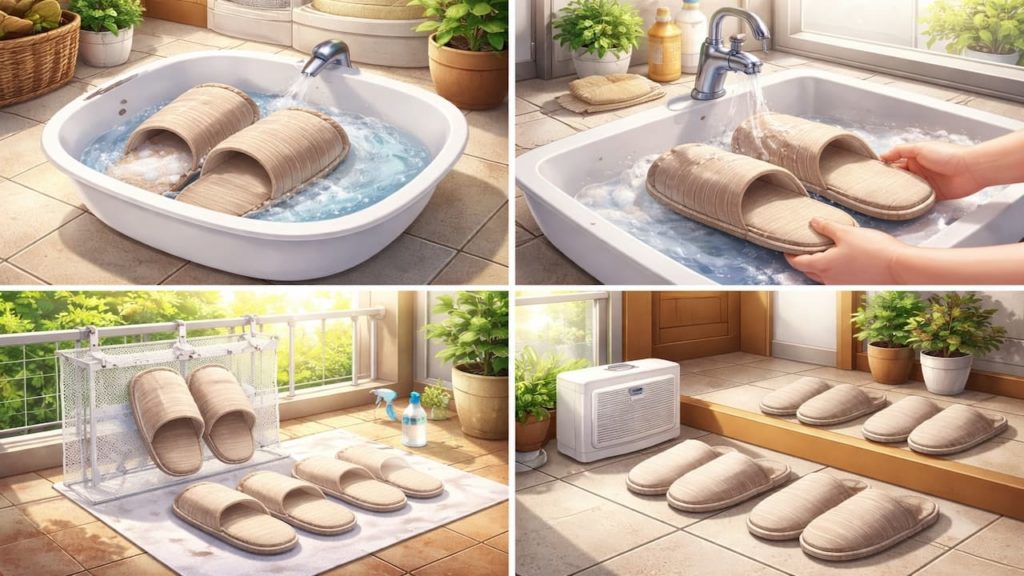
Start by removing loose grit, then wash gently, then dry slowly away from direct heat; basic supplies can be ¥100–500 for a mesh laundry net. Japan winter makes genkan air cold, so move slippers to a ventilated indoor spot once they stop dripping. Keep soles off wet tataki tile so they do not reabsorb water. Airflow matters.
- Brush off grit and rinse mud from soles
- Wash in net on gentle cycle only
- Press water out with towel without twisting
- Reshape toe box using rolled towel inside
- Dry near fan with opening facing airflow
You may want to use a dryer for speed, but heat can shrink fabric and harden foam. Sun baking can also fade color and stiffen glue. If you must speed up, use airflow, not heat, and rotate pairs so each fully dries. Slow is fast.
5. FAQs
Q1. Can I machine wash most genkan slippers?
Machine wash only if the care note allows it. Use a mesh net and a gentle cold cycle — then air dry. If soles are glued or fuzzy, be extra gentle.
Q2. How often should I wash slippers in rainy season?
Wash when smell starts or the lining feels sticky. In Japan's humid months, drying between uses matters more than frequent washing. Rotation.
Q3. How do I remove stubborn odor without harsh chemicals?
First dry them fully, then wash with mild detergent and extra rinse. Leave them in moving air until the liner feels dry and warm. Odor drops when moisture disappears.
Q4. Why did my slippers become stiff after washing?
High heat and over-drying can harden foam and fabric. Avoid heaters and direct sun, and dry at room temperature with airflow. Gentle drying keeps softness.
Q5. My slippers slip more after washing, what happened?
Soap film can stay on the sole and reduce grip. Rinse well and wipe soles with a damp cloth, then dry fully. If the sole is worn smooth, replace the pair.
Pro's Tough Talk

I've been on site for 20+ years. I've worked on hundreds of jobs. Japan's rainy season makes slippers stay damp by the door, and winter drafts keep the genkan cold. Classic scene: you step into a wet pair and feel that cold squish.
Three causes, easy. You wash too hard and twist the toe box. You dry too fast with heat and cook the foam. You store them near wet umbrellas, so they never fully dry, like laundry in a fridge. Another scene: you grab the same pair every day because it is closest.
Come on.
Do it in 3 steps. Check the care note and use a net. Press water out with a towel, do not wring. Dry with airflow, not heat, like a sponge left in a plastic box.
Let them dry fully once and the smell stops bullying you. Then rotate pairs so each one gets real dry time.
Keep wearing damp slippers, and enjoy your personal foot sauna.
Summary
Confirm material first, then wash gently in a net and rinse well. The goal is clean and intact, not aggressively scrubbed.
If slippers keep smelling, your drying setup is failing — move them away from the cold genkan corner. Open the toes, and give them airflow every time. Routine.
Wash calmly then dry completely before the next wear and your genkan pairs stay fresh through Japan's wet seasons.