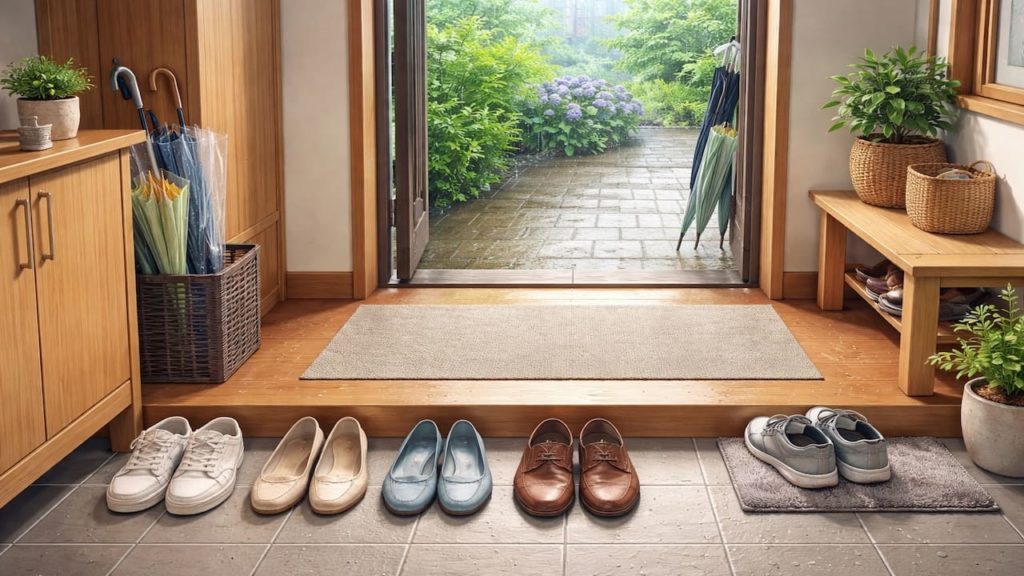
You notice wall scuffs in the genkan the moment the light hits the corner. Then you wonder if it is your fault, or just the home being tight.
In Japan, rainy season umbrellas, winter coats, and humid summers add moisture and grit to the entry. Narrow hallways and sharp turns make bumps more likely.
In this guide, you'll learn how to stop genkan wall scuffs without babying the space. You'll protect doors and corners, clean marks safely, and keep the pathway clear.

Hi, I’m Ken — I’m Japanese, and I live in Malaysia long-term, so I explain everyday life in Japan from a practical ‘from abroad’ perspective.
I hold a building design qualification and I’ve been on site for 20+ years across hundreds of jobs. I turn Japan’s unspoken rules into simple checks, so you can avoid costly mistakes and take the next step with clear actions that feel safe.
1. Genkan wall scuffs: 5 tips
Protect the first impact points before you chase stains.
Most scuffs come from the same few moves in a Japanese entry. You turn to step up, swing a door, and lift bags in a narrow lane. In rainy months, wet soles bring grit that rubs like powder on paint. Tight homes magnify small hits — even careful people scuff. Daily friction.
The genkan typically has a lower tataki and a raised step that marks the boundary between outside and inside. According to Source.
- Mark the corner where bags hit most
- Check door swing arc for handle contact
- Look for suitcase wheel tracks along baseboards
- Spot paint chips at the step edge line
- Test light angle to reveal dull scuff zones
You might think scuffs are cosmetic and not worth attention, but they signal repeated impacts. Those impacts also dent trim, loosen door stops, and make cleaning harder. Fix the pattern first, then clean what remains. Less stress.
2. Protect doors and corners in tight homes
Add simple buffers where your body cannot avoid contact.
In small Japanese apartments, you will brush past corners no matter how careful you are. Wet-season routines add more gear, so elbows, stroller handles, and umbrella tips wander. A thin protector stops paint wear and keeps the edge crisp — that is the low effort win. Soft barrier.
Melamine cleaning sponges can remove scuffs, but they wear away while scrubbing and can shed microplastics into the environment. According to Source.
- Stick clear corner guards on outer corners
- Install door stops to prevent knob dents
- Hang bags higher to avoid wall brushing
- Park strollers on a tray away from walls
- Use a slim shoe rack to open walkway
You may worry protectors look cheap, but clear guards disappear at a distance. If you hate the look, place them at hip height only, where impacts happen. The goal is fewer repairs and fewer arguments at the door. Calm entry.
3. Why genkan walls scuff so easily
Scuffs happen because you pivot and squeeze past gear.
The genkan is a turn zone, not a straight hallway — corners lose first. You rotate to remove shoes, step up, and reach for storage in one motion. In Japan's humid season, damp grit transfers from soles to the tataki, then to walls by contact. Corners take the hit first. Turning space.
- Notice where your shoulder grazes the corner
- Watch umbrella tips tap walls during entry
- Track which door edge hits on windy days
- See how deliveries force sideways stepping moves
- Check if slippers slide into the wall line
Some people blame low-quality paint, but even premium paint loses against daily bumps. The deeper issue is traffic flow. When you widen the lane by even a few centimeters, scuffs drop fast. Simple geometry.
4. How to prevent and clean genkan wall scuffs
Combine prevention and gentle cleaning so marks stop returning.
Start with prevention on corners and door swing points — then clean only what stays visible. Basic supplies like clear guards, a door stop, and a microfiber cloth often cost ¥500–3,000. In Japan's rainy season, wipe grit first, then spot-clean, then dry the area so damp does not linger. Fast loop.
- Wipe grit off walls using dry microfiber
- Dab mild soap water on fresh scuff marks
- Test melamine sponge on hidden paint patch
- Dry the spot fully before closing doors
- Reposition storage to widen the entry lane
You might want to scrub hard, but aggressive rubbing can dull paint and make a larger matte patch. Go gentle, and stop when the wall looks even. If a mark will not lift, cover it with a protector and change the impact point. Done.
5. FAQs
Q1. What causes black marks on genkan walls?
Most black marks are rubber or grime transferred by contact. Bag straps, stroller handles, and shoe soles can leave them when you pivot in a tight lane. Reduce contact first, then clean lightly.
Q2. Can I use a melamine sponge on painted walls?
You can, but test first in a hidden spot. Melamine is mildly abrasive, so it can dull soft paint finishes. Use light pressure and stop early.
Q3. What is the best protector for rental homes?
Use removable clear guards and low-tack pads when possible. Avoid strong adhesives that pull paint. If unsure, place protection where it overlaps trim.
Q4. How do I stop door handles from hitting walls?
Add a door stop — then adjust the opening angle. Also clear the floor so you do not swing the door wider to step around shoes. Small change.
Q5. How do I prevent stroller scuffs in the genkan?
Park the stroller on a tray and face the handle away from the wall. Wipe wheels before the step up during wet months. Keep the lane clear.
Pro's Tough Talk

I've been on site for 20+ years. I've worked on hundreds of jobs. Japan's rainy season makes the genkan a wet, gritty bottleneck, and walls take the abuse. You bump the stroller handle while juggling keys. You swing the umbrella and tap the corner without noticing.
Three causes. One, you keep too much at the entry, so you move sideways. Two, door swing and knobs hit the same spot again and again. Three, grit acts like fine sandpaper when it rubs on paint. Like a suitcase grinding a curb. Like a bumper car in a narrow lane.
Seriously.
Do it in 3 steps. First, clear one lane and move bulky stuff back. Second, add guards on corners and a door stop. Third, wipe grit dry, then spot-clean gently, then dry the wall.
Fix the flow and the scuffs stop being your daily background noise. Do it once, then enjoy the quiet entry.
Or keep collecting wall scars like they're souvenirs.
Summary
Find the impact points, protect them, and you will stop most genkan wall scuffs. Tight Japanese homes need traffic rules more than perfect paint.
If marks keep coming back, your lane is too narrow or your door swing is unchecked. Move one item, add one buffer, and watch the difference. Practical.
Pick one corner today and protect it properly, then let the rest of the entry breathe.