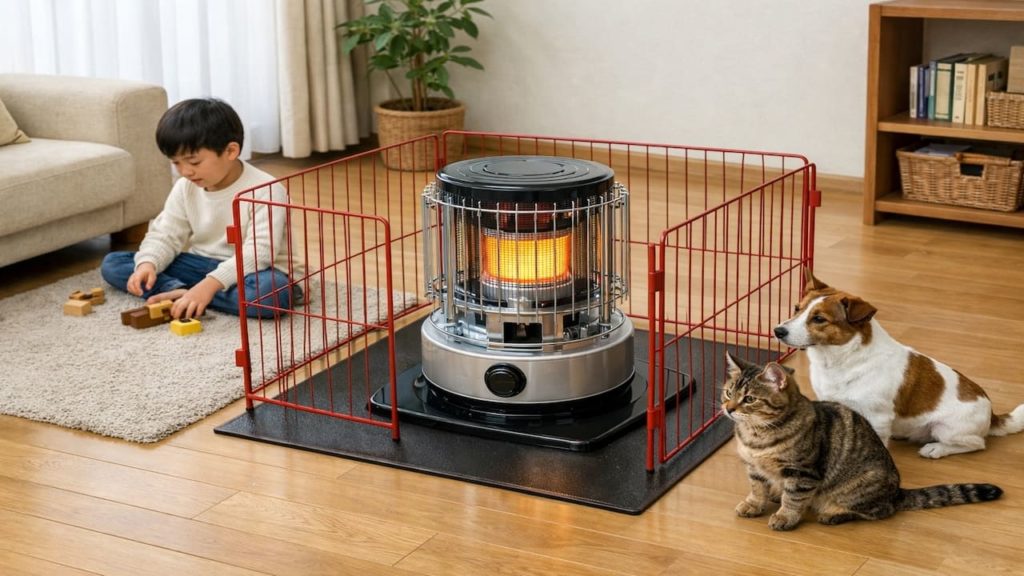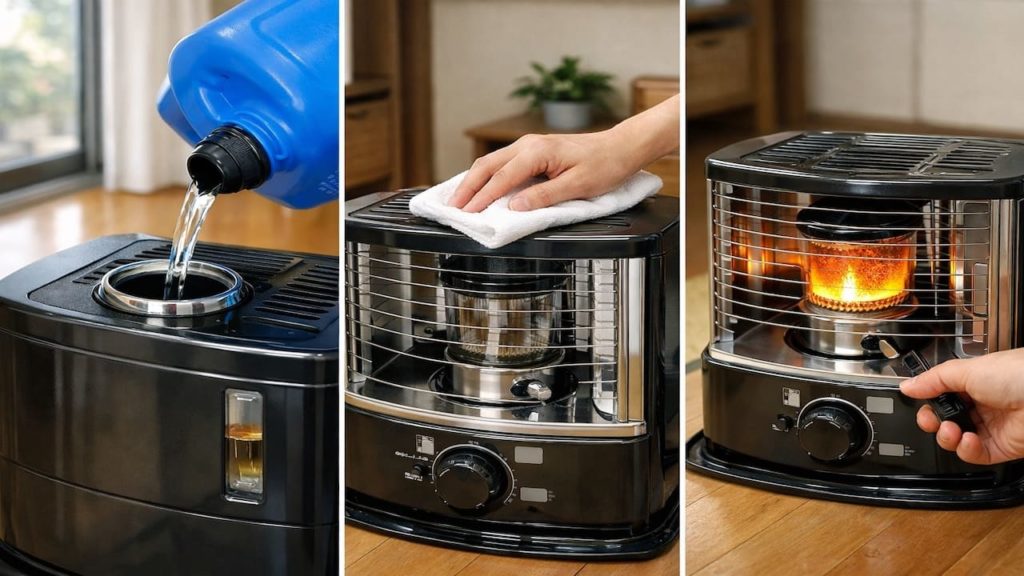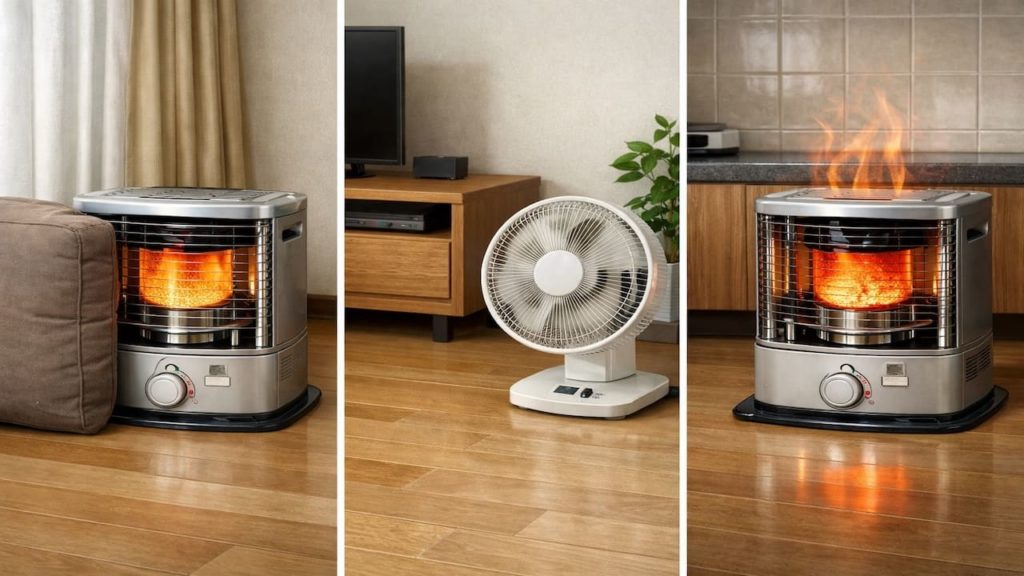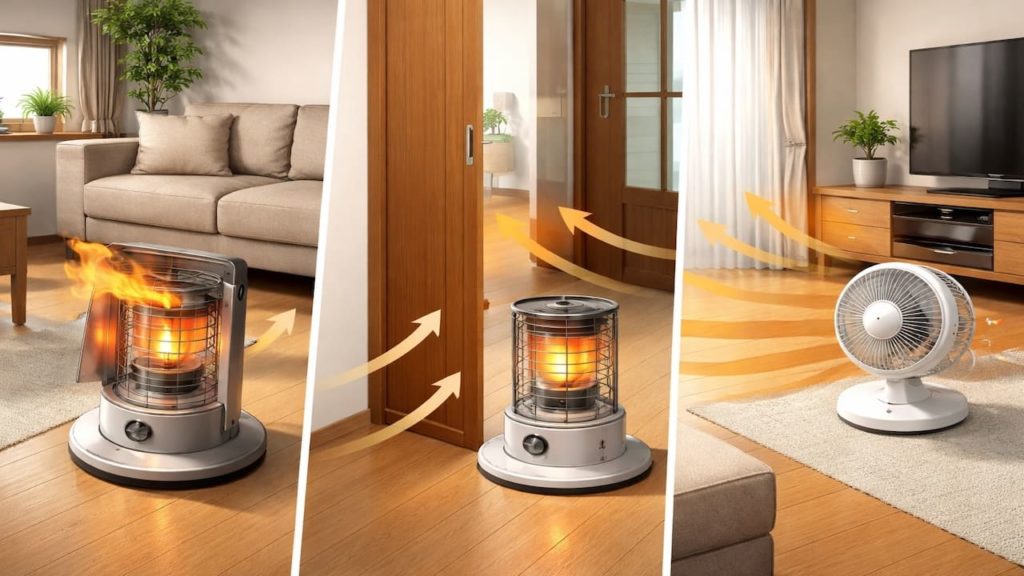
Your kerosene heater warms one spot, but the rest of the room still feels cold. You want even warmth, not a “one hot chair” lifestyle.
This happens when heat gets trapped near the heater, cold air pours in from gaps, or airflow never mixes. In Japan, winter apartments often have thin doors and drafty edges, so uneven comfort shows up fast.
In this guide, you’ll learn how to spread kerosene heater warmth evenly in a Japanese room without over-heating. You’ll adjust reflector angle, manage door gaps, and use a fan assist the safe way.

Hi, I’m Ken — I’m Japanese, and I live in Malaysia long-term, so I explain everyday life in Japan from a practical ‘from abroad’ perspective.
I hold a building design qualification and I’ve been on site for 20+ years across hundreds of jobs. I turn Japan’s unspoken rules into simple checks, so you can avoid costly mistakes and take the next step with clear actions that feel safe.
1. Want even warmth from a kerosene heater 5 tips
Even warmth comes from moving heat on purpose—Japan’s winter rooms rarely do it for you.
Kerosene heaters create strong radiant heat near the front and warm air that pools at the ceiling. If the room has drafts, the cold air stays low and keeps your feet cold. In Japanese apartments, floor-level living makes that contrast feel brutal. You can fix it with small layout changes and steady airflow.
Oil heater guidance in Japan emphasizes safe placement and ventilation habits during use. According to METI.
- Aim heater toward open space not a wall
- Keep flame low and steady for stability
- Use a small fan to mix warm air
- Close curtains but keep them off heater path
- Clear clutter so heat can travel freely
You might crank the heater higher to “reach” the far side. That often overheats the near zone and still leaves cold corners. Spread first, then adjust heat. Airflow beats brute force.
2. Reflector angle door gap fan assist
Three tweaks give the biggest jump: aim the reflector smartly and stop drafts while mixing air gently.
Reflector direction changes where the radiant heat lands, so point it toward the area you actually sit. Door gaps feed cold air low along the floor, so seal the bottom edge or block the draft path. Fan assist works best when it pushes cool floor air toward the heater, not when it blasts hot air around. Japan rooms are small, so a gentle push is enough.
For avoiding accidents, keep combustibles away from heater airflow and surface heat. According to nite.go.jp.
- Tilt reflector toward your seating zone
- Move heater away from walls and corners
- Block door draft with towel or draft stopper
- Place fan low and point toward heater
- Leave a small door gap for air exchange
You may think a fan should blow from heater to room. That often just makes a hot gust near the unit. Push cold air to the heater and let the warm air replace it. Simple circulation.
3. Why kerosene heat feels uneven in Japanese rooms
It feels uneven because radiant heat and drafts fight in Japan’s winter apartment layout.
Radiant heat warms what it hits, not the whole air volume evenly. Warm air rises and sits near the ceiling, while cold air stays low by doors and windows. If you sit on the floor, you live in the cold layer. Japanese sliding doors and thin walls can leak air more than you expect.
- Check feet feel cold while head feels warm
- Notice one corner is always colder
- Feel draft near door bottom edge
- Watch curtains move even with windows shut
- See condensation near the coldest window pane
You might blame the heater size, but many times the room flow is the real issue. Fix drafts and mixing first, then decide if the heater is underpowered. Diagnose before you buy. Room physics.
4. How to get even warmth without overheating
Use a routine and your whole room feels warmer without pushing the heater hard.
Start by sealing low drafts, then aim the heater at open space, then add gentle mixing with a low fan. If you already have a small fan and a towel draft stopper, cost is mostly time/effort. Avoid placing anything directly in front of the heater that could dry, curl, or fall. After setup, keep the flame stable instead of chasing temperature every five minutes.
- Seal low drafts before you start heating
- Point heater at open area for radiation spread
- Use fan low to lift cold air
- Rotate seating location before raising heat output
- Vent briefly each hour to keep air fresh
You may think “sealing drafts means no ventilation.” Not the same thing. Seal the low leak, but ventilate on a schedule. If you did this and it still fails, next is adding a reflective board behind the heater or switching heater position. Stop brute forcing it.
5. FAQs
Q1. Where should I aim the heater for the most even warmth?
Aim it toward open space where you sit and spend time, not straight at a wall. That lets radiant heat spread and reduces one-hot-spot discomfort.
Q2. Does sealing door gaps make air quality worse?
It can if you never ventilate, so keep short planned ventilation. Sealing drafts is about comfort, while ventilation is about fresh air and safety.
Q3. What fan setup works best?
Place the fan low and push cool air toward heater so warm air replaces it naturally. Keep the fan gentle and avoid blowing fabric toward the heater.
Q4. Why are my feet cold even when the room reads warm?
Warm air rises, so the floor layer stays colder, especially in Japanese apartments with drafts. Mixing air and stopping low drafts solves that fast.
Q5. Should I raise the flame to heat corners?
Not first, because it overheats your near zone and still leaves drafts. Fix airflow and drafts, then adjust flame only if needed.
Pro's Tough Talk

I’ve spent 20+ years working around Japanese homes, so I’ve seen what tends to work—and what tends to go wrong—in everyday use. I’ve been on site for 20+ years. I’ve worked on hundreds of jobs. Japan’s winter draft habits make people heat the room like they are trying to warm a leaky bucket.
Cause 1: you let cold air crawl in at floor level, so your feet live in a freezer layer. Cause 2: you aim the heater at a wall, so heat bounces back like yelling at a pillow. Cause 3: you never mix air, so the ceiling gets tropical while your knees stay sad. You sit right in front of it, then complain the far side is cold. You crank the flame, then wonder why you feel sleepy and the room still has cold corners.
Block the door draft right now.
Today aim the reflector at your seating zone.
This weekend add a low fan to mix air.
Do this and your room warms like a system instead of a spotlight. If you did this and it still fails, next is repositioning the heater or adding a reflective board.
Nope.
If your heater is a spotlight, that is not “cozy,” that is you refusing to move air.
Summary
Aim the reflector, stop low drafts, and mix air gently for even warmth. Japan’s winter apartments make floor-level drafts feel stronger than the thermostat suggests.
Keep the flame low and steady, then adjust only after airflow is fixed. If cold corners remain after two nights, reposition the heater or add a reflective board behind it.
Tonight do draft block plus low fan assist and feel the difference at floor level. Then keep browsing for more winter home habits that fit Japanese apartments.