You use a kerosene heater at home because it is quick warmth, but the fire risk sits in the back of your mind. You want practical prevention, not scary stories.
Most accidents start with simple setup mistakes like clutter, curtains, or sloppy refueling, then they escalate in seconds. In Japan, winter rooms are compact and sealed, so hazards feel closer.
In this guide, you’ll learn how to prevent kerosene heater fires at home with five realistic habits. You’ll clear clutter, keep curtains back, and build a safe routine that fits Japanese home life.

Hi, I’m Ken — I’m Japanese, and I live in Malaysia long-term, so I explain everyday life in Japan from a practical ‘from abroad’ perspective.
I hold a building design qualification and I’ve been on site for 20+ years across hundreds of jobs. I turn Japan’s unspoken rules into simple checks, so you can avoid costly mistakes and take the next step with clear actions that feel safe.
1. Kerosene heater fire prevention at home 5 tips
Fire prevention is mostly keeping a clear safety zone—especially in Japan’s tight winter apartments.
Heaters throw strong radiant heat, and nearby items can dry, curl, and ignite without drama first. A small bump can move a hanger, a magazine pile, or a chair into the hot area. Japan homes often have low tables, floor seating, and packed storage, so “just for now” clutter becomes permanent. Start by controlling what can reach the heater.
Japan’s METI urges people to remove accumulated dust and confirm safety devices before using oil heaters each season. According to METI.
- Clear papers and boxes from heater safety zone
- Keep curtains tied back and away from heat
- Place heater on flat noncombustible stable surface
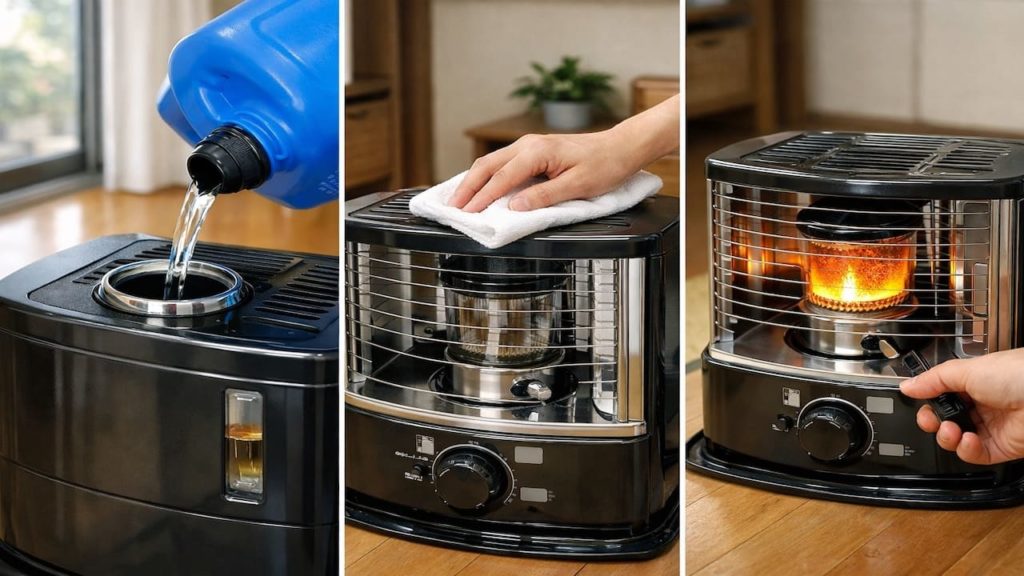
- Turn heater off before refueling or moving it
- Keep kids and pets outside heater perimeter always
You might think a low flame makes it harmless. Items still heat up, and thin fabrics ignite faster than you expect. Build a boring clear zone and you remove most surprises. Safe space first.
2. Clear clutter keep curtains back
Your biggest win is stopping fabric from drifting—because Japan rooms love soft clutter.
Curtains, bedding, and laundry racks are the usual offenders because they move when you walk past. Even if nothing touches the heater, hot airflow can dry fabric and make it easier to catch later. Japan apartments often use light curtains and narrow walk paths, so brush contact happens more than you admit. Treat anything that can swing, slide, or fall as a risk.
NITE has warned about laundry placed near kerosene heaters dropping and catching fire, along with other common misuse patterns. According to nite.go.jp.
- Remove laundry racks from heater airflow path
- Leave a clear walkway between heater and exit door
- Store fuel can upright in cool ventilated spot
- Set a timer for short ventilation breaks hourly
- Check curtain edges cannot drift toward heater ever
You may tell yourself you will watch it. Then you answer a message, and the rack shifts. Prevent drift. Soft clutter.
3. Why kerosene heater fires start so easily
Most fires start because heat meets a moving fuel—and Japan’s home layout puts both close together.
Combustible items are everywhere: curtains, futon covers, paper bags, and plastic storage bins. Heat dries and weakens materials, so they ignite with less contact than you expect. Refueling mistakes also matter because spilled kerosene can flash when it hits hot parts. Japan’s winter habit of closing rooms can trigger panicked moves.
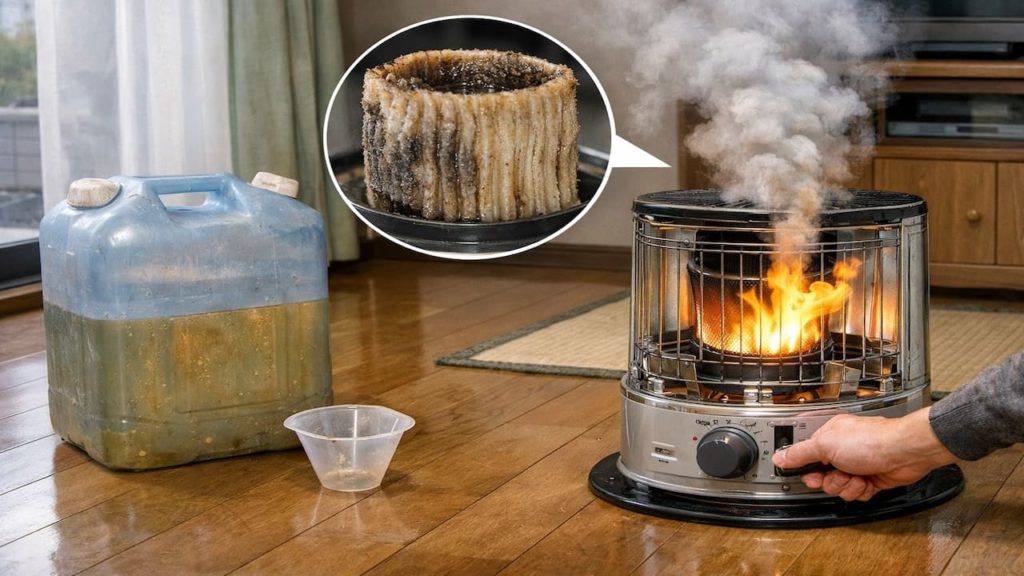
- Notice soot smell after bumping heater body slightly
- Watch flame color for dull orange tips often
- Feel airflow blocked by furniture or laundry nearby
- Spot dry scorch marks on curtain hems
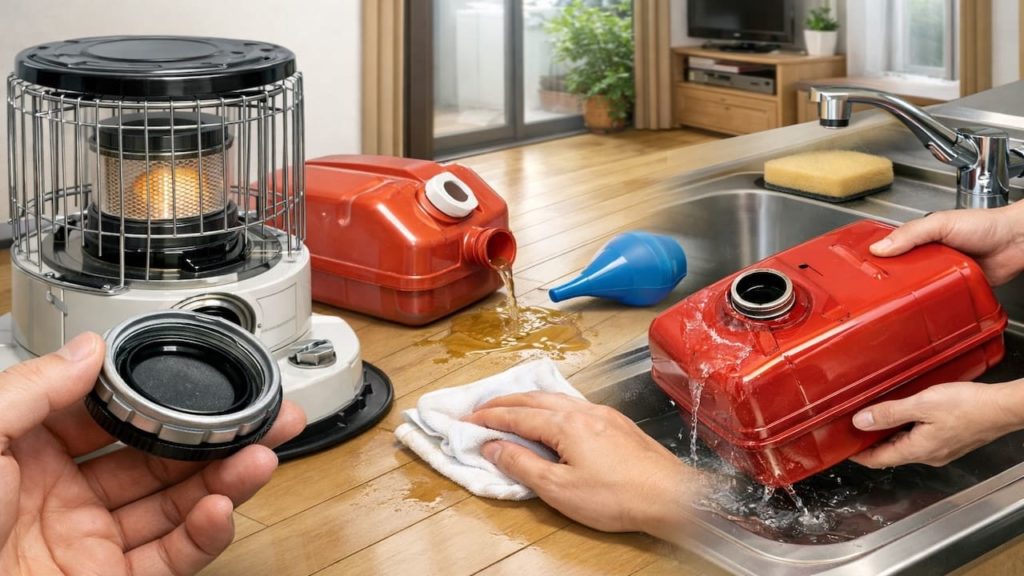
- Check floor for spilled fuel during every refill
You might assume safety devices will save you every time. They help, but they cannot stop a curtain that falls onto heat. Use the devices as backup, not permission. Room physics.
4. How to set up a fire-safe heater routine
Use one routine and you cut fire risk hard—even in a small Japanese apartment room.
Start with layout, then tools, then habits, and do it the same way each night. If you need a smoke alarm, a small extinguisher, or a fireproof mat, ¥2,000–8,000 covers many options. Keep ventilation short but regular, and never refuel while the heater is running. Make “exit ready” part of the ritual.
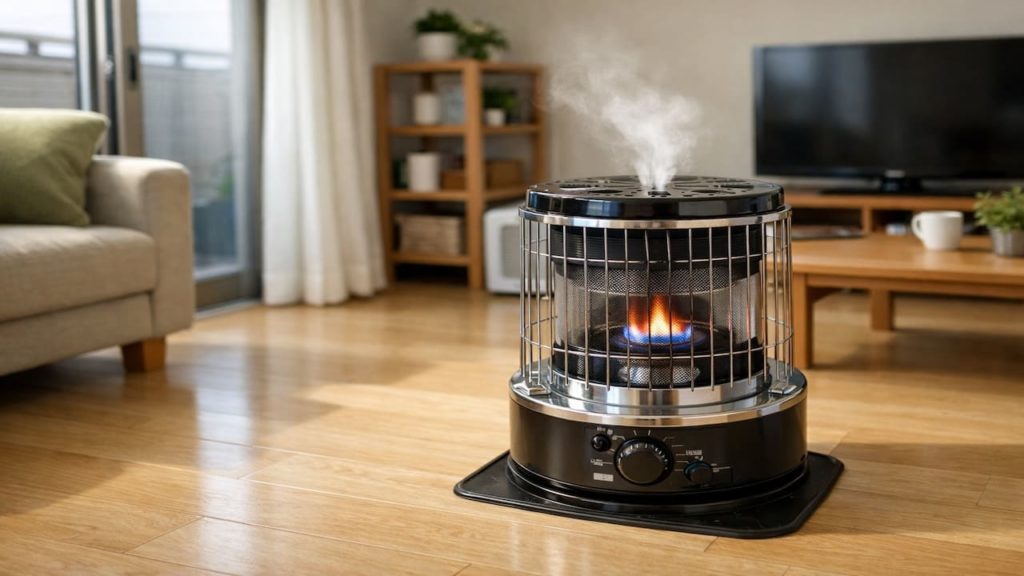
- Create a 1-meter clear heater zone around it
- Install a smoke alarm near hallway ceiling today
- Keep a small extinguisher by the exit inside home
- Practice cutoff lever motion with eyes closed once
- Vent briefly after refueling and after shutdown too
You may worry this is overkill. In Japan, one cramped room can turn a tiny flame into a fast room fire. If you did this and it still fails, next is stopping use and getting the heater inspected or replaced. Decision line.
5. FAQs
Q1. How far should curtains and laundry be from the heater?
Far enough that they cannot drift into the heat—even if you bump the rack. If you are unsure, move the heater or the rack, not the curtains.
Q2. Can I refuel if the heater is still warm?
Wait until it is fully off and stable, then refuel carefully and wipe any drops. Rushing refuel is where spills and flash-ups begin.
Q3. What should I do if a curtain touches the heater?
Turn it off and air the room right away. Then check for scorching and reset the layout so it cannot happen again.
Q4. Is it okay to leave a kerosene heater on while sleeping?
No, because you cannot react fast if something shifts or the air gets bad. In Japan apartments, shut it down before sleep and warm the room earlier instead. Small rooms.
Q5. Where should I store kerosene and fuel tools?
Store them upright in a cool ventilated spot away from heat sources. Keep caps tight and keep the pump or nozzle clean to avoid drips.
Pro's Tough Talk

I’ve spent 20+ years working around Japanese homes, so I’ve seen what tends to work—and what tends to go wrong—in everyday use. I’ve been on site for 20+ years. I’ve worked on hundreds of jobs. In Japan winter apartments, I get why you keep it close, but fabric fires are instant.
Cause 1: you park the heater next to soft stuff, like parking a barbecue under a paper umbrella. Cause 2: you let clutter creep in, like snow piling on a narrow road until nothing moves. Cause 3: you refuel in a hurry and trust luck more than routine. You hang a towel “just to dry it” and it slowly leans closer. You stack a magazine pile by the warm spot and it becomes furniture.
Kill the flame and clear the zone now. Today tie curtains back and move laundry racks away. This weekend rehearse extinguisher and cutoff lever steps.
Do it right and your heater stops being a fire magnet. If you did this and it still fails, next is stop using it and get it inspected or replaced.
Seriously. If your “cozy corner” needs a curtain inches away, it is not cozy, it is a dare.
Summary
Fire prevention is clear space, stable placement, and calm refueling habits. In Japan’s winter rooms, clutter and curtains are the fastest path to trouble.
Use one routine each night and keep your exit path ready as part of the setup. If you see scorching, repeated smoke, or unstable burning, stop using the heater and move to inspection.
Tonight do one clear zone plus curtain control before you light it. Then browse more winter home safety habits to keep warmth predictable.