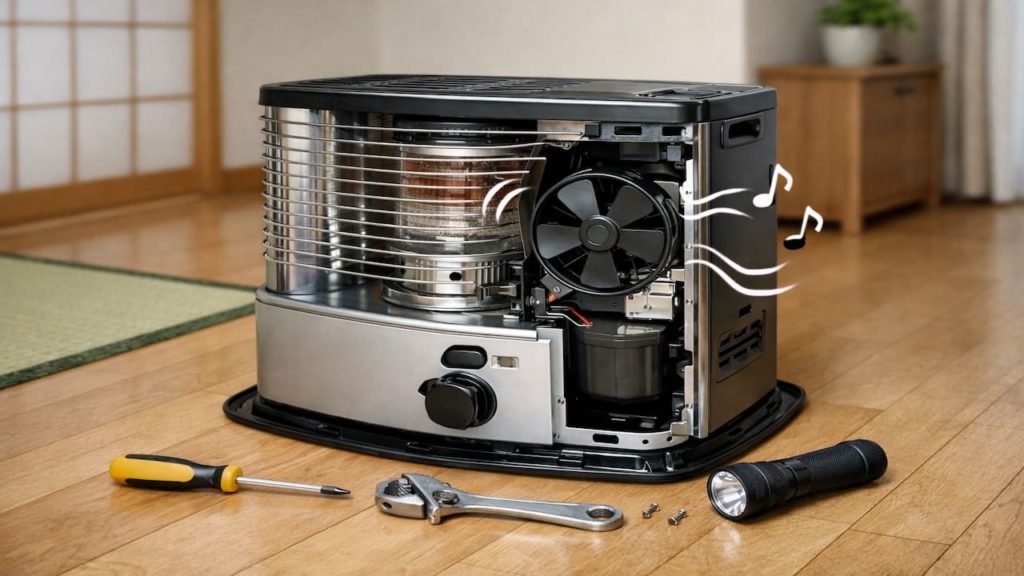
Your kerosene heater works, but it sounds like it’s angry at you. Rattles, buzzing, squeals, and that low vibration can ruin the whole room.
Noise is usually a setup or airflow problem, not a “broken heater” right away. In Japan winter housing, tight rooms and drafts amplify every small mistake.
In this guide, you’ll learn how to diagnose kerosene heater noise without unsafe hacks. You’ll check loose parts, fan rub, and vibration causes, then decide the next move.

Hi, I’m Ken — I’m Japanese, and I live in Malaysia long-term, so I explain everyday life in Japan from a practical ‘from abroad’ perspective.
I hold a building design qualification and I’ve been on site for 20+ years across hundreds of jobs. I turn Japan’s unspoken rules into simple checks, so you can avoid costly mistakes and take the next step with clear actions that feel safe.
1. Why your kerosene heater is noisy 5 checks to try
Most heater noise is a fixable warning — not a reason to panic.
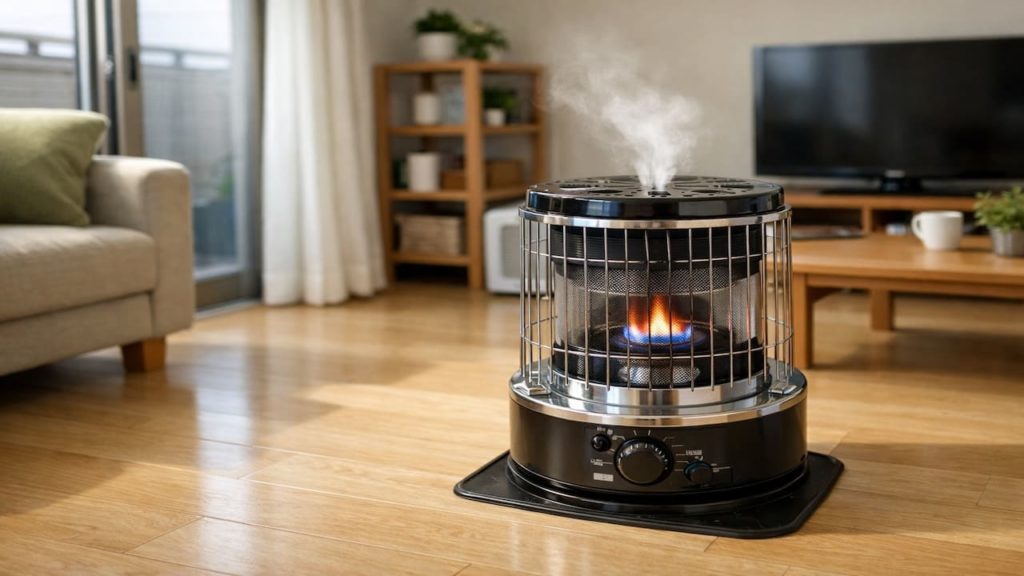
In Japan homes, heaters sit close to walls, low tables, and laundry racks, so small contact points become loud. A light rattle often means a cover, guard, or handle is vibrating. A squeal or scraping can be a fan rubbing or dust buildup. A deep hum can be base wobble or fuel flow issues.
Season-start checks like dust removal and confirming safety devices help prevent abnormal operation. According to meti.go.jp.
- Check top cover and side panels for play
- Confirm heater sits flat with no rocking
- Inspect air intake for lint and dust
- Listen for fan scrape during startup cycle
- Move nearby objects away from heater body
You might think noise is “normal” in winter. But new sounds are signals, and ignoring them can lead to soot, smell, or sudden shutoff. Do the quick checks first, then enjoy the heat.
2. Loose parts fan rub and vibration
Find the sound type first and you’ll stop guessing.
Japan apartments often have mixed flooring, and a small tilt can turn into a constant buzz. Loose handles and guards rattle at certain flame levels. Fan heaters can scrape if dust or a warped panel touches the fan path. Vibration can also come from fuel flow issues, especially when contaminants collect.
Some manuals note that water or waste particles can cause vibration and noise. According to toyotomi.jp.
- Tighten loose screws on covers and handles
- Remove dust from intake and fan grille
- Re-seat the tank until it sits flush
- Place a rigid board under soft flooring
- Lower flame slightly and recheck the sound
You might want to press the casing to “make it stop”. That’s how fingers get burned and parts bend. Fix the fit and the base instead, and the noise usually drops fast.
3. Why kerosene heaters get noisy in winter rooms
Noise happens when air and heat fight your room layout — especially in Japan winter drafts.
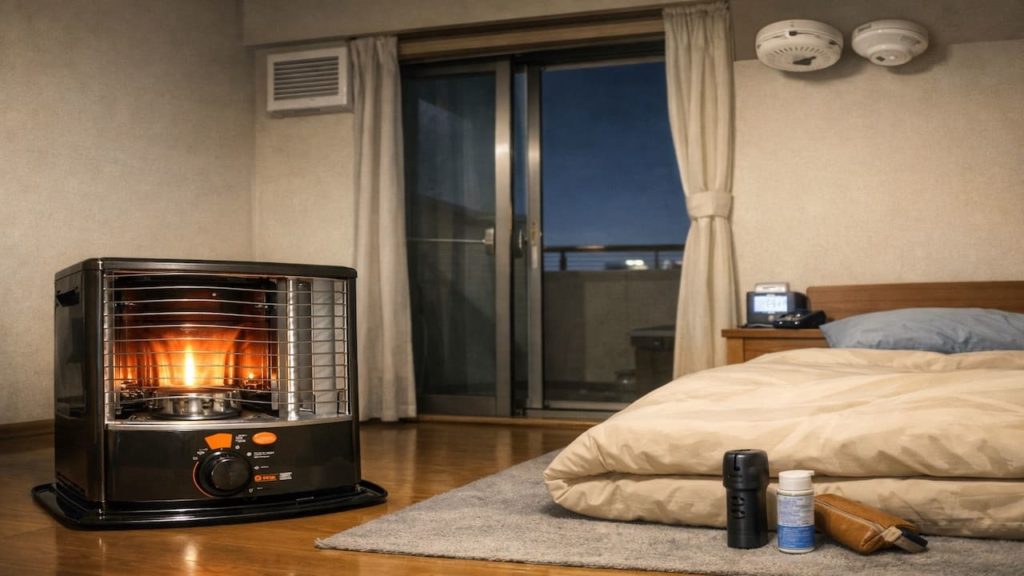
If warm air is blocked by furniture, the heater cycles harder and fans can ramp up. Drafts from doors and vents make combustion fluctuate, which can sound like pulsing or whooshing. A slightly uneven floor makes the whole body resonate like a drum. Room physics.
- Clear airflow lane from heater to seating
- Keep laundry racks away from heater outlet
- Close unused room doors to reduce drafts
- Ventilate briefly then return to steady burn
- Keep heater away from door draft line
You might blame the heater model. But many “noisy heaters” become quiet after you stop blocking airflow and stop feeding drafts. Fix the room first, then judge the machine.
4. How to quiet a kerosene heater safely
Quiet comes from stability and clean airflow — not from forcing parts.
Start with a stable base, then remove dust, then confirm tank seating in your Japan room setup. If the noise changes with flame level, adjust down after warm-up and aim for a steady burn. If the noise is a scrape or squeal, stop using it and let it cool before inspection. cost is mostly time/effort, unless a wick or service is needed.
- Warm up ten minutes then reduce flame level
- Use a small fan to mix air gently
- Keep one meter clearance from soft fabrics
- Shut down if scraping sound appears suddenly
- Test again after cooling and reseating parts
You might think “it still heats, so it’s fine”. Heat output can stay normal while a fan rub gets worse. If the sound is sharp, metallic, or new, treat it as a stop-and-check moment.
5. FAQs
Q1. Is any noise normal for a kerosene heater?
Soft ticking and gentle airflow can be normal, especially as metal warms and cools. New scraping, squealing, or loud rattling is not normal and should be checked.
Q2. Why does it get louder at higher flame settings?
Higher output can increase airflow and vibration, which makes loose parts resonate. Try warming up, then stepping down to a steady mid setting.
Q3. What does a scraping sound usually mean?
Often a fan is rubbing a panel or dust is catching in the airflow path. Turn it off and inspect only after it cools down.
Q4. Can an uneven floor really cause that much vibration?
Yes, a small wobble can amplify into a loud hum when the heater resonates. A rigid board under the base is a simple fix.
Q5. When should I stop using it and call for service?
If the noise is sharp, metallic, or paired with smoke, smell, or repeated shutoffs, stop. At that point, inspection for fan rub, fuel issues, or worn parts is worth it.
Pro's Tough Talk

I’ve spent 20+ years working around Japanese homes, so I’ve seen what tends to work—and what tends to go wrong—in everyday use. In Japan winter, dry air and tight rooms turn small rattles into a full concert. It’s not “just noise”, it’s a clue.
Cause 1: loose panels vibrate like a shopping cart wheel on rough tiles. Cause 2: blocked intake makes the fan work harder, like a straw pinched by your fingers. Cause 3: a tilted base or dirty fuel flow creates a steady hum that never stops.
Turn it off and let it cool now.
Clear dust and re-seat the tank today.
Level the base on a rigid board this weekend.
Make it stable and let it breathe, and most heaters go quiet without drama. If you did this and it still fails, next is checking the blower fan alignment or getting a wick and fuel path inspection.
Yeah, that rattle isn’t “personality”. You know the scene: you finally sit with coffee, and the heater starts buzzing like a cheap phone. Or at night you tap the casing once, it stops, then it returns louder just to spite you.
Summary
Identify the noise type first, then check loose panels, base level, and airflow. Most sounds are room and fit issues, not instant failure.
If scraping or squealing appears, shut down and inspect after cooling. If noise keeps returning after stable setup, the next step is fan and fuel-path checks.
Do the five checks tonight and stop the guesswork. Once the heater is quiet, you can focus on comfort and safer winter routines.