You use a kerosene heater almost every day, so it starts to feel normal. That “normal” is exactly when small safety habits fade.
Most accidents come from the same boring moments: no ventilation, messy refueling, sloppy storage, and forgetting shutoff. In Japan winter housing, tight rooms and closed windows make every mistake louder.
In this guide, you’ll learn an everyday 5-check routine that keeps kerosene heater use calm. You will ventilate on purpose, refuel without drama, store fuel safely, and confirm shutoff behavior.

Hi, I’m Ken — I’m Japanese, and I live in Malaysia long-term, so I explain everyday life in Japan from a practical ‘from abroad’ perspective.
I hold a building design qualification and I’ve been on site for 20+ years across hundreds of jobs. I turn Japan’s unspoken rules into simple checks, so you can avoid costly mistakes and take the next step with clear actions that feel safe.
1. Everyday kerosene heater safety routine 5 checks
A daily routine prevents the avoidable problems — even when you are tired.
Everyday safety is not a big checklist, it is the same five checks at the same times. Japan winter rooms often stay sealed, so air and smell build fast if you “forget once”. Refueling and storage mistakes also happen when you rush, not when you think clearly. Routine turns safety into autopilot. Autopilot is the point.
Safe use points include confirming ventilation, keeping distance from combustibles, and tightening the fueling cap after refueling. According to meti.go.jp.
- Crack window two centimeters before lighting heater
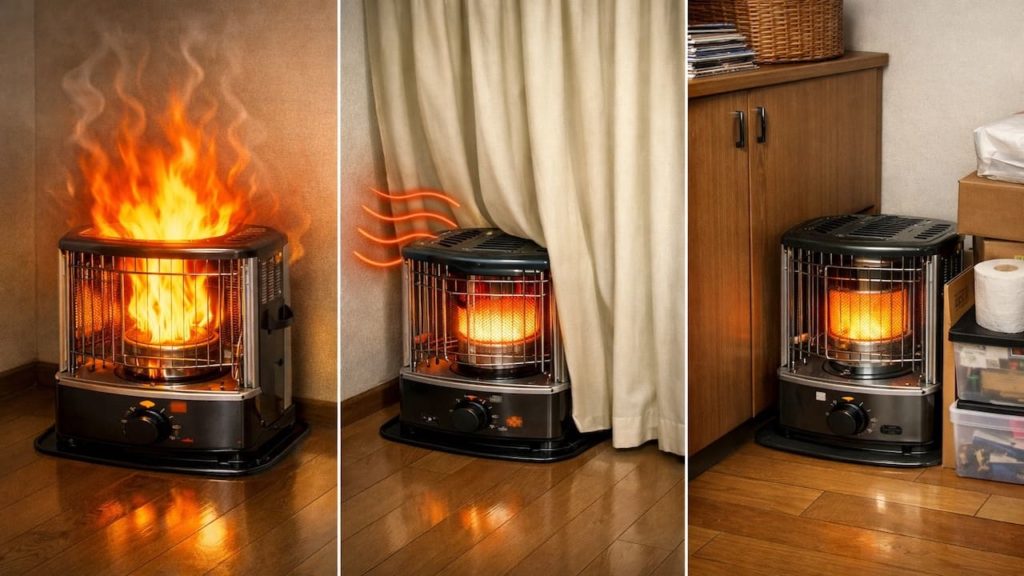
- Check curtains bedding and papers near heater
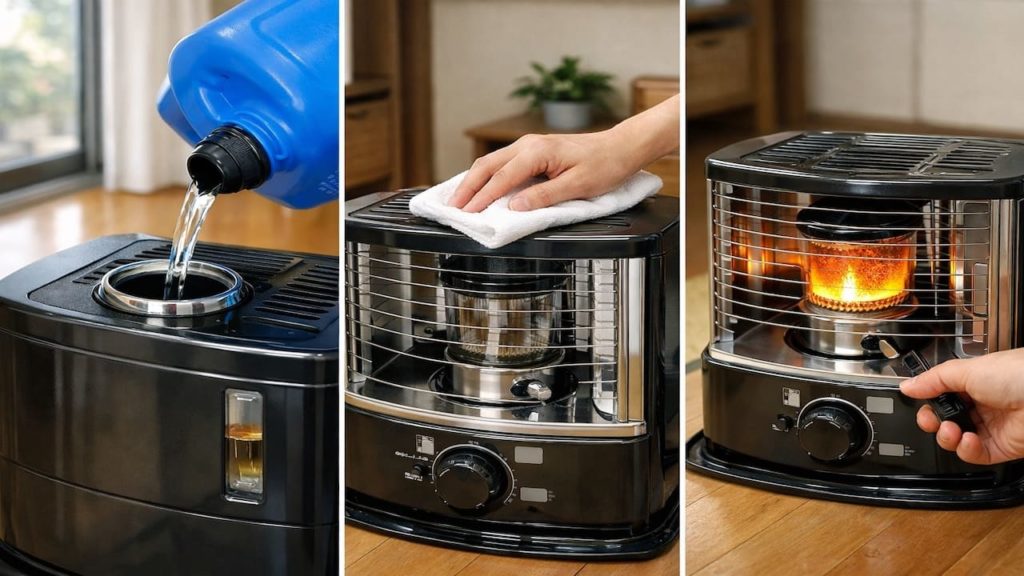
- Confirm tank cap tight and gasket seated
- Wipe tank bay and floor for drips
- Test shutoff lever movement before leaving room
You might feel this is overkill for daily use. But daily use is exactly why you need it, because you stop noticing risk. Five checks is small. Peace is big.
2. Ventilation refuel storage shutoff
Ventilation and shutoff habits do the heavy lifting — storage and refuel keep trouble away.
In Japan winter apartments, one sealed room becomes your whole world for hours, so ventilation is not optional. Refueling is where people spill, and spills create smell and fire risk, even if it is “just a little”. Storage matters because the wrong container and wrong place invite mixups and leaks. Shutoff matters because the worst accidents happen when you walk away. Daily rhythm.
Accident examples include fuel leaks from a poorly closed cap and refueling without extinguishing the heater. According to nite.go.jp.
- Ventilate one minute every two hours on timer
- Refuel only after heater cool and off
- Use labeled kerosene container and keep cap sealed
- Store fuel outside living area in cool shade
- Shut off heater before sleep or leaving
You might say you can “smell when it needs air”. That is late, and it trains you to ignore early signs. Use time, not smell. Make it boring.
3. Why everyday routines prevent kerosene heater accidents
Routine works because it removes decision fatigue — Japan winter fatigue is real.
When you are cold, you want heat now, so you cut corners without noticing. In Japan winter housing, drafts and closed doors create uneven heat, so you keep adjusting controls and forget the basics. Ventilation is forgotten because nothing looks wrong at first, and then the room feels off. Refueling trouble happens because you want to be done fast, not because you lack skill. A routine is a guardrail.
- Reduce knob fiddling by using steady medium flame
- Prevent leaks by checking cap seal each time
- Stop odor buildup by wiping drips immediately
- Avoid misfuel risk by separating containers clearly
- Prevent fire by keeping heater clear of fabric
You might think the heater itself is the danger. The real danger is your tired brain doing “one quick exception”. Remove exceptions and you remove most risk. Guardrails win.
4. How to run the routine before and after use
Do the checks at the same moments daily — start, mid-use, and shutdown.
Use a simple schedule that fits Japan winter life: one check before lighting, one mid-use check, and one shutdown check. Keep it tied to something you already do, like making tea or brushing teeth. cost is mostly time/effort, because you are changing habits and layout, not buying parts. If you can do it half-asleep, it is the right routine.
- Before lighting ventilate and clear heater safety zone
- After ignition watch flame stability for one minute
- Mid use ventilate briefly and recheck nearby fabric
- After refuel wipe cap bay and floor completely
- At shutdown confirm flame out then ventilate briefly
You might try to remember everything “when needed”. That becomes nothing, because your brain is busy being cold. Put the routine on rails. Same order, every day.
5. FAQs
Q1. How often should I ventilate when using a kerosene heater?
Ventilate on a timer not on smell — Japan winter rooms can feel fine until they do not. A short one minute ventilation every couple of hours is a simple baseline for many homes.
Q2. Is it okay to refuel indoors in a small apartment?
It is possible, but spills and odor risk rise fast in tight spaces. If you must refuel indoors, use a flat protected spot, good light, and wipe everything before lighting again.
Q3. Where should I store kerosene fuel at home?
Store it in a sealed, clearly labeled container, away from heat and direct sun. Keep it out of the living area if you can, so odor and spills do not spread.
Q4. Should I leave the heater on while I step out briefly?
No, that is when accidents happen, because your “briefly” becomes longer. Shut it off before you leave the room, then restart calmly when you return.
Q5. What is the quickest daily check if I only do one?
Do ventilation plus a quick clearance scan for curtains and laundry. If you cannot keep the safety zone clear today, do not run it.
Pro's Tough Talk

I’ve spent 20+ years working around Japanese homes, so I’ve seen what tends to work—and what tends to go wrong—in everyday use. I get why you skip steps when the room is cold in Japan winter. That skip is where the trouble starts.
Cause 1: no ventilation, so the room turns into a sealed jar and you only notice when your head feels weird. Cause 2: sloppy refueling, so a tiny drip hides in the tank bay and stinks forever like a ghost. Cause 3: lazy storage and shutoff, so the wrong container shows up or the heater keeps running when your attention leaves.
Crack a window and clear the heater zone now.
Refuel only when cool and wipe every drip today.
Set storage rules and confirm shutoff habits this weekend.
This routine is your seatbelt for winter heat, and it keeps the heater predictable. If you did this and it still fails, next is checking the cap gasket condition or getting the heater serviced.
Yeah, stop treating the shutoff like a suggestion.
Summary
The everyday routine is ventilation, refuel discipline, safe storage, and shutoff checks. Those four habits prevent most messy and scary outcomes.
Run the checks at fixed moments — before lighting, mid-use, and at shutdown. If you cannot keep the zone clear or refuel safely, the next step is changing the room setup.
Tonight do the five checks once in a calm order. After that, keep the rhythm and explore more winter comfort habits that fit your home.