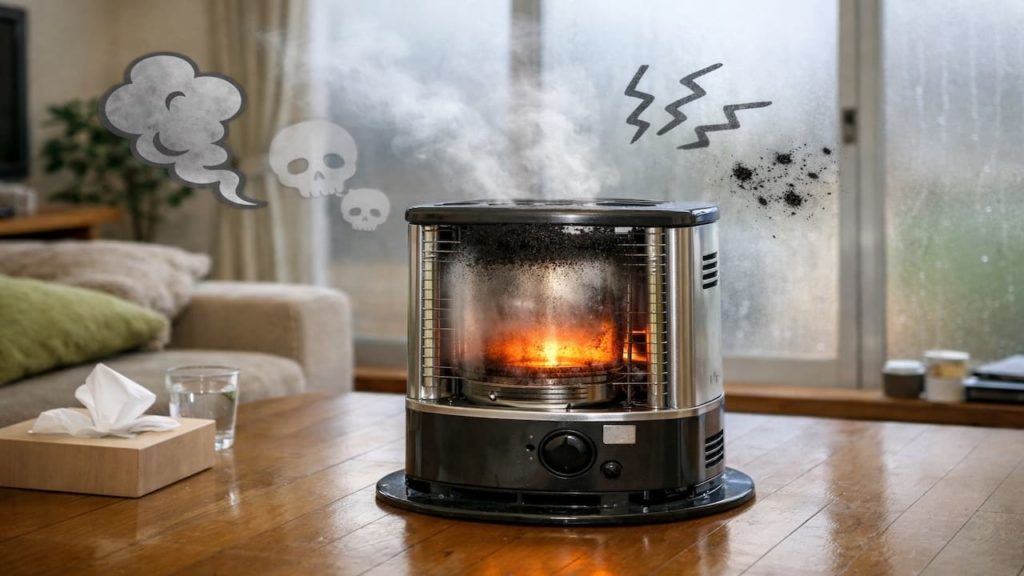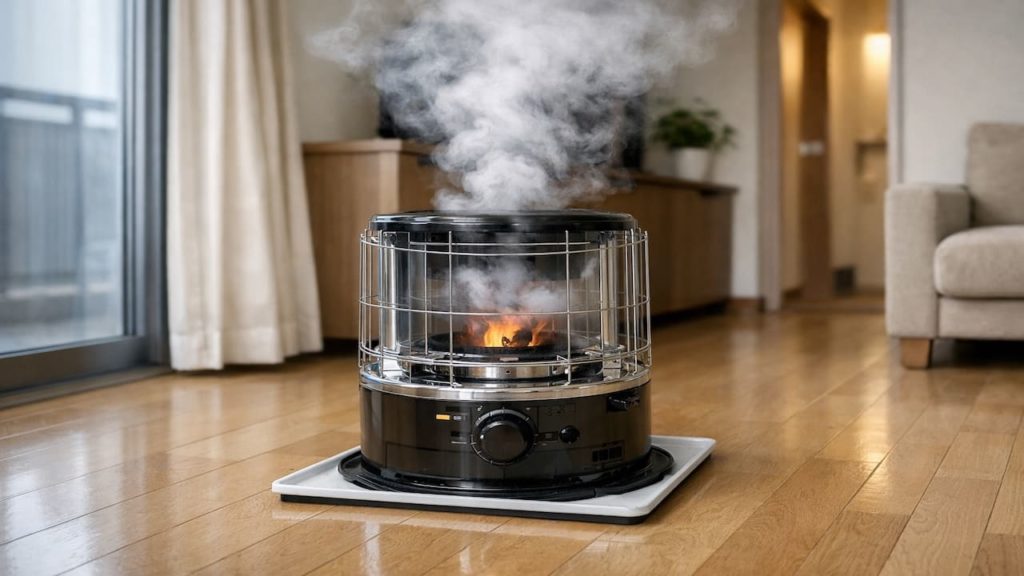
You notice a bit of smoke when the kerosene heater starts, or a gray haze shows up after it has been running. It feels wrong, because it is.
Smoke usually comes from a flame that is set too high, a wick that needs trimming, or a restart that was too fast. In Japan winter homes, sealed rooms and dry air make even small smoke feel bigger.
In this guide, you’ll learn how to stop kerosene heater smoke at the source. You will lower the flame, trim the wick, ventilate with rhythm, and restart the right way.

Hi, I’m Ken — I’m Japanese, and I live in Malaysia long-term, so I explain everyday life in Japan from a practical ‘from abroad’ perspective.
I hold a building design qualification and I’ve been on site for 20+ years across hundreds of jobs. I turn Japan’s unspoken rules into simple checks, so you can avoid costly mistakes and take the next step with clear actions that feel safe.
1. Kerosene heater smoke starts showing up 5 steps
Smoke is a warning that combustion is not clean — fix it before it becomes soot and odor.
In Japan winter apartments, heaters often run in a small closed room, so a small smoke event leaves a smell trail and dust film fast. Most smoke comes from one of three moments: right after lighting, right after adjusting the wick, or right after a quick relight. You can stop it with a simple order of checks. No guessing.
Oil heater guidance includes removing dust and confirming safe operation before winter use. According to meti.go.jp.
- Lower wick one notch and wait calmly
- Ventilate briefly then close window again
- Wait three minutes before relighting after shutoff
- Trim wick top if it looks fuzzy
- Wipe soot dust around burner area
You might think a tiny puff is normal “at first”. A small puff can happen, but repeat smoke means the flame is dirty and will keep making soot. Fix the setup and the wick, then run it steady again.
2. Lower flame trim wick and vent
Lowering the flame is the fastest smoke stopper — then you clean up the wick and airflow.
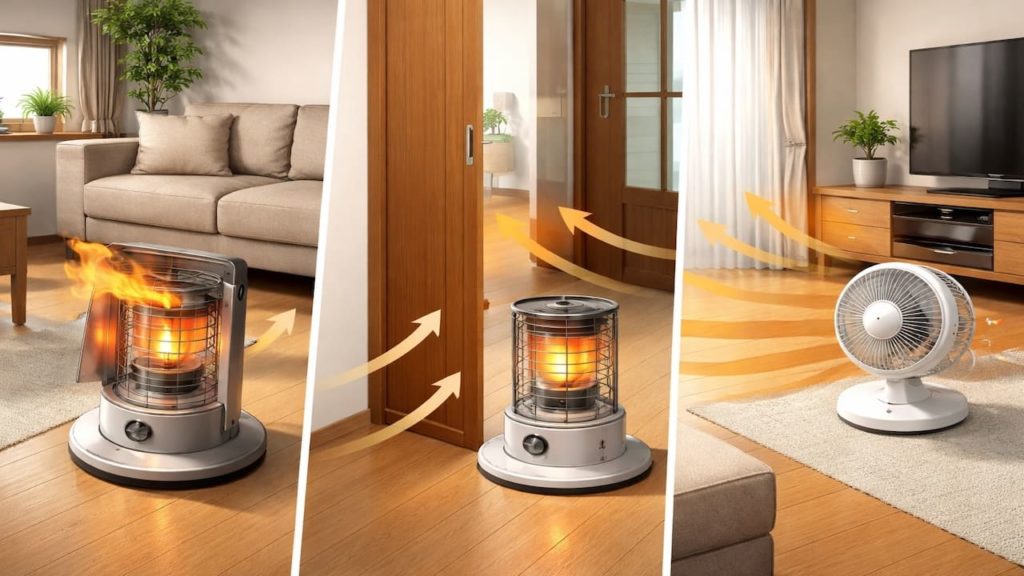
If smoke appears, do not raise output to “burn it off”. In Japan winter living spaces, that move often makes smoke worse and dries the room faster. Lower the wick slowly and watch for a stable flame, then ventilate briefly to clear the haze. If smoke returns after the flame is stable, the wick top is usually the next suspect. The sequence matters.
Some heater manuals warn that relighting too soon after shutoff can cause smoke and odor. According to toyotomi.jp.
- Turn wick down until flame calms down
- Hold adjustment and watch for one minute
- Crack window two centimeters during correction
- Let heater cool before any wick work
- Restart only after smoke fully clears
You might want to open the window wide and freeze the room. A short controlled vent clears smoke without swinging the flame with drafts. Keep it small, keep it steady, then close it again.
3. Why kerosene heater smoke appears indoors
Smoke usually means the wick or airflow is out of balance — and the heater is telling you early.
Cause one is wick too high or uneven, so the flame touches where it should not and burns rich. Cause two is fast relighting, where leftover vapor ignites badly and makes a puff. Cause three is dirty air paths, like dust buildup around the burner or blocked intake, which changes combustion. In Japan winter rooms, closed doors and weak air exchange make these issues show up faster.
- Check wick height marks and avoid max setting
- Wait after shutoff before relight attempt
- Clean dust near intake and top grill
- Use fresh kerosene and keep water out
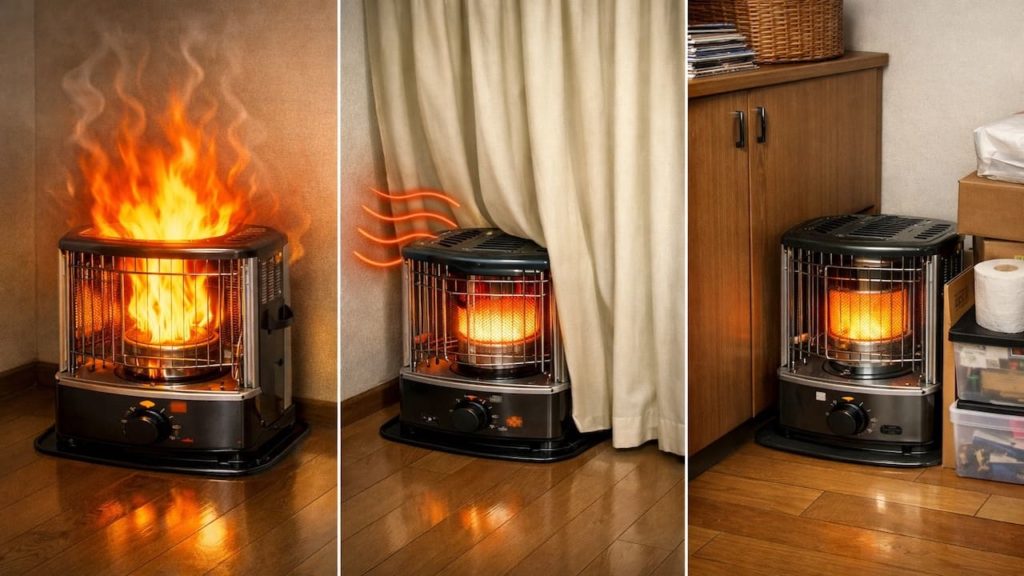
- Keep heater away from wall and curtains
You might blame the fuel first, and sometimes it is fuel, but most repeat smoke starts with wick height and restart habits. Fix the controllable parts first. Then decide if fuel quality is the real issue.
4. How to stop smoke and keep it from returning
Use a calm smoke drill and do not chase heat — stabilize first, then warm the room.
In Japan winter, a small room heats quickly, so you can run lower output and still stay comfortable. If you need basic supplies like paper towels, a small brush, or a simple wick tool, budget ¥100–500 for basic supplies one time and keep them near the heater. Start by lowering the flame and ventilating briefly, then shut down if smoke persists and let it cool fully. After cleaning and trimming, restart slowly and observe the flame for one full minute.
- Lower wick and stop adjusting for sixty seconds
- Ventilate briefly then remove draft sources
- Shut off if smoke persists and cool down
- Trim wick evenly and remove loose fibers
- Relight after three minutes and watch flame
You might feel impatient because the room cools while you wait. Waiting prevents the worst smoke burst, and it protects the wick from getting cooked and crusty. If smoke keeps returning after a clean restart, stop using it and inspect the wick assembly.
5. FAQs
Q1. Is a little smoke at startup always a problem?
One tiny puff can happen but repeat smoke is not normal. If it shows up often, treat it as a wick height, restart timing, or airflow issue.
Q2. Should I open the window wide when I see smoke?
Open it a little, not a lot, so you clear haze without creating a strong draft. A strong draft can make the flame unstable and prolong the smoke.
Q3. Why does smoke happen right after I turn it off then relight?
Relighting too soon can ignite leftover vapor and cause a puff — wait at least a few minutes and let the heater settle before restarting.
Q4. Can bad fuel cause smoke?
Yes, old fuel or contaminated fuel can burn dirty and create soot. If wick and airflow are correct but smoke stays, switch to fresh fuel and clean the tank area.
Q5. When should I stop using the heater and get it checked?
If smoke continues after lowering the flame, ventilating, cooling down, and a clean relight, stop using it. The next step is a wick replacement or a professional inspection.
Pro's Tough Talk

I’ve spent 20+ years working around Japanese homes, so I’ve seen what tends to work—and what tends to go wrong—in everyday use. I’ve been on site for 20+ years. I’ve worked on hundreds of jobs. In Japan winter, smoke is your early warning before soot becomes your roommate.
Cause 1 is wick too high, like trying to run a candle in a hurricane and calling it “mood lighting”. Cause 2 is relighting too fast, like microwaving a closed lunch box and acting surprised it blows steam everywhere. Cause 3 is dust and blocked airflow, where the heater is basically breathing through a dirty mask. You know the scene: you see a puff, you crank it hotter, and the room turns into a tiny BBQ. You know the scene: you shut it off, count to five, relight, and then blame the heater for “being dramatic”.
Lower the wick and stop touching the knob now.
Vent briefly and wait before relighting today.
Cool it down and trim the wick this weekend.
Smoke stops when the flame is stable and fed correctly. If you did this and it still fails, next is wick replacement or a proper service inspection.
Stop speedrunning the relight like it is a video game.
Summary
Smoke usually comes from wick height, fast relighting, or airflow problems. Lower the flame first, then ventilate and reset the conditions.
Use the smoke drill: stabilize, cool down if needed, trim and clean, then relight slowly and observe. If smoke repeats after a clean restart, the next step is wick replacement or inspection.
Tonight lower the flame and follow the wait and vent rhythm. Once smoke is gone, keep exploring safe winter heater habits and room comfort tuning.