You notice the smell, the flame, or the heat feels wrong, and you start second-guessing the heater. In Japan, kerosene heaters run in small rooms in winter, so warning signs can turn serious fast.
Some issues are a quick clean, but some mean you should stop using the unit immediately. The hard part is knowing which signs are normal startup and which are your last free warning.
In this guide, you’ll learn when to stop using a kerosene heater safely and what to do first. That keeps your room air clean even in a small Japanese apartment.

Hi, I’m Ken — I’m Japanese, and I live in Malaysia long-term, so I explain everyday life in Japan from a practical ‘from abroad’ perspective.
I hold a building design qualification and I’ve been on site for 20+ years across hundreds of jobs. I turn Japan’s unspoken rules into simple checks, so you can avoid costly mistakes and take the next step with clear actions that feel safe.
1. When to stop using a kerosene heater 5 signs
Stop using it when any danger sign shows up—don’t wait for the heater to decide for you.
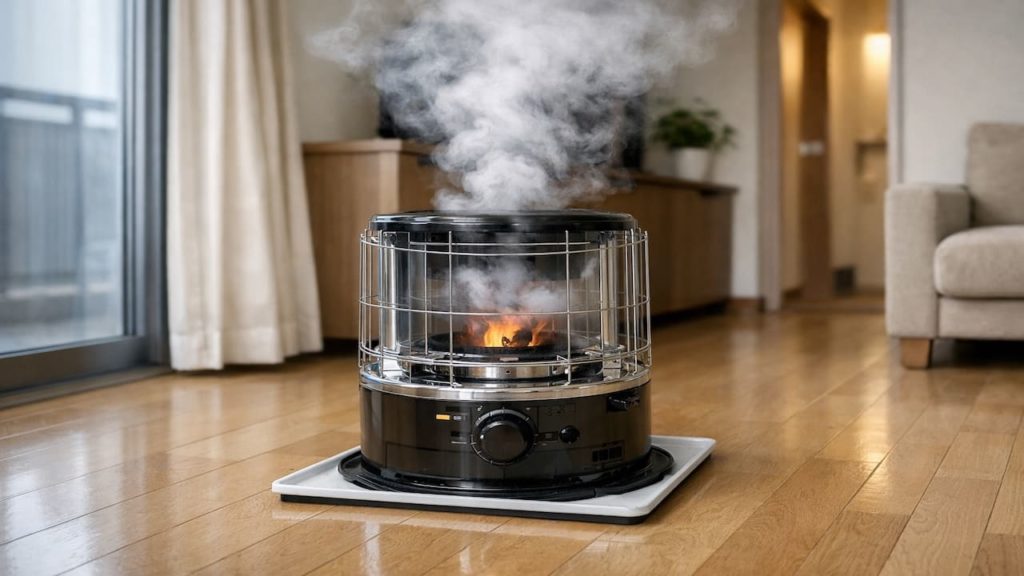
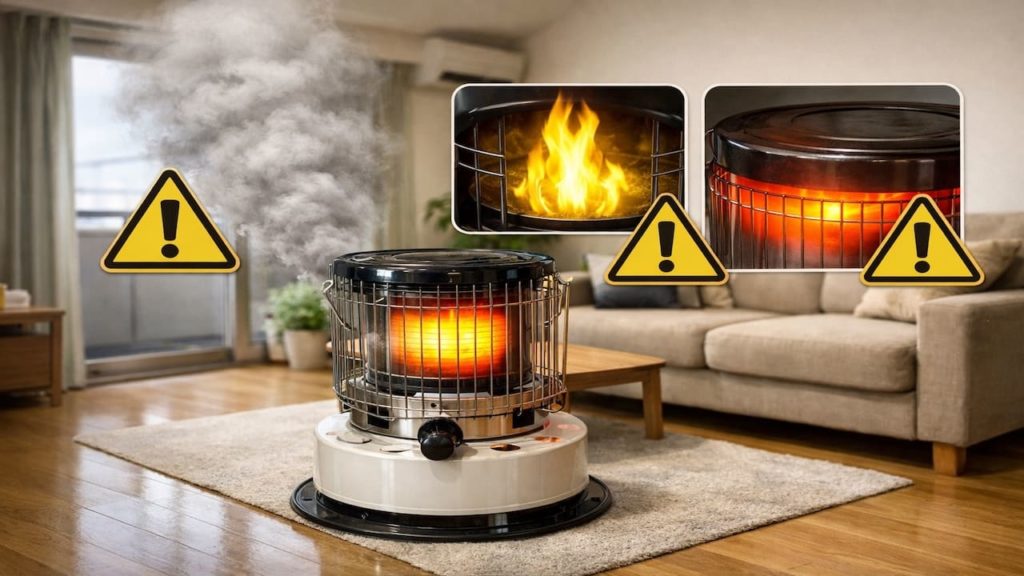
In a Japanese apartment, heat builds up quickly, and so does bad air when windows stay shut. Strong fumes, a yellow flame, or sudden headaches are not just winter smell, they’re a stop signal. Many manuals warn that abnormal flame or odor means the heater is not burning right. According to toyotomi.jp.
- Shut the heater off and open windows
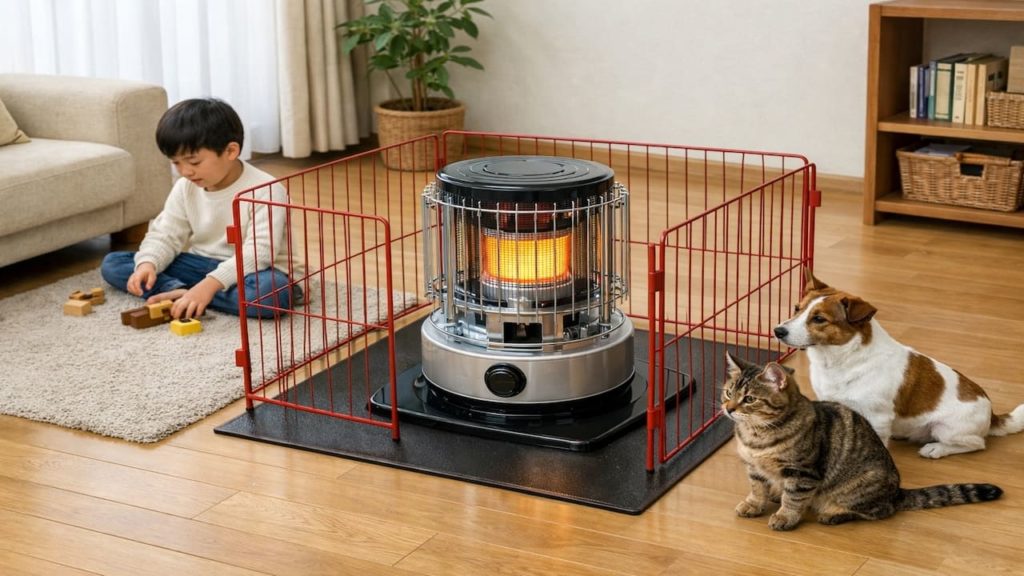
- Move people and pets into fresh air
- Watch flame color through the heater window
- Check for wet drips around the base
- Let the unit cool before touching parts
You might think it still heats so it’s fine, but heat can stay high while combustion gets worse. If the same sign returns after a restart, treat it as a fault, not a fluke. Safety first, then diagnosis, every time.
2. Strong fumes yellow flame hot case
Strong fumes or a yellow flame means stop and ventilate—assume the burn is dirty until proven clean.
Japan winter air can be dry, and that makes your throat react faster to smoke and odor. Yellow or uneven flame often points to abnormal combustion, and a case that feels unusually hot can mean airflow is blocked or soot is trapping heat. If the smell does not fade after ventilation, don’t normalize it as kerosene life. Safety notes also stress carbon monoxide risk in enclosed rooms. According to pref.iwate.jp.
- Ventilate the room for several minutes first
- Turn off and wait for full cool
- Inspect fuel cap seal and gasket tightness
- Wipe drips and check for fresh wetness
- Clear dust from intakes and outer grills
Turning the flame down can hide the symptom while the cause stays. If fumes keep coming back, stop using it and keep ventilating. Fresh air. Treat your room like a sealed box and protect the air inside.
3. Why these kerosene heater danger signs matter
Closed rooms make small problems feel big—bad combustion stacks faster than you expect.
Many Japan homes balance drafts with tight closures, so you can feel stuffy without realizing the air is changing. Incomplete combustion adds irritants, soot, and exhaust, and your body often notices before any detector does. Overheating can warp parts and make the flame less stable, so the problem snowballs. This is why a little smell is not a safe plan.
- Keep a ventilation rhythm while the heater runs
- Use the heater only on a level floor
- Keep curtains and laundry away from heater
- Stop use if anyone feels sudden headache
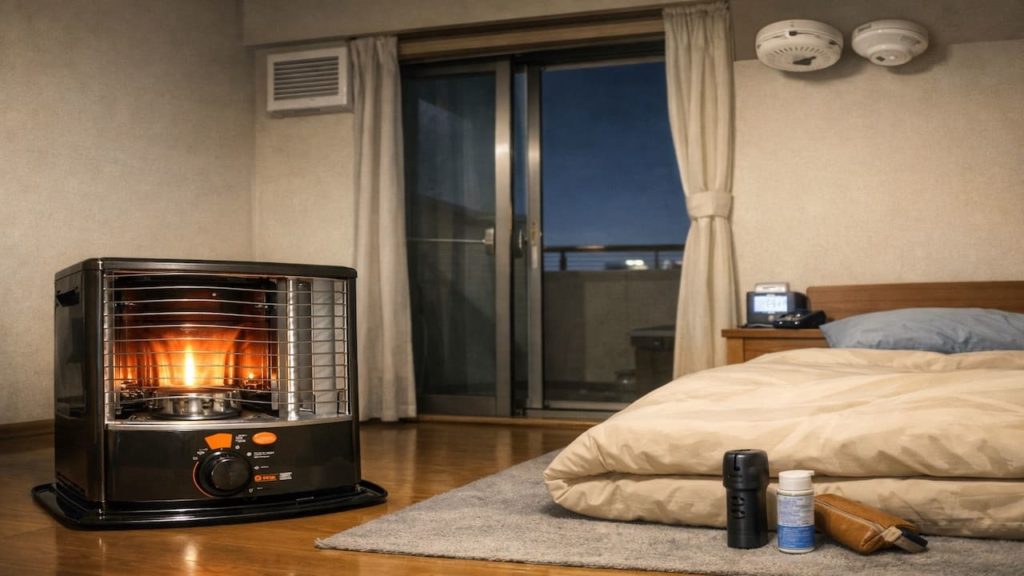
- Never sleep with the heater running indoors
Yes, plenty of people have used these for years with no drama. But warning signs are not random, and your room size changes the margin. Small room math. Respect the signs early and you avoid the scary stories later.
4. How to decide your next move after you stop
Decide by repeatable signs not by hope—one seems fine restart does not erase a pattern.
In Japan, heaters get used daily, so a bit off can become your new normal if you let it. First, air out the room and make sure everyone feels normal again, then reset your judgment. Next, check what you can see: drips, dust blockages, and obvious soot around vents. If you don’t buy parts today, cost is mostly time/effort, but your attention has to be sharp.
- Write down which sign appeared and when
- Test for short supervised minutes only today
- Stop immediately if the same sign returns
- Clean dust around intakes and outer grills
- Call service if fuel smell persists after cooling
You’re not overreacting just because it’s cold outside. The downside of being wrong is high, and the first checks are simple. No hero points. If the heater keeps failing basic checks, treat it like a tool that aged out.
5. FAQs
Q1. Is a little kerosene smell normal at startup?
A faint brief smell can happen right after lighting, especially in a closed room. If it stays strong or spreads, stop and ventilate, then check for drips or a bad seal.
Q2. What does a yellow flame usually mean?
It often means abnormal combustion from dirt, a wick issue, or a burner part that is not seated right. Don’t keep running it to burn it off, because that can add soot and heat stress.
Q3. When should I worry about dizziness or nausea?
Worry immediately if symptoms start during use. Turn it off, open windows, and get fresh air, because your body is a better alarm than your pride.
Q4. The heater case feels very hot. Is that always bad?
Some warmth is normal, but too hot to approach is not a comfort feature. Overheating can point to airflow blockage or soot buildup, so stop and let it cool fully.
Q5. Can I sleep with a kerosene heater on in winter?
Sleeping with it on is risky in any enclosed room, even if you feel used to it. Use safer overnight heating options and keep a plan for ventilation and alarms.
Pro's Tough Talk

I’ve spent 20+ years working around Japanese homes, so I’ve seen what tends to work—and what tends to go wrong—in everyday use. In Japan winter, people shut everything tight, then act surprised the air gets heavy. You know the scene: you crack the window 2 cm and call it ventilation. Then you keep scrolling your phone.
Here’s the cold breakdown in 3 causes. First, a tired wick or dirty burner shifts the flame and makes it spit odor and soot. Second, a loose cap or seal leaks vapor, like a perfume bottle left open in a closet. Third, blocked airflow cooks the unit from inside, and soot becomes a blanket that traps heat where it shouldn’t.
Turn it off now and ventilate hard. Check the flame, the cap, and any wet drips today. Book service or replace it this weekend.
Stop using it if the same sign returns, because repeating danger signs are the decision point, not a debate. If you did this and it still fails, next is service or replacement.
You can’t out-stubborn physics.
Keep testing it in your bedroom if you miss excitement, I guess.
Summary
Stop using a kerosene heater when strong fumes, yellow flame, overheating, or symptoms show up. Ventilate first, then treat repeat signs as a real fault.
If the sign comes back after a careful restart, choose inspection or replacement instead of one more try. If you need warmth tonight, prioritize safer heating and steady ventilation.
Clean air is the real comfort. Do the simple checks today, then keep learning the routines that prevent winter heater problems.