You turn the heater on, but the room still feels cold for longer than you want. In Japan winter, drafts and small rooms make warm-up time feel extra slow.
The heater may be fine, but your setup might be wasting the first heat. A few small moves can make the room feel comfortable faster.
In this guide, you’ll learn how to warm up faster with a kerosene heater without doing anything reckless. Faster comfort in Japanese housing.

Hi, I’m Ken — I’m Japanese, and I live in Malaysia long-term, so I explain everyday life in Japan from a practical ‘from abroad’ perspective.
I hold a building design qualification and I’ve been on site for 20+ years across hundreds of jobs. I turn Japan’s unspoken rules into simple checks, so you can avoid costly mistakes and take the next step with clear actions that feel safe.
1. Warm up faster with a kerosene heater 5 tips
Warm-up speed comes from air control and placement—not from cranking it blindly.
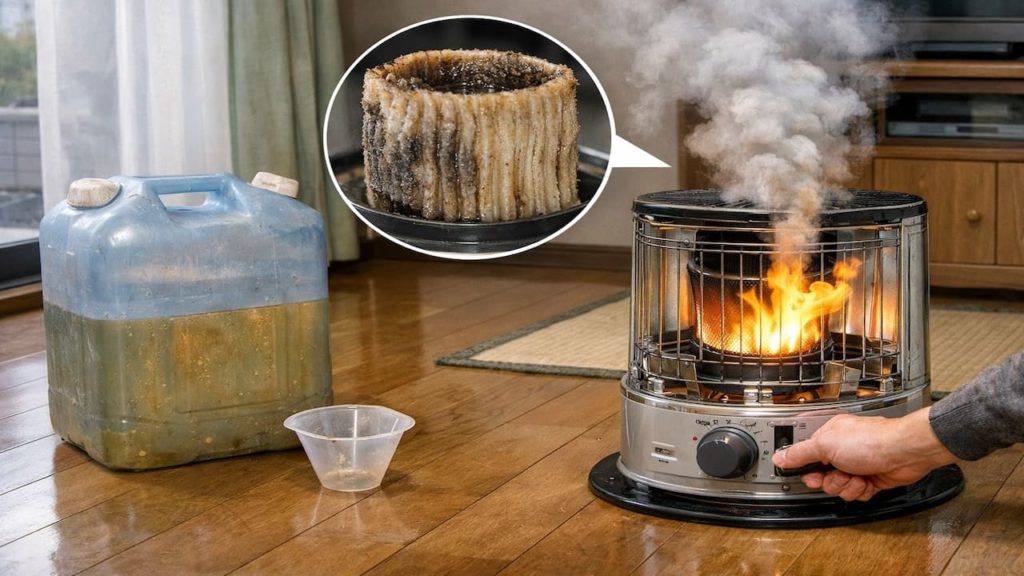
Japan homes often have cold floors and sneaky drafts, so the first heat gets stolen fast. Start by resetting the room air, then aim the heat where your body actually is. Dust and old fuel also slow clean combustion, so warm-up feels weaker than it should. Oil-heater safety notes emphasize keeping heaters clean and using fresh kerosene. According to meti.go.jp.
- Ventilate briefly before lighting to reset air
- Place heater in the smallest used room
- Close doors to trap heat in zone
- Angle heat toward people not open space
- Remove dust from grills before first use
You might think “more flame equals faster,” but that can make air stuffy and uneven. If warm-up still feels slow, your room is leaking heat, not your heater failing. Winter math in Japan.
2. Pre vent set wick reflect heat
Pre-vent then set the wick correctly for clean heat—and reflect warmth back into the room.
Japan winter rooms warm faster when you fix oxygen and direction first. A quick pre-vent clears stale air, then you can light and tune for a stable flame. Reflection helps because radiant heat can disappear into a cold wall or open hallway. Manuals also stress stable placement and proper clearances, which affects heat efficiency too. According to toyotomi.jp.
- Open two points for sixty seconds before lighting
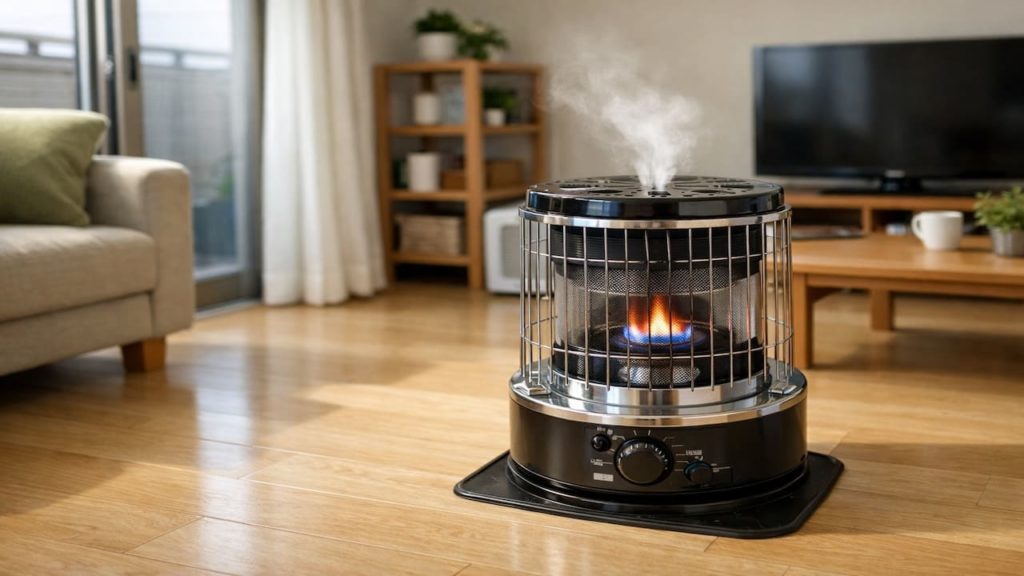
- Set wick height until flame looks steady
- Keep heater on a firm level floor
- Use a heat board to reflect sideways loss
- Stop drafts by closing hallway doors nearby
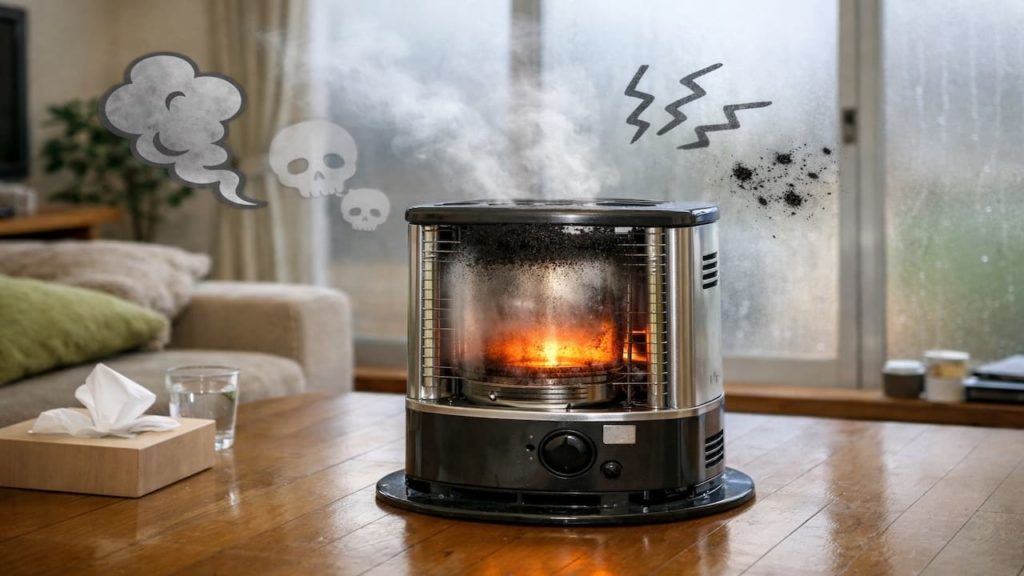
You may worry ventilation wastes heat, but the short reset often makes the next ten minutes warmer. If you smell strong exhaust or see unstable flame, stop and ventilate instead of chasing speed. Clean burn first.
3. Why warm-up feels slow in Japan apartments
Heat escapes before it builds when drafts win—especially in Japan winter layouts.
Many Japan rooms have cold entryways, thin interior doors, and gaps that pull warm air out. Cold floors absorb the first heat, so the room feels stubborn even when the heater works. If the heater sits in a traffic path, doors open and close and reset the whole temperature. Small-room reality.
- Identify the draft source using your hand
- Close the genkan door to block cold flow
- Lower ceiling fan speed to push heat down
- Move seating closer to radiant heat path
- Keep the heater away from door swing
People blame the heater, but the room shape is usually the thief. Fix the leak points and warm-up speed changes instantly. Japan winter rewards setup.
4. How to feel warm faster without overfiring
Build a fast comfort zone then expand it—do not try to heat the whole home at once.
Start with one room, one seating spot, and one airflow plan, which suits Japan apartments. Use short ventilation cycles after the room stabilizes, not during the first minute. If you do not buy anything, cost is mostly time/effort. Comfort routine.
- Warm one room first then open adjacent door
- Block floor drafts using a rolled towel
- Point a small fan across the warm air
- Keep curtains outside the heat throw area
- Turn down wick once comfort is reached
You might be tempted to run it high until you sweat, then turn it off. That creates big swings and makes the room feel cold again fast. Keep it steady and you feel warmer sooner.
5. FAQs
Q1. Should I ventilate before turning a kerosene heater on?
Yes, a short pre-vent helps the heater burn cleaner and can make the room feel better faster. In Japan winter, do it fast and close up again after the reset.
Q2. What flame look is best for faster warm-up?
Look for a stable flame that does not flicker wildly, because unstable burn wastes heat and creates odor. If the flame looks odd, stop and fix the cause before trying to “power through.”
Q3. Is it okay to run the wick higher to heat faster?
Only if the flame stays stable and clean. If odor increases or the window soots, lower it and improve ventilation—speed is not worth bad air.
Q4. Does a fan help a kerosene heater warm a room faster?
A small fan can help distribute warm air so you feel comfort sooner. Keep it gentle and never block heater airflow paths.
Q5. My room warms up but my feet stay cold, why?
Cold floors absorb heat and your body notices it first. Use a rug away from the heater base and block drafts near the floor line.
Pro's Tough Talk

I’ve spent 20+ years working around Japanese homes, so I’ve seen what tends to work—and what tends to go wrong—in everyday use. I’ve been on site for 20+ years. I’ve worked on hundreds of jobs. In Japan winter, warm-up feels slow when the room steals heat, then you start doing dumb stuff.
Three causes, clean cut. One, you start it in stale air and the burn is lazy, like trying to sprint while holding your breath. Two, the room leaks heat like pouring water into a bucket with a crack, so the first minutes never “stick.” Three, you aim heat into a hallway or cold wall, so warmth just wanders off and dies.
Ventilate for sixty seconds now.
Set the wick for a steady flame today.
Seal drafts and use a small fan this weekend.
Fast warm-up comes from a tight comfort zone. If you did this and it still fails, next is checking the wick condition or getting the heater serviced.
You stand in front of it, hands out, then complain it is “weak” when you walk away. You open the door to the toilet and blame the heater for the cold wave. Seriously, stop heating the hallway like it pays rent.
Summary
Warm up faster by pre-venting briefly, tuning the wick, and heating one small zone first. In Japan winter, draft control is the real accelerator.
If warm-up still feels slow after setup, your decision point is repeatable drafts or unstable flame. Fix leaks, stabilize burn, then expand the warm area.
Make your first ten minutes deliberate. Do one fast reset today, then keep exploring the small routines that make winter heat feel easy.