You press the igniter, wait, and nothing happens, even though it worked yesterday. In Japan winter, cold mornings and sealed rooms make a failed start feel urgent.
Most no-start problems are simple and repeatable, not mysterious. If you run calm checks in order, you avoid smoke, odor, and risky relights.
In this guide, you’ll learn what to check when a kerosene heater won’t start and how to restart safely. A smoother warm-up in Japanese housing.

Hi, I’m Ken — I’m Japanese, and I live in Malaysia long-term, so I explain everyday life in Japan from a practical ‘from abroad’ perspective.
I hold a building design qualification and I’ve been on site for 20+ years across hundreds of jobs. I turn Japan’s unspoken rules into simple checks, so you can avoid costly mistakes and take the next step with clear actions that feel safe.
1. Kerosene heater won’t start today 5 checks to try
Start with the safest easiest checks first—then move to parts only if needed.
In Japan apartments, a failed ignition can quickly become repeated clicking and strong smell, so take control early. The most common causes are power, fuel delivery, and a wick that is not ready. Work in a ventilated room and keep flammables away from the heater zone. Decision order.
Seasonal safety guidance in Japan also recommends removing dust, confirming safety devices, and using fresh kerosene before winter use. According to meti.go.jp.
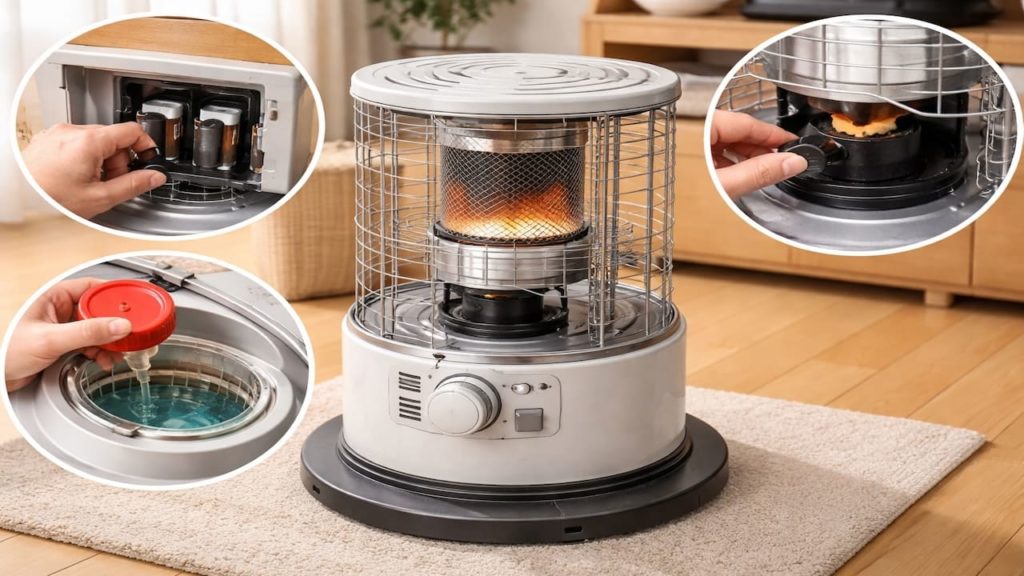
- Confirm fuel tank is seated and latched
- Check batteries are fresh and correctly oriented
- Verify wick is raised to ignition position
- Look for tip over shutoff being triggered
- Ventilate briefly before trying another ignition
You might want to keep pressing the button until it lights, but that can flood odor into a small Japan room. Do one check, then one attempt, then pause. Calm beats frantic.
2. Battery igniter wick level and fuel
Ignition fails when one link in the chain breaks—battery, igniter glow, wick level, or fuel quality.
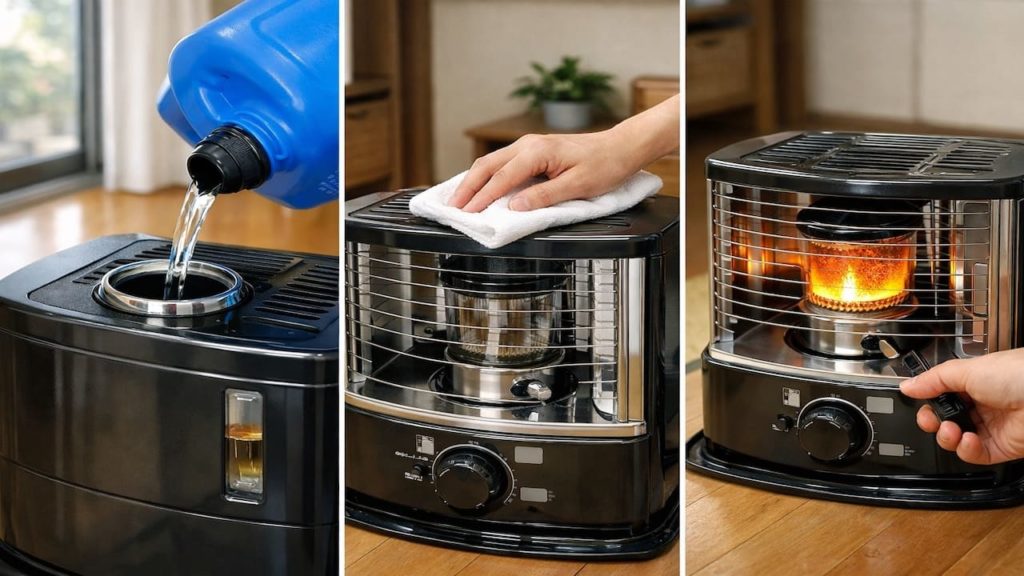
A weak battery may let the igniter glow poorly, so the wick never catches even if fuel is fine. If the wick is too low or dry, it cannot present fuel at the top edge to ignite. Old or contaminated kerosene also makes the wick act stubborn and slow. Small links.
Model manuals often list “wick won’t ignite” causes such as out of fuel, weak batteries, or igniter issues, and recommend checking battery condition and wick level. According to toyotomiusa.com.
- Listen for igniter click and watch glow
- Smell fuel for sour or sharp notes
- Let wick soak after refilling before ignition
- Clean dust around air intake and burner
- Test wick knob moves smoothly without binding
You may assume the heater is dead if it fails once, but ignition is a sequence problem. Fix the weakest link and it often starts normally. Japan winter is less forgiving of shortcuts.
3. Why kerosene heaters refuse to start in Japan winter
Cold starts fail when airflow fuel and wick timing mismatch—and Japan housing makes that mismatch common.
Early winter in Japan pushes people to rush starts right after storage, when dust and residue are at their worst. Cold air can slow fuel flow at the wick edge, and a small mistake feels bigger in a tight room. Safety shutoffs also trigger more easily if the unit is jostled on soft flooring. Room math.
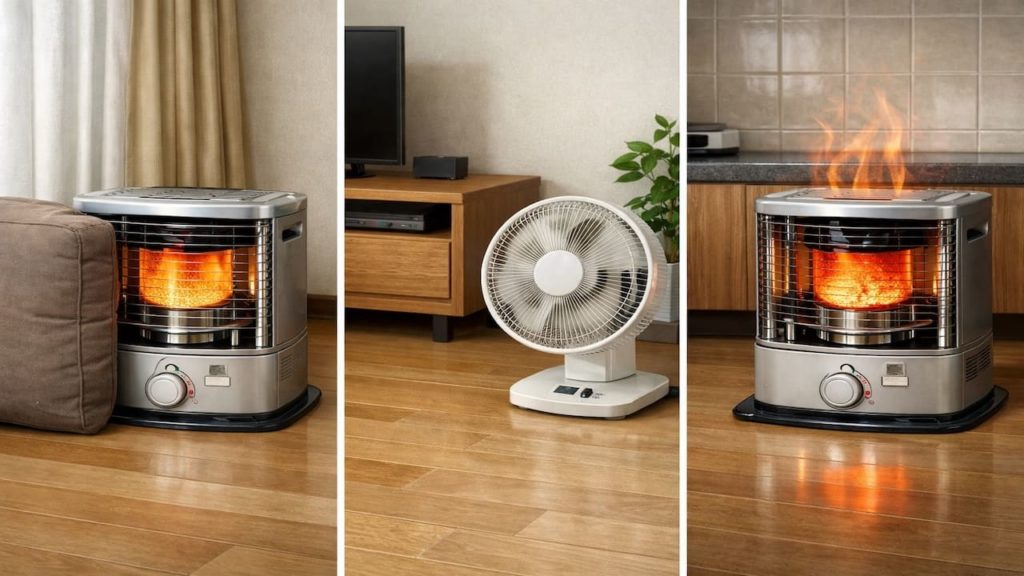
- Start in a smaller room with closed door
- Place heater on firm level floor board
- Keep the heater away from doorway drafts
- Run a short ventilation cycle each hour
- Store fuel separately and label it clearly
Some people blame the igniter first, but the environment often caused the no-start. If the same setup fails every time, the setup is the culprit. In Japan, layout matters more than pride.
4. How to restart a kerosene heater safely
Restart with one controlled attempt after each fix—and stop early if smell or smoke appears.
In Japan apartments, the safest approach is to ventilate briefly, reset the wick and fuel conditions, then test once while watching the flame area. If you need supplies, ¥100–500 for basic batteries is usually enough for the first reset. Keep your face away from the top and do not lean over the heater during ignition. A clean test.
- Turn heater off and wait two minutes
- Open two points for sixty seconds ventilation
- Raise wick to ignition level and hold
- Press igniter once and watch for light
- Shut off immediately if strong odor returns
You might feel you are wasting time with “one attempt only,” but it prevents messy fuel smell and panic. If you get repeated failure after these steps, stop and inspect the igniter and wick condition. Japan winter heating should be boring.
5. FAQs
Q1. How many times can I try igniting before it becomes risky?
Keep it to one attempt after each check, then ventilate and pause. In Japan rooms, repeated tries can build odor fast—do not treat it like a button-mashing game.
Q2. What if the igniter clicks but the wick will not light?
Check battery strength and confirm the igniter is actually glowing, not just clicking. Also confirm the wick is raised to the correct ignition position and is not dry.
Q3. My heater starts with a match but not with the igniter, why?
The igniter is likely weak or misaligned. Replace batteries first, then inspect the igniter and follow your model’s manual guidance for service.
Q4. I refueled and it still will not start, what did I miss?
The wick may need time to soak fuel again, especially after storage. Wait a bit, then try one controlled ignition attempt after brief ventilation.
Q5. When should I stop and call service?
If the wick adjuster binds, the igniter never glows, or you see repeated smoke or soot, stop. A forced restart can turn a small issue into a safety problem.
Pro's Tough Talk

I’ve spent 20+ years working around Japanese homes, so I’ve seen what tends to work—and what tends to go wrong—in everyday use. I’ve been on site for 20+ years. I’ve worked on hundreds of jobs, and the first cold dry Japan morning always makes people rush.
Three causes. One, the batteries sag, so the igniter is like a flashlight with dying cells. Two, the wick is dry or gummed up, like trying to light wet charcoal. Three, the tank is seated wrong or the safety shutoff tripped, and you keep “trying harder” anyway.
No, turning the knob harder is not magic.
Ventilate and stop pressing buttons now.
Reset the wick level and tank seating today.
Replace batteries and clean dust this weekend.
One fix one attempt is the rule. If you did this and it still fails, next is checking the igniter condition or replacing the wick.
You know the scene where you click the igniter five times and start sniffing the air like a detective. You know the scene where you tilt the heater “just a little” and the shutoff bites you back.
Summary
When a kerosene heater will not start, check tank seating, batteries, wick level, and safety shutoff in order. Ventilate briefly and keep attempts controlled.
If ignition still fails after a calm reset, use the repeat pattern as your decision point. Persistent no-start is a maintenance issue, not a mood.
Do one clean restart test today. Then keep building the small habits that make Japan winter heating safer and less annoying.