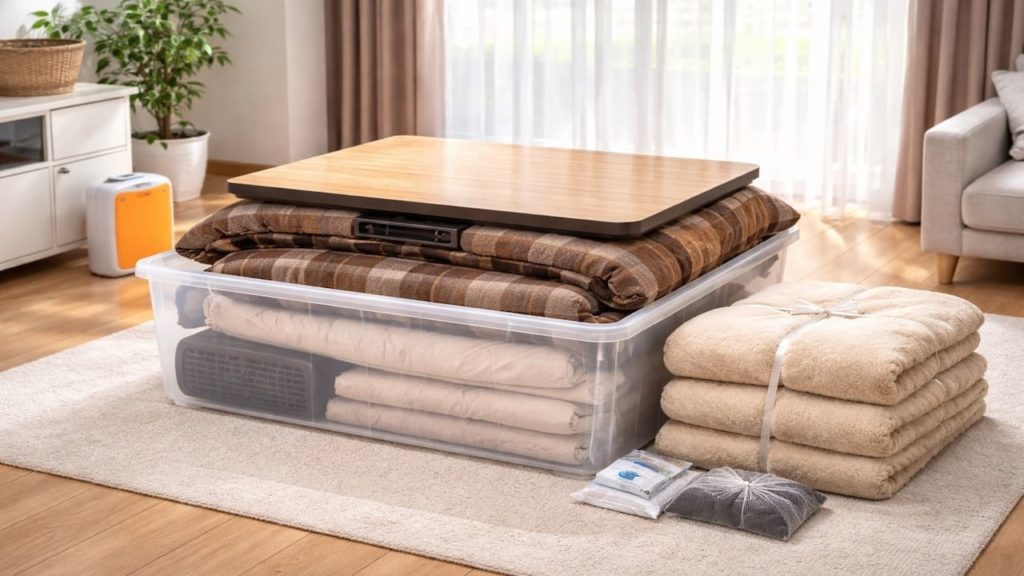
Your kotatsu feels perfect on cold nights, then the air turns damp and it starts to feel weak. The blanket stays warm, but the room smells heavy and your legs feel clammy.
Japan's wet season brings long stretches of rain and high indoor humidity, especially in tight apartments. That moisture can trap in fabrics and make airflow mistakes feel worse.
In this guide, you'll learn how to use a kotatsu in humid homes without inviting musty heat. You will balance warmth, airflow, and simple habits that fit rainy weeks.

Hi, I’m Ken — I’m Japanese, and I live in Malaysia long-term, so I explain everyday life in Japan from a practical ‘from abroad’ perspective.
I hold a building design qualification and I’ve been on site for 20+ years across hundreds of jobs. I turn Japan’s unspoken rules into simple checks, so you can avoid costly mistakes and take the next step with clear actions that feel safe.
1. Kotatsu in humid homes: 5 checks
Keep warmth gentle while keeping moisture from building up — that is the real win in Japan's tsuyu season.
When humidity is high, a kotatsu can turn into a warm pocket that never dries. Wet air and low airflow make the futon hold sweat, skin oils, and room moisture. In Japan, rainy days also reduce sun airing, so fabrics stay damp longer. NITE has reported kotatsu accidents linked to improper use and carelessness. According to nite.go.jp.
- Check blanket edges for airflow gaps daily
- Check floor dampness under the kotatsu area
- Check heater cover for dust and lint buildup
- Check cord path for pinches and heat spots
- Check for musty smell after each long use
Some people think humidity only matters in summer, not under a winter table. In Japan, wet nights happen in spring and early summer too, and indoor air can stay sticky. Do the checks early, then run lower heat to avoid sweating inside the blanket. Calm warmth.
2. Balance warmth and airflow in wet season
Airflow is your dehumidifier when the weather stays wet — even if you cannot open windows much.
During the Baiu rainy season, outdoor moisture stays high and indoor drying slows down. Warm air under the blanket rises and condenses into the futon if it never gets exchanged. Japan homes often have one main room doing everything, so a damp kotatsu can affect the whole space. The Baiu is a cloudy, rainy early summer period across most of Japan. According to jma.go.jp.
- Lift one blanket edge for a vent corner
- Run a fan across the room air
- Open a door for five minutes hourly
- Keep the kotatsu away from wet laundry
- Switch to low heat after ten minutes
You might worry airflow will kill the cozy feeling. It will, if you vent too hard and too long. Use small, timed air swaps, then reseal the blanket edge and keep the dial low. In Japan's wet season, steady air movement beats blasting heat. Balance.
3. Why humidity makes kotatsu feel musty
Moisture plus warmth feeds smells and mold inside the futon — and the kotatsu hides it until it is obvious.
Warmth speeds up odor buildup when sweat cannot evaporate. The futon absorbs moisture, then releases it slowly, so the warm pocket stays humid. In Japan, many homes have limited cross ventilation, and the floor area is cooler, which increases condensation risk. Musty air.
- Notice clammy fabric on your calves quickly
- Rotate blanket direction to dry uneven zones
- Dry socks and slippers outside the blanket
- Wipe tabletop underside to remove damp dust
- Air the futon flat after each session
It is easy to blame the heater and shop for a stronger model. Stronger heat can worsen sweat and push more moisture into fabric. Fix the moisture loop first, then your current kotatsu often feels warmer with less smell. Simple physics.
4. How to run kotatsu safely in humid weeks
Use short heat bursts, then dry and reset the fabrics — that keeps Japan rainy nights comfortable.
Start with a quick warm up on medium, then drop to low to reduce sweating. Build a post use routine that dries the futon, even when you cannot sun it outside. If you need small supplies like clips, a microfiber cloth, or a shoe deodorant sheet, plan ¥100–500 for basic supplies. Keep the heater space clear and never push wet items inside.
- Warm up for ten minutes then lower dial
- Stand up and shake blanket every hour
- Hang the futon over chairs after use
- Vacuum the heater cover vents weekly
- Run a fan on low toward the floor
Some families leave the kotatsu on all day to fight damp chill. That can trap moisture and raise safety risks if the blanket shifts. Treat it like a tool, not a background appliance, and you will get warmth without the swampy feel. Rainy season logic.
5. FAQs
Q1. Is it okay to use a kotatsu during Japan's rainy season?
Yes, if you keep airflow and fabric drying as part of use. Use low settings after warm up and air the futon so moisture does not stay trapped.
Q2. Why does my kotatsu blanket smell musty so fast?
Humidity plus body heat keeps the futon damp. Add short ventilation breaks and dry the blanket flat after each long session — small changes work.
Q3. Should I run a dehumidifier near the kotatsu?
It can help if your room stays sticky, but keep it away from the heater and cords. Do not block airflow under the table with hoses or tanks.
Q4. How often should I air the kotatsu futon?
In wet weeks, air it after each long use, even if only indoors. Hang it for an hour and run a fan so the inner layers dry. A quick habit.
Q5. What is one sign I should stop using it tonight?
If you smell hot plastic or the cord feels warm, stop and unplug. Damp air can hide problems, so trust your nose and hands.
Pro's Tough Talk

I've been on site for 20+ years. I've worked on hundreds of jobs. Japan's rainy season makes homes feel like a wet towel left in a bag.
Three causes keep showing up. You crank the dial to fight damp chill, you never dry the futon, and you block airflow with laundry and cushions. A kotatsu in humidity is like a bathtub with the drain half closed, and like a lunchbox left warm in your bag. Two common scenes. You crawl in with slightly damp socks. You hang wet laundry nearby and call it efficient.
Do this in 3 steps. Warm up fast, then drop to low. Vent for five minutes, then reseal the edge. Dry the futon after use, even indoors.
Moisture control beats more heat every single time.
Come on.
If your kotatsu smells like a locker room, do not blame Japan weather, blame your lazy routine.
Summary
Humid air can make a kotatsu feel weak and musty — even when the heater works fine. In Japan's wet season, the blanket holds moisture unless you exchange air.
Use low heat after warm up and add small ventilation breaks. Dry the futon after long sessions and keep wet laundry away from the table.
Do the checks and drying routine and the cozy feeling stays. Keep building simple Japan home habits that work even when rain lasts for days.