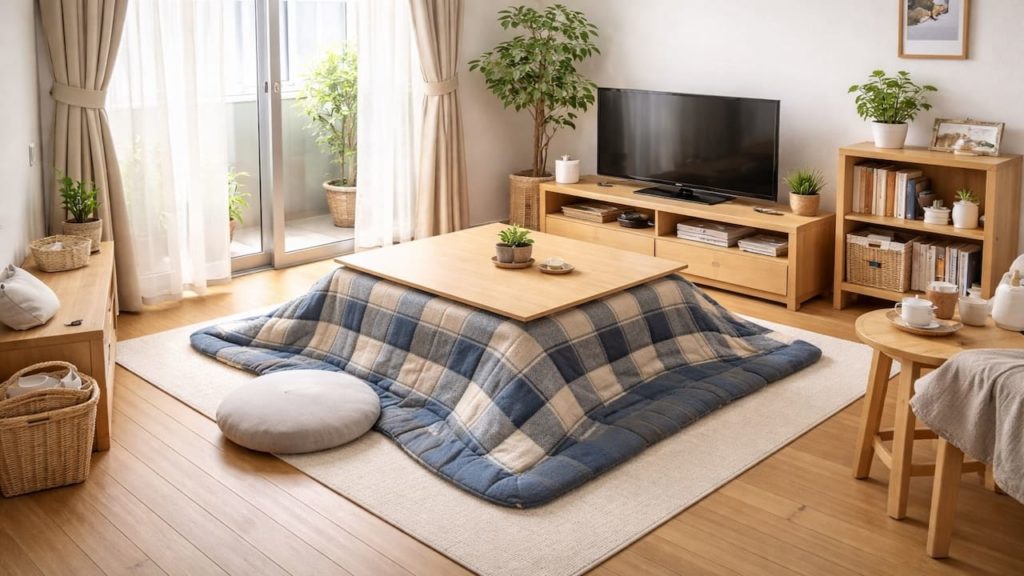
Your kotatsu feels cozy, but the blanket starts to smell mid-season. The odor sticks to your clothes and makes the room feel stale.
Japan homes swing between dry heated nights and damp rainy weeks. That mix traps sweat and moisture inside thick fabric layers.
In this guide, you’ll learn how to keep kotatsu fabric fresh without harsh chemicals. You’ll build small habits that prevent odor from returning.

Hi, I’m Ken — I’m Japanese, and I live in Malaysia long-term, so I explain everyday life in Japan from a practical ‘from abroad’ perspective.
I hold a building design qualification and I’ve been on site for 20+ years across hundreds of jobs. I turn Japan’s unspoken rules into simple checks, so you can avoid costly mistakes and take the next step with clear actions that feel safe.
1. Kotatsu odor control: 5 tips
Odor fades fastest when you dry the blanket core — not just the surface.
Most kotatsu smells are trapped moisture plus skin oils, not “dirty air.” Warmth makes you sweat lightly, and the futon holds it deep where air does not reach. Japan winter also means closed windows, so the room never resets. Moisture control is the key to preventing musty growth. According to epa.gov.
- Lower heat after ten minutes of warming
- Open one edge to vent for minutes
- Hang blanket over chairs after use
- Rotate blanket direction every few days
- Vacuum surface before you fold it
You might think a stronger deodorizer spray fixes everything. It often masks smell while moisture stays inside, then odor returns harsher. Focus on drying and airflow first, then light cleaning actually lasts. Freshness.
2. Keep fabric fresh through the season
Prevent odor by keeping sweat and crumbs out — then drying becomes easy.
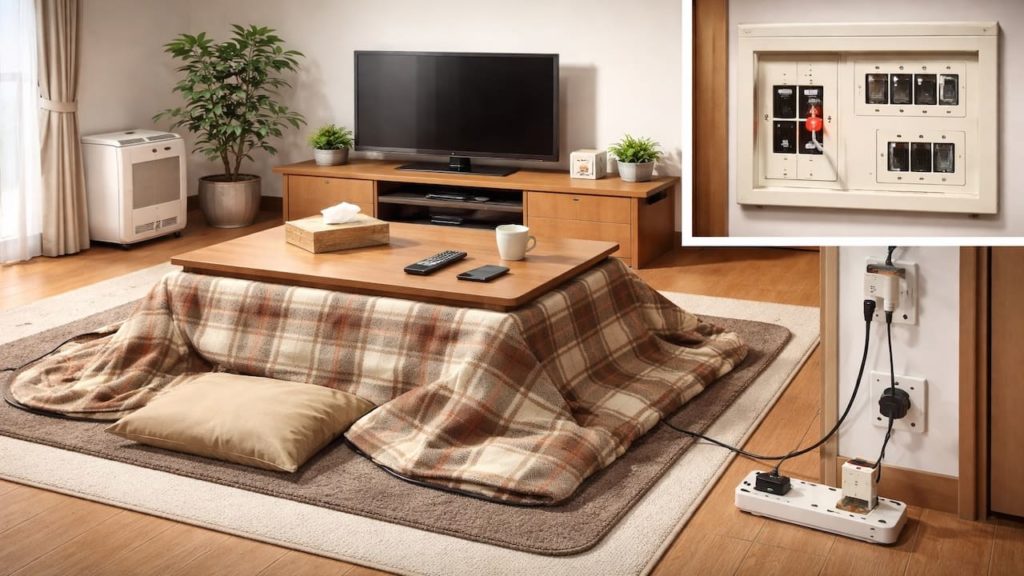
A kotatsu blanket is a sponge for tiny daily messes. Socks bring sweat, snacks bring oils, and the warm pocket locks it in. Japan rainy weeks also slow drying, so one bad night can linger. Proper use reduces trouble, especially keeping flammable fabric and clutter away from heat. According to nite.go.jp.
- Wear clean dry socks before entering
- Keep drinks outside the blanket edge
- Use a thin washable cover on top
- Wipe tabletop underside after snack time
- Air the room briefly before bedtime
You may worry this feels too strict for relaxing. The trick is making cleanliness automatic, not a lecture. In Japan small rooms, one easy routine keeps the whole living space fresher. Control.
3. Why kotatsu blankets start to smell
Odor grows when warmth traps moisture without airflow — and the futon hides it.
The blanket core stays warmer than the room, so moisture does not fully evaporate. Sweat and body oils feed bacteria, then smell builds in the fibers. When Japan weather flips to damp days, the smell turns musty fast. Hidden layer.
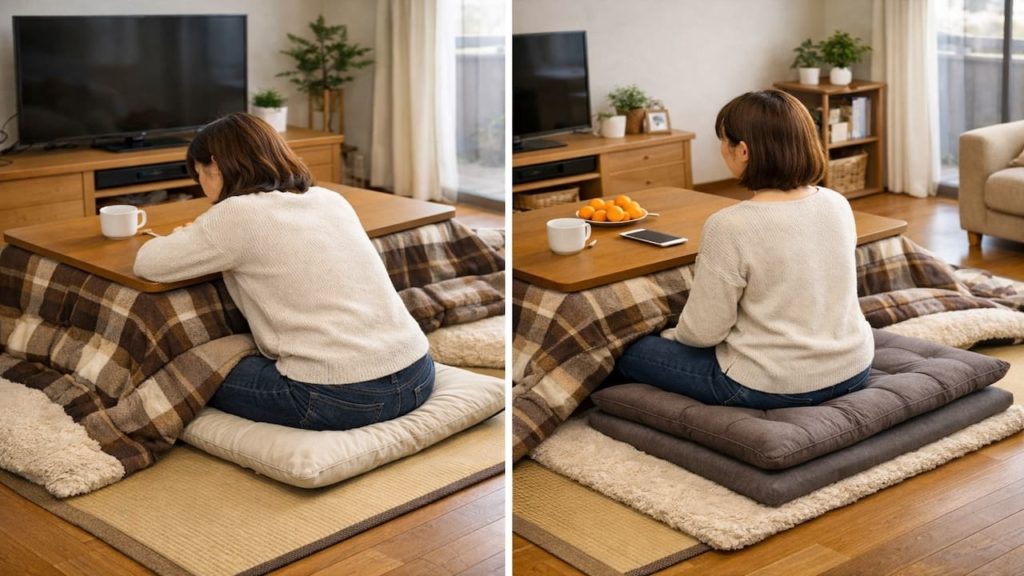
- Long sitting keeps one warm pocket constant
- Blanket folds lock moisture into the core
- Floor level air stays cool and damp
- Closed windows reduce daily air exchange
- Food oils cling and oxidize over time
It is easy to blame the heater or the blanket brand. Most odor issues are usage patterns and drying delays, not the product itself. Fix the moisture loop and the smell drops quickly. Physics.
4. How to refresh kotatsu fabric in 15 minutes
Reset the blanket with airflow and light surface cleaning — then run low heat only.
Do this on any night the fabric feels clammy, especially during Japan rainy weeks. Shake out crumbs, cool the futon, then move air through it before you fold. If you want basic supplies like a laundry net or mild detergent, plan ¥100–500 for basic supplies. Short session.
- Turn off heat and lift tabletop
- Shake blanket flat and remove crumbs
- Hang blanket and blow fan through it
- Wipe contact areas with mild soapy cloth
- Store only when fabric feels fully dry
You might think you need to wash the whole futon every time. Full washing is slow and can fail if drying is weak in Japan humidity. This reset keeps the core dry so deeper washing becomes rare. Momentum.
5. FAQs
Q1. Why does the kotatsu smell worse after rainy days?
Humidity slows drying, so yesterday’s moisture stays in the blanket core. Vent the edge and hang the futon after use on wet weeks.
Q2. How often should I wash the kotatsu cover?
Wash the cover weekly when you use it daily. If washing is hard, vacuum and air it more often, then wash on a fixed schedule.
Q3. Are deodorizer sprays safe on kotatsu fabric?
Use them lightly, and never soak the fabric because dampness worsens odor. Test a small area first and prioritize drying over fragrance.
Q4. What is the fastest indoor drying method?
Hang it over chairs and push air through with a fan — then flip once to dry the inner side too.
Q5. How should I store the kotatsu blanket off-season?
Store only when fully dry and cool, then use a breathable bag if possible. Avoid sealing in any dampness, or the smell returns next season.
Pro's Tough Talk

I’ve been on site for 20+ years. I’ve worked on hundreds of jobs. Japan weather swings hard, and fabric always loses if you ignore moisture.
Three causes. You run high heat and sweat without noticing. You fold the futon while it is still warm. You let snacks and socks feed the fibers. It is like sealing a wet towel in a backpack, and like marinating a sponge in warm air. Two familiar scenes. You doze off and wake up sticky. You drop crumbs, laugh, and pretend vacuuming tomorrow is real.
Do this in 3 steps. Lower the dial early so you stop sweating. Open the blanket and move air through it. Then store only when your hands say dry.
Dry first and the smell stops coming back.
Seriously.
That “mystery odor” is not a mystery, it is your lazy routine doing karaoke.
Summary
Kotatsu odor is usually trapped moisture, sweat, and small oils in the fabric. Japan winter and rainy weeks make drying delays easy.
Vent edges, hang the blanket after use, and keep snacks controlled — those moves prevent the smell loop. If odor persists, do the fifteen minute reset and keep heat low.
Keep the blanket core dry and the season stays fresh. Build the habit now so your kotatsu feels clean every night.