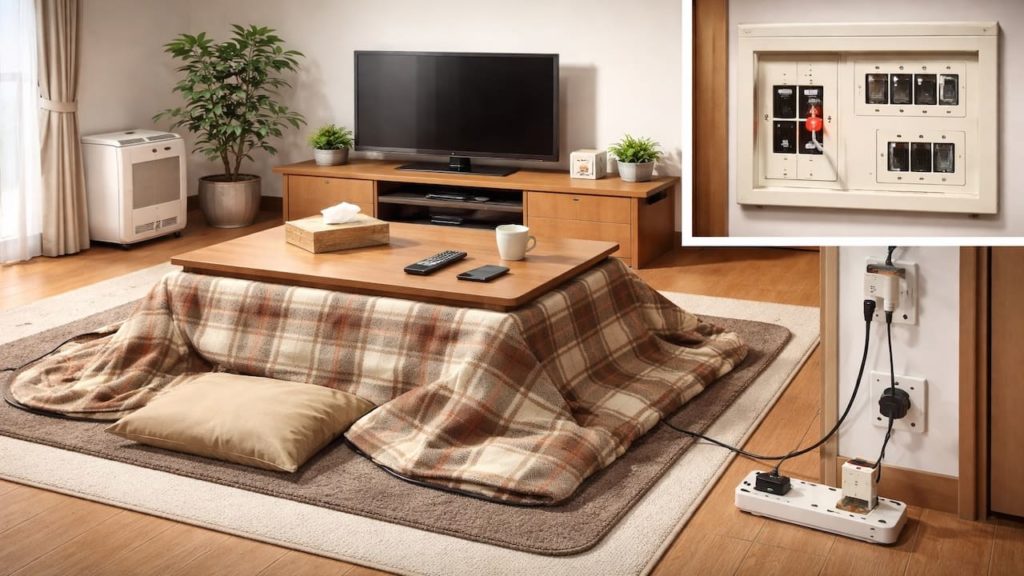
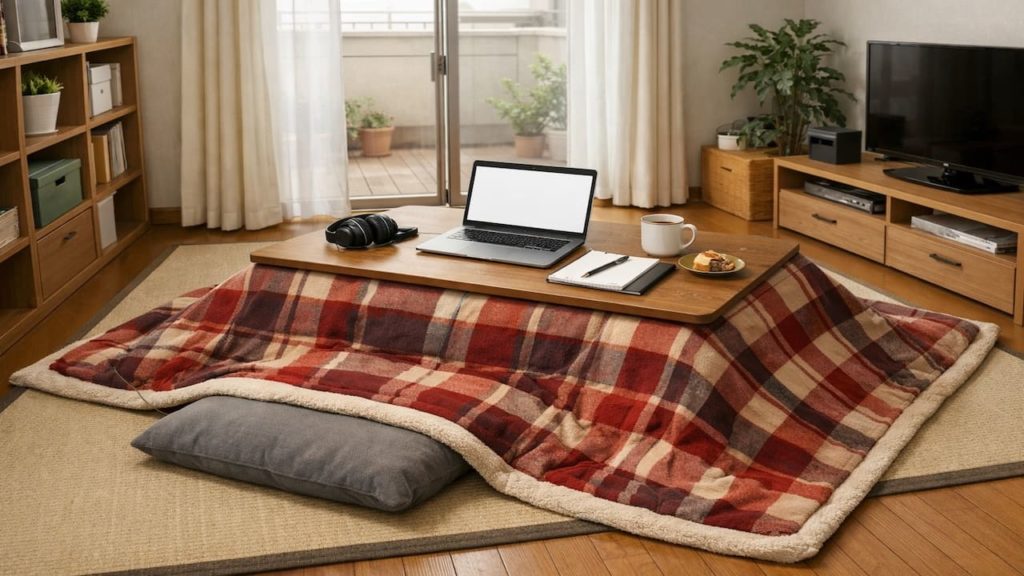
You set the kotatsu to feel perfect, then you get too warm and sleepy. The cozy trap hits right when you wanted to read or work.
Japan winter rooms can feel cold in the air but hot under the blanket. That contrast makes it easy to overheat and drift off.
In this guide, you’ll learn how to set kotatsu heat so you stay warm and stay awake. You will keep comfort steady without the nap crash.

Hi, I’m Ken — I’m Japanese, and I live in Malaysia long-term, so I explain everyday life in Japan from a practical ‘from abroad’ perspective.
I hold a building design qualification and I’ve been on site for 20+ years across hundreds of jobs. I turn Japan’s unspoken rules into simple checks, so you can avoid costly mistakes and take the next step with clear actions that feel safe.
1. Kotatsu heat setting: 5 tips
The sweet spot is warm legs with a cool head — that is how you stay awake in Japan winter.
If your upper body is sealed under the blanket, you will overheat and doze. If your legs sweat, you are already past the sweet spot. Japan homes often use spot heating, so you do not need to blast the kotatsu to warm the whole room. Aim for stable warmth, not peak heat. Awake comfort.
Excess heat can raise dehydration risk and make you feel lightheaded or sleepy. According to Mayo Clinic.
- Warm up ten minutes then lower dial
- Keep upper body outside blanket most time
- Vent one corner for gentle airflow
- Use a thin top sheet to reduce sweat
- Drink water before long sitting sessions
You might think higher heat saves electricity because you finish faster. In reality, overheating makes you sweaty, then you feel cold and crank it again. In Japan winter, steady low heat plus insulation keeps you awake and comfortable. Stable wins.
2. Find the sweet spot so you stay awake
Use heat as a pulse not a constant blast — that keeps your brain alert.
Your body gets sleepy when it is too warm and still. Kotatsu warmth is great for muscle relaxation, but that is also nap fuel. Japan winter evenings often come with dim lighting and quiet rooms, so your brain already leans toward sleep. Build a setting routine that forces small resets. Alert mode.
Many kotatsu accidents increase when people fall asleep and use it carelessly. According to nite.go.jp.
- Set a timer for thirty minute resets
- Stand up and stretch every cycle end
- Lower heat one step when you yawn
- Move feet and flex ankles every few minutes
- Keep snacks outside blanket to avoid sealing
You may think yawning means you need more heat. It often means you are too warm and too still. Cool your calves for a minute, then return at a lower setting and you stay sharper. Small reset.
3. Why high kotatsu settings make you sleepy
Overheating triggers stillness and drowsy dehydration — the blanket hides it.
High heat makes you sweat, and sweat makes you feel heavy and lazy. The warm pocket also reduces airflow, so you breathe warmer air and feel more drowsy. Japan homes can be dry in winter with closed windows, so dehydration signs appear as dull headache and fatigue. Cozy trap.
- High heat increases sweat without you noticing
- Still posture slows circulation and alertness
- Warm air under blanket reduces cooling signals
- Dry room air increases hidden moisture loss
- Heavy futon weight encourages dozing posture
Some people blame themselves for weak focus. Often the setting is simply too high for work or reading. In Japan winter, you can keep feet warm on low and keep your head in cool room air. That balance works.
4. How to set kotatsu heat for work and reading
Use a simple dial routine and keep your head cool — it prevents the nap cliff.
Start with a short warm up so your feet stop feeling cold. Then drop to low and use insulation under your feet to hold warmth without blasting heat. cost is mostly time/effort. Japan winter rooms feel better when you warm the floor layer, not the whole air volume.
- Warm up on mid then switch to low
- Keep a small mat under your feet
- Place blanket only over legs not torso
- Vent corner and keep room air moving
- Unplug when you feel too sleepy late
You might worry low heat will not be enough. If your feet still feel cold, add insulation or a thicker top blanket layer, not more heater power. In Japan apartments, insulation is the quiet cheat code that keeps you awake. Practical fix.
5. FAQs
Q1. What is the best heat setting to stay awake?
Low after a short warm up is best for alertness. The goal is warm legs without sweating, with your upper body in room air.
Q2. Why do I yawn when the kotatsu is on?
Yawning can be a sign of overheating and stillness. Lower the dial, vent a corner, and stand up for ten seconds.
Q3. Should I keep my upper body under the blanket?
No if you want to stay awake. Keep the blanket on legs only and let your head breathe cooler Japan winter air.
Q4. How do I stop accidental dozing while working?
Set a timer and place it across the room so you must stand up. Standing breaks the heat pocket and resets your focus.
Q5. Is it dangerous to fall asleep under a kotatsu?
It can increase risk of low-temperature burns and accidents if you stay pressed in one spot. If you tend to doze, use a strict timer and lower heat early.
Pro's Tough Talk

I’ve been on site for 20+ years. I’ve worked on hundreds of jobs. Japan winter makes people chase “max warmth” and then wonder why they fall asleep like a switched-off robot.
Three causes. You warm up and forget to lower the dial. You seal the blanket like a bunker and stop moving. You mistake sweat for comfort and keep turning it up. It is like driving with the heater on full and windows shut, and like trying to focus inside a warm bath.
Two familiar scenes. You open a laptop, then wake up with the same page on the screen. You promise “five more minutes,” then lose an hour.
Warm up then drop to low and keep your head cool.
Really.
If your kotatsu turns you into a nap machine, the dial is not helping, it is bullying you.
Summary
The sweet spot for staying awake is warm legs, cool head, and steady airflow — Japan winter rooms make that balance important. Use a warm up, then drop to low.
Vent one corner, keep your upper body outside the blanket, and add insulation under your feet instead of blasting heat. Use a timer if you drift easily.
Lower the dial early and you keep warmth without the sleep crash. Keep exploring simple winter routines on this site for safer cozy nights.