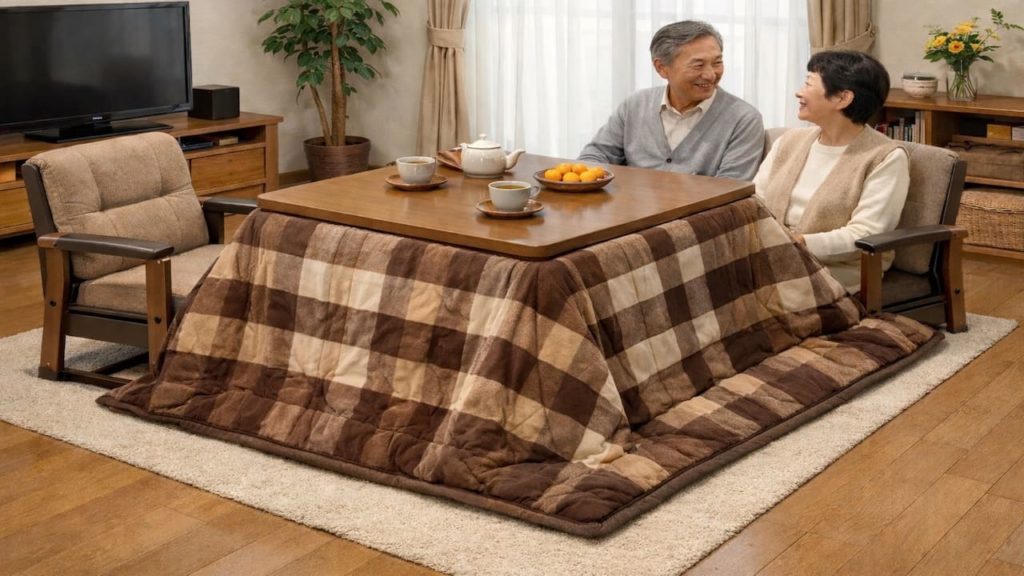
When your kotatsu blanket keeps sliding, the warm pocket collapses every time you move. It feels childish, but it is genuinely annoying.
You tuck the corner, shift your legs, and the fabric crawls away again. In Japan, winter rooms often have smooth flooring and dry air, so small gaps feel sharp.
In this guide, you’ll learn easy ways to stop kotatsu blanket corners from slipping without turning your table into a wrestling match. You’ll also learn setups that fit tight Japan apartments.

Hi, I’m Ken — I’m Japanese, and I live in Malaysia long-term, so I explain everyday life in Japan from a practical ‘from abroad’ perspective.
I hold a building design qualification and I’ve been on site for 20+ years across hundreds of jobs. I turn Japan’s unspoken rules into simple checks, so you can avoid costly mistakes and take the next step with clear actions that feel safe.
1. Kotatsu blanket slipping: 5 tips
Stop the slip by controlling the corners first in Japan winter living.
Most slipping starts at the corner because that point takes the highest tension when you scoot. On laminate or tatami with a thin rug, friction changes fast—especially when humidity drops in heated rooms. Retailers often list compatible kotatsu futon sizes by table shape and dimensions. According to nitori-net.jp.
- Place the table centered on your rug
- Pull each corner down to floor level
- Fold extra fabric inward under your knees
- Set one heavy cushion on each corner
- Check corner contact after every seat shift
Some people blame the heater, but heat loss often starts after a corner lifts. If you can keep corners down, the rest of the blanket behaves. Corner grip. You will feel warmer with the same setting.
2. Keep corners in place while moving
Build a corner anchor that survives leg movement in Japan style floor seating.
Moving legs is normal under a kotatsu, so the setup must tolerate kicks and scoots. A simple anchor works better than constant re-tucking, and it keeps the edge seal steady—exactly what you want on cold nights. Guides that explain choosing kotatsu futon types and sizes help you pick a stable drape. According to nitori-net.jp.
- Tuck one corner under a zabuton edge
- Loop the corner around a table leg
- Clip corner fabric to the top cover
- Layer a thin throw along the perimeter
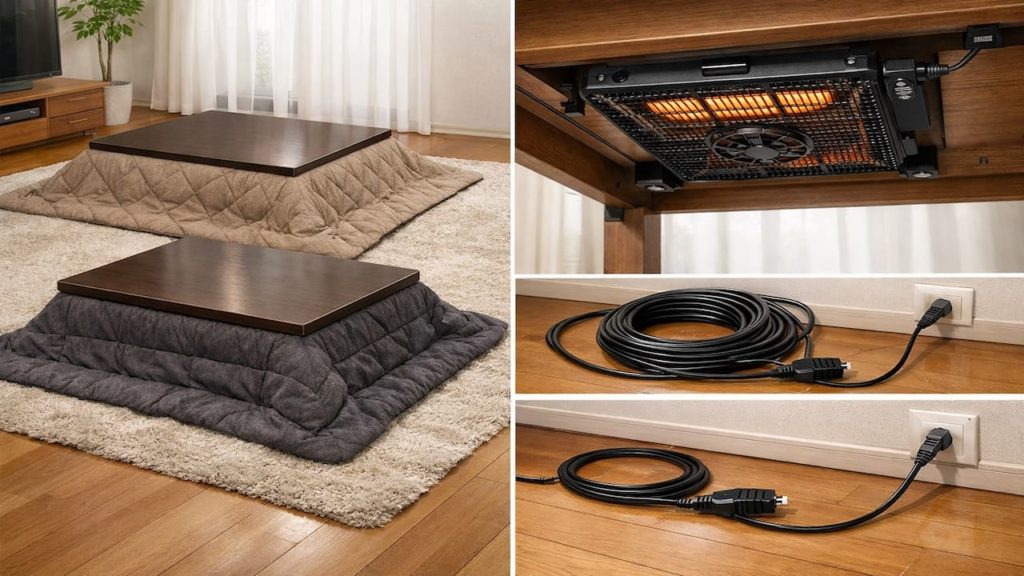
- Keep cords and feet away from corners
You might think this is overkill, but it saves you from repeating the same fix all night. Once the anchor holds, you move naturally and stay warm. Less fuss. More calm for long winter evenings.
3. Why kotatsu blankets slip when you move
Slipping happens when friction and tension fight on Japan floors.
Blanket fabric slides when the pull from your legs is stronger than the grip under the edge. In Japan, many rooms have low tables, light rugs, and smooth mats, so there is not much weight holding fabric in place. Dry winter air also makes some fibers feel slick, so the blanket glides easier than you expect. Simple mechanics—no mystery.
- Notice where the blanket lifts during movement
- Check rug material for low friction surfaces
- Test blanket underside for slippery lining fabric
- Look for uneven drop lengths on corners
- Watch pets or kids pulling edges loose
People often buy thicker blankets, but thickness alone can slide even more. What you need is grip at the edge and slack in the middle. Friction control. Then warmth stays trapped.
4. How to fix slipping with quick upgrades
Combine grip plus slack so corners stop walking in Japan winter nights.
If you want a simple upgrade, use blanket clips, anti-slip pads, or a heavier corner weight, then adjust how the fabric folds. Small supplies are usually cheap—around ¥100–1,500 for basic clips or pads. In Japan apartments, this helps when you stand up often and the blanket keeps shifting. Do it once, then enjoy the season.
- Add anti-slip pads under each corner edge
- Use blanket clips on two back corners
- Switch to a heavier top cover layer
- Increase drop length by sizing one step up
- Fold a slack pocket where your feet move
You do not need perfect gear, and you do not need to tape the blanket to the floor. If your corners stay down for five minutes, your setup is already improving. Small wins. Keep tweaking one change at a time, and your corners will stop wandering.
5. FAQs
Q1. How do I stop kotatsu corners from slipping fast?
Anchor two corners and leave slack for legs so the fabric stops pulling loose. In Japan winter rooms, this also reduces drafts along the floor edge.
Q2. Are blanket clips safe to use with a kotatsu?
Yes, if you keep clips away from the heater unit and cords. Quick stability. Use clips on the outer edge, not near the heat source.
Q3. Does a thicker blanket slip less?
Not always, because thickness can reduce friction and glide on smooth rugs. Focus on corner grip and drape first.
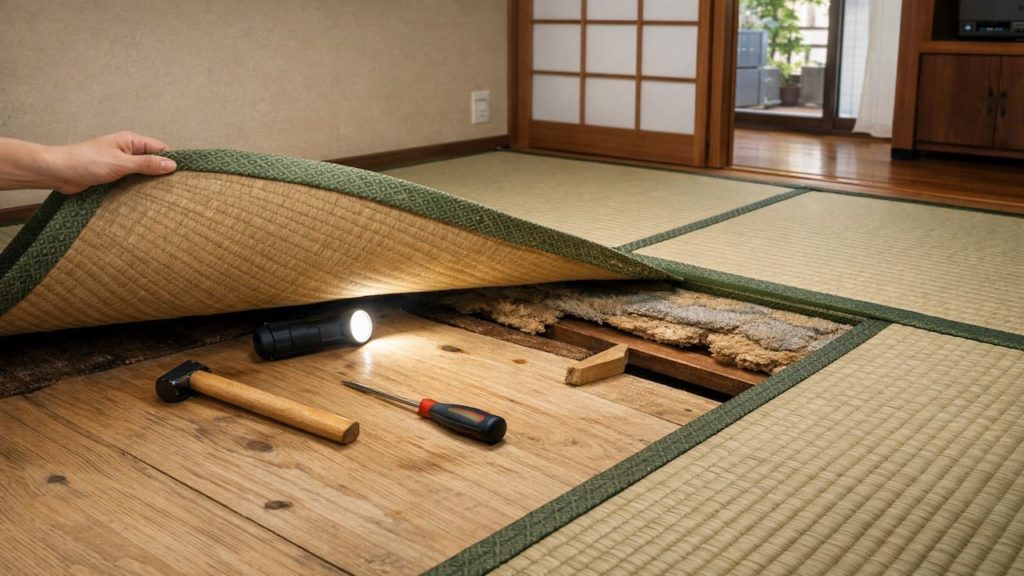
Q4. What if my kotatsu is on tatami?
Tatami can grip better than laminate, but corners still lift if the drop is short. Try a zabuton tuck or a corner weight.
Q5. Why does it slip more when I stand up often?
Standing lifts the edge—then the fabric tension resets. When you sit back down, the blanket lands in a new position and starts creeping again.
Pro's Tough Talk

I’ve been on site for 20+ years. I’ve worked on hundreds of jobs. Japan winter homes are full of small slips that turn into big annoyances.
Three causes, cold and simple: smooth floors, light rugs, and you yanking the blanket with your legs. It is like trying to keep a tarp still in wind, and like a loose shoelace that keeps untying.
Three steps, right now. Add grip under both back corners. Anchor two corners to a cushion or leg. Leave a slack pocket where your feet move.
Stop blaming the heater and fix the corners and your kotatsu suddenly feels smarter. You are not cursed, your setup is just lazy.
Seriously? You settle in, one kick peels a corner back, and your toes get slapped by cold air. Someone stands up, the blanket shifts, and everybody re-tucks in silence, then pretends it is fine.
Summary
Corner slipping is usually a grip problem, not a heat problem. In Japan winter rooms, a stable edge also keeps drafts out.
Anchor two corners, add grip under edges, and keep slack where legs move. If slipping still happens, change one factor at a time and re-test.
Fix the corners once and stop fighting fabric so you can move freely and stay warm. Keep browsing for the next small upgrade you can do tonight.