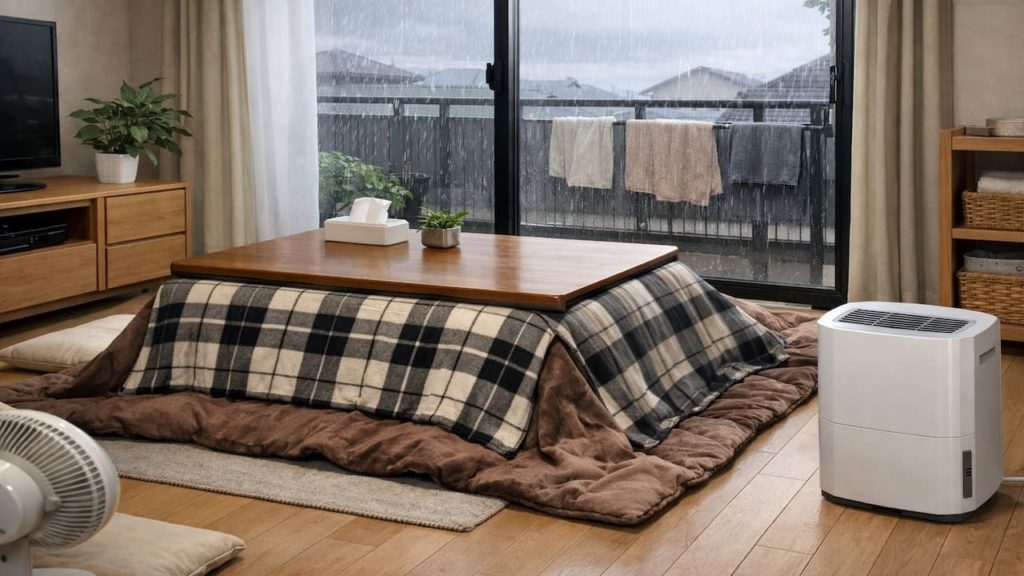
Waking up sweaty under a kotatsu feels awful, and it can be risky. You fell asleep cozy, then your body kept heating in a closed winter room.
In Japan, dry heated air and compact apartments make overnight overheating easier than you think. If you set a timer well, you can nap safely without that heavy, dizzy feeling.
In this guide, you’ll learn how to set kotatsu auto shutoff for overnight safety and keep comfort steady. You’ll also learn timer habits that fit Japan winter living.

Hi, I’m Ken — I’m Japanese, and I live in Malaysia long-term, so I explain everyday life in Japan from a practical ‘from abroad’ perspective.
I hold a building design qualification and I’ve been on site for 20+ years across hundreds of jobs. I turn Japan’s unspoken rules into simple checks, so you can avoid costly mistakes and take the next step with clear actions that feel safe.
1. Kotatsu timer use: 5 tips
Use the timer as your default switch not a backup for Japan winter nights.
Most overheating stories start with “just for a minute” and then you drift off on the floor. A timer creates a hard stop — which matters in Japan homes where insulation varies and rooms get stuffy. It also limits dry skin from long exposure. Good habit.
Accidents involving electric kotatsu have been reported, and improper use is a common factor. According to nite.go.jp.
- Set timer before you sit down each night
- Choose a short cutoff for nap risk
- Put the controller where your hand reaches
- Lower heat level when you plan to sleep
- Reset timer after bathroom breaks at night
You might think you will stay awake, but kotatsu warmth is a sleep trap. If you rely on willpower, you lose on tired nights. Make the timer automatic, then relax without policing yourself. Safer comfort.
2. Set auto shutoff so you never overheat overnight
Match shutoff time to your sleep risk not your mood in Japan winter.
Auto shutoff is not only for power saving — it is for body safety when you fall asleep. Many kotatsu heaters include a built-in timer, so learn your model’s limit and use it. One heater spec lists an auto-off timer up to 5 hours. According to japantrendshop.com.
- Start with a 2 hour auto off target
- Use the lowest setting before you lie down
- Keep blanket edges loose for airflow balance
- Drink water and place it within reach
- Tell family your shutoff plan before bed
Some people set the longest time because it feels safe, but longer time raises dehydration and heat stress. Others set no timer and trust protection features, which are not bedtime tools. Use the timer on purpose, then let the kotatsu do its job. Sleep smart.
3. Why kotatsu overheating happens overnight
Overheating happens when heat stays trapped while you stop moving in Japan rooms.
When you sleep, your posture locks and your blanket seal stays tight, so hot air pools around your legs. Japan winter homes can have dry indoor air, so you lose moisture faster even without heavy sweat. Add a closed room and the warm pocket becomes a slow cooker — quietly. Quiet danger.
- Notice sweating or dry mouth after dozing
- Check skin redness on shins and knees
- Feel head heaviness after waking under blanket
- Watch pets staying too close to heater area
- Smell musty odor from damp blanket sections
You may believe kotatsu cannot overheat because it feels gentle, but long exposure is the issue. The heater is low, yet the enclosure is efficient. Treat it like a sofa nap and you can wake dehydrated and groggy. Respect the enclosure.
4. How to set a timer routine that stays safe
Build a repeatable timer routine you follow half asleep in Japan winter.
Pick one rule you never break — timer on before blanket goes down, then set the heat low. If your kotatsu lacks a timer, a simple outlet timer can help, and ¥100–500 for basic supplies can be enough. Ventilate briefly too, because Japan apartments can trap warm air and stale humidity at night. Small routine.
- Set timer then pull blanket down second
- Keep one edge open for quick exit
- Place phone alarm as a second reminder
- Stop sleeping face down under the blanket
- Turn off and unplug when you leave home
It sounds strict, but strict keeps you safe when you are sleepy. If you share the kotatsu, agree on the rule so nobody extends the timer quietly. You can still enjoy deep warmth, just with a controlled end. Cozy without regret.
5. FAQs
Q1. What timer length is safest if I might fall asleep?
A short cutoff like 1 to 2 hours is safer than all night because it limits heat exposure. Adjust by how easily you doze and how warm your room gets.
Q2. My kotatsu has auto shutoff already, do I still need to set it?
Yes, because some auto features protect from overheating, not sleep timing. Set the timer you want — then treat shutoff as planned.
Q3. Can I sleep under a kotatsu every night in winter?
You can, but watch hydration in Japan’s heated winter air. Use lower heat, set a timer, and avoid sealing the blanket fully.
Q4. What signs mean I should stop overnight kotatsu naps?
Dry mouth, headaches, skin redness, or waking up drenched are warning signs. If you see them, shorten timer time and lower the heat level.
Q5. Is it safe for kids or pets to stay under kotatsu overnight?
They may not move away when hot, so be careful. Keep timer short, watch heater clearance, and protect cords from chewing.
Pro's Tough Talk

I’ve been on site for 20+ years. I’ve worked on hundreds of jobs. Japan winter rooms feel calm, but they hide dumb heat mistakes.
Three causes: you trust your brain when half asleep, you crank heat to get warm fast, and you seal the blanket like a bunker. It is like napping in a parked car with windows shut, and like leaving a kettle on low forever.
Three steps: set the timer first, drop the heat second, keep water close. Then crack the room for a minute before sleep so the air stays sane.
If you wake up sweaty you already messed up so shorten the timer and stop pretending it was just cozy.
You know the scene: you tell yourself five minutes, then wake at 3 a.m. thirsty. You know the other scene: someone covers you kindly, and the kotatsu turns into a personal sauna.
Seriously, who sleeps in a heat box and calls it self care.
Summary
Use the timer as the main safety tool, not an optional feature. In Japan winter housing, a sealed blanket plus dry air can overheat you overnight.
Choose a short cutoff, lower the heat, and keep water nearby before you doze. If you notice dryness or headaches, shorten time and add brief ventilation.
Set the shutoff before you get comfy and you can enjoy kotatsu warmth without the overnight risk. Do it tonight, then keep reading for the next Japan home-life fix.