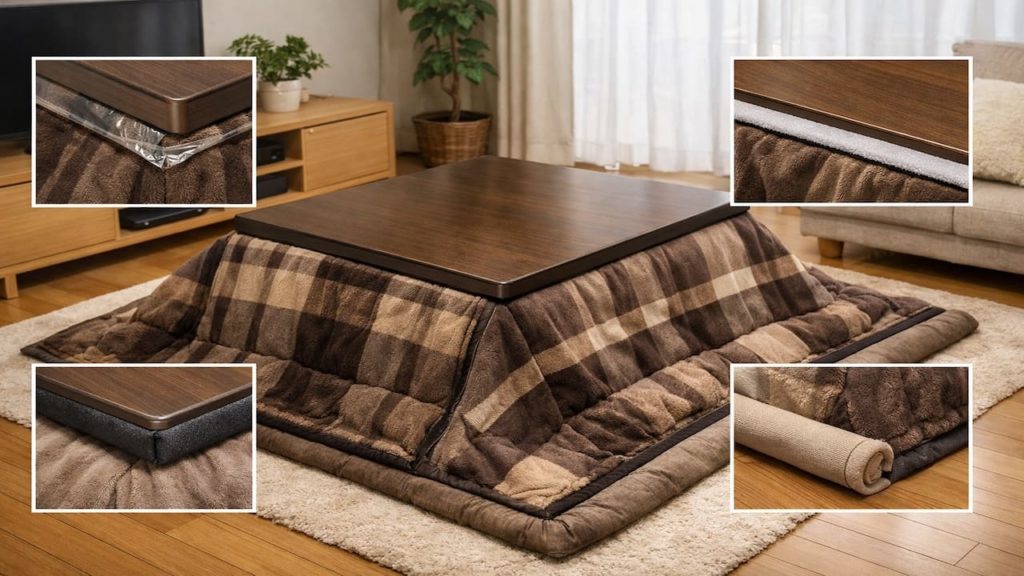
A wobbly kotatsu table makes every cup of tea feel risky. One small bump and the blanket shakes, then the drink goes over.
Loose legs get worse in winter because you sit longer and shift your weight more. In Japan homes with smooth floors and tight rooms, even tiny wobble feels huge.
In this guide, you’ll learn how to fix kotatsu table wobble with simple checks so drinks stay safe. You’ll also learn small habits that fit Japan winter apartments.

Hi, I’m Ken — I’m Japanese, and I live in Malaysia long-term, so I explain everyday life in Japan from a practical ‘from abroad’ perspective.
I hold a building design qualification and I’ve been on site for 20+ years across hundreds of jobs. I turn Japan’s unspoken rules into simple checks, so you can avoid costly mistakes and take the next step with clear actions that feel safe.
1. Kotatsu table wobble: 5 checks
Find the exact wobble source before you tighten anything in a Japan winter room.
Wobble is not one problem, it is a chain: loose bolts, uneven floor, and twisted frames — all stacking together. Start by testing each leg by hand, then check the frame joints underneath. Some kotatsu manuals say to insert leg mounting bolts by hand, then tighten them securely with the supplied spanner driver. According to manuals.plus.
- Lift one corner and feel leg movement
- Check each bolt with your hand first
- Rock the table gently on a flat spot
- Inspect brackets for gaps and bent metal
- Confirm top board sits evenly with frame
You might want to crank every screw hard, but that can strip soft wood and make wobble worse. If the floor is uneven, tightening alone will not fix it in a Japan rental. First isolate the cause, then choose one fix. Clear diagnosis.
2. Fix loose legs so drinks do not spill
Tighten the right fasteners and add stable contact points for Japan winter use.
Most kotatsu wobble comes from leg bolts that loosen slowly with vibration and repeated lifting. Tighten in a cross pattern, and stop when the leg sits flush with no gap — not when your wrist hurts. If something underneath also rattles, manuals say to tighten mounting screws securely and avoid overtightening. According to manuals.plus.
- Turn table upside down on a soft blanket
- Tighten bolts in an X pattern evenly
- Add felt pads under legs for grip
- Shim one leg using folded paper card
- Recheck wobble after ten minutes of sitting
You may think felt pads are only for floor scratches, but they also reduce micro sliding that turns into wobble. If you still spill drinks, the issue is often the floor or a warped leg, not weak tightening. Keep the table stable, then the whole kotatsu feels calmer. Safer tea time.
3. Why kotatsu tables wobble in daily use
Wobble grows when small looseness meets long sitting hours in Japan winter.
A kotatsu gets pushed, leaned on, and lifted more than a normal table, so joints fatigue. In Japan, you often shift weight through elbows, which twists the frame little by little. Cold and dry indoor air can shrink wood slightly, making bolts feel looser over time — subtle but real. Slow drift.
- Notice wobble only after long warm sessions
- Check if blanket pulls legs during movement
- Watch for floor flex near old apartments
- Look for missing washers under bolt heads
- Test wobble in two different room spots
Some people blame cheap tables, but even good frames wobble if one joint loosens. Others ignore it until a drink spills, then stain cleanup becomes the real chore. Fix it early and you prevent mess and stress. Small maintenance.
4. How to stabilize a kotatsu table quickly
Combine tightening plus shimming for a fast stable base in Japan homes.
Do the mechanical fix first, then add a small support so the table stays stable on real floors. Basic supplies are cheap, around ¥100–500 for simple shims or felt pads, and you can keep them for next season. If the leg socket is stripped, add a wider washer or wood-safe filler, then retighten after drying. One calm reset — then test with a full mug.
- Clean dust from joints before tightening bolts
- Add a shim under the shortest leg
- Install wide washers to spread bolt pressure
- Use thread tape on bolts for grip
- Place table on a flat rug area
You do not need a perfect workshop repair for a small wobble. You need stable contact and even tension, especially in Japan apartments where floors can slope slightly. After you fix it, keep one monthly check so it stays tight. Quiet routine.
5. FAQs
Q1. How do I know if the wobble is from the floor?
Move the table to another spot and retest before tightening again. Japan rentals often have slight floor slope, so location changes reveal the truth.
Q2. Should I overtighten bolts to stop wobble forever?
No, overtightening can strip threads — and the wobble comes back in a new shape. Tighten until flush, then recheck after a day of use.
Q3. What if one leg still feels loose after tightening?
Check for missing washers, damaged threads, or a widened bolt hole. A shim can help short term, but a stripped joint needs repair.
Q4. Can felt pads really reduce wobble?
Yes, if the issue is micro sliding on smooth floors. They also protect tatami edges and reduce noise during Japan winter nights.
Q5. Is it safe to work on the table with the heater attached?
Unplug first and avoid pulling on cords. If anything rattles underneath, tighten mounting screws carefully and keep clearance from fabric.
Pro's Tough Talk

I’ve been on site for 20+ years. I’ve worked on hundreds of jobs. Japan winter life makes you camp at the kotatsu, and that table takes a beating.
Three causes. Bolts back out little by little, one leg sits on a slope, and the blanket pulls the frame when you scoot. It is like a chair with one shoe missing, and like a shopping cart wheel that suddenly starts dancing.
Flip it, tighten in an X pattern, and shim the short leg. Then test with your hand on the corner, not with a full mug.
If it wobbles your it is fine is a lie so fix it before the tea wins. One quick check each month is enough.
You know the scene: you set down coffee, the table tips, and you freeze like time will stop the spill. You know the other scene: you keep nudging the mug to the safe spot and pretend you are not annoyed.
Yeah, the kotatsu is not the problem.
Summary
Find the wobble source, then tighten the right bolts and supports. In Japan winter rooms, long sitting time makes small looseness grow — fast.
Add shims or pads if the floor is uneven, and recheck after real use. If threads are damaged, stop forcing and repair the joint instead.
Stabilize it now and your drinks stay stress free while the kotatsu stays cozy. Do one corner test tonight, then keep browsing for the next small fix.