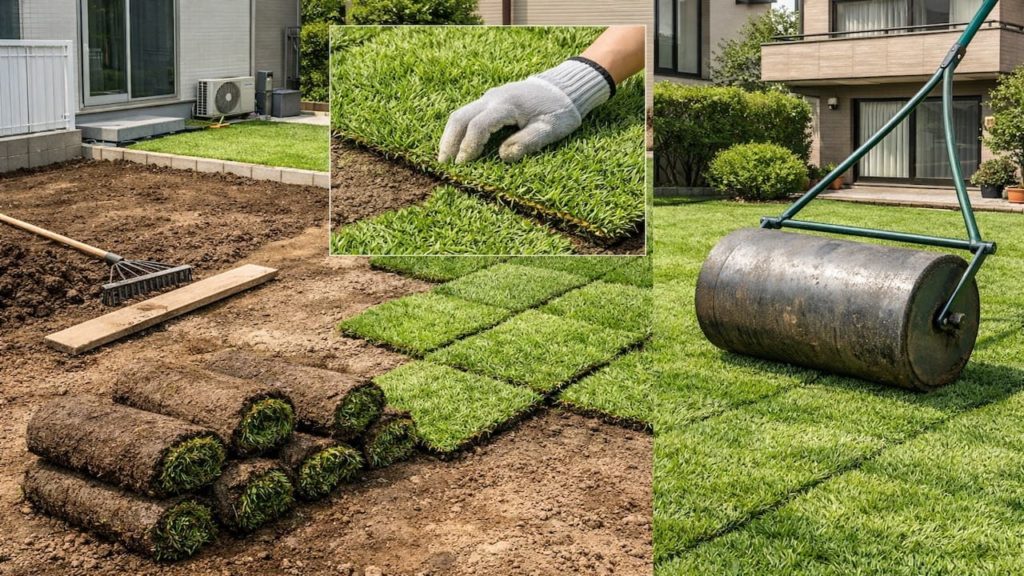
You walk across the lawn in sandals and every step feels like a surprise. Little dips and humps make the yard feel messy, even when the grass looks green.
Bumps can come from settling soil, old footprints, moles, or topsoil that washed away. In Japan, rainy season downpours and humid summers can move fine soil fast, especially around narrow side yards and downspout areas.
In this guide, you'll learn how to level lawn dips without wrecking grass. You will use 5 steps that work with growth, not against it.

Hi, I’m Ken — I’m Japanese, and I live in Malaysia long-term, so I explain everyday life in Japan from a practical ‘from abroad’ perspective.
I hold a building design qualification and I’ve been on site for 20+ years across hundreds of jobs. I turn Japan’s unspoken rules into simple checks, so you can avoid costly mistakes and take the next step with clear actions that feel safe.
1. Lawn feels bumpy under sandals 5 steps to level dips
Level dips in thin layers so the grass keeps breathing.
Most lawns get bumpy from small settling, not one big collapse. In Japanese homes, the path from gate to door gets compacted by daily traffic, then the edges settle unevenly. Work with the lawn’s growth cycle—if you bury blades too deep, the patch dies instead of smoothing out. The cost is mostly time/effort when you are just redistributing soil you already have.
- Walk the lawn barefoot to map soft dips
- Circle problem spots with small stones
- Check if bumps are soil or hidden roots
- Probe with a screwdriver for hollow pockets
- Pick a week with steady grass growth
Some people try to fix it in one day with a thick dump of soil. That turns dips into dead spots and invites weeds. If you keep the layer thin, grass pushes through and stitches the surface flat. Slow wins, and it stays flat.
2. Topdress sweep and repeat
Topdress then sweep so the mix drops into low points.
Topdressing is just controlled filling, not burying. In Japan’s humid months, a heavy mix that stays wet can smother grass, so use a light, crumbly blend and spread it evenly. One pass will not perfect the lawn—two or three light rounds beat one heavy mistake. Keep the blades visible after sweeping, and you stay safe.
- Mix dry sand with fine soil lightly
- Spread a thin layer across the dip
- Sweep with a push broom into gaps
- Brush grass tips free so light hits
- Repeat after a week if dip remains
People worry repeating is wasted effort. It is the opposite, it is how you avoid suffocation and rot. If you can still see grass tips after sweeping, you are in the right zone. Repeat lightly until your sandals stop catching.
3. Why lawn dips form in the first place
Dips happen when soil moves and the lawn cannot reset the surface.
Water is the main mover: runoff, splash, and downspout discharge steal fines and leave soft pockets. In Japan, sudden rain bursts can hit hard, then the yard dries and shrinks, making the surface uneven again. Compaction adds another layer, because compacted strips settle differently from loose soil. Old thatch can also hide the real contour, so you think it is bumpy when it is just spongy.
- Check downspouts dumping water onto lawn edges
- Check puddles that appear after short rain
- Check compacted paths near gates and bins
- Check thatch layer thickness under green grass
- Check for burrowing signs near fresh soil
Some people blame the grass type, but the soil story is usually louder. If you do not control water, the dip returns after every storm. If you do not relieve compaction, the dip becomes a rut. Fix the drivers, then leveling actually holds.
4. How to level dips step by step without killing grass
Use a 5 step cycle that fills, frees blades, then lets roots recover.
Step 1: mow a bit higher and stop scalping the area. Step 2: rake lightly to lift matted blades and reveal the dip shape. Step 3: spread a thin topdress mix and sweep it in until tips show. Step 4: water lightly to settle the mix, then stop before it turns muddy—expect ¥1,500–5,000 for basic sand and soil if you need to buy it. Step 5: repeat in 7 to 10 days if the dip is still noticeable, not sooner.
- Mow higher to protect stressed crown areas
- Rake lightly to lift matted grass blades
- Topdress thin and keep tips visible
- Sweep across dip until surface feels smooth
- Water lightly then avoid traffic for days
Some folks water hard to “set” the soil, then they wash the mix away. Others keep walking on it and stamp a new dip into the patch. If you keep traffic off and go thin, the lawn grows through and locks it. If the dip is deep and keeps sinking, you are not leveling, you are discovering a drainage or void issue.
5. FAQs
Q1. Can I just add a thick layer and be done?
No keep it thin so grass can push through and stay alive. Thick layers suffocate crowns and turn dips into bare spots.
Q2. What mix should I use for topdressing?
Use a dry, fine mix that spreads easily and does not clump. Avoid heavy wet compost blobs that stick to blades and block light.
Q3. How many rounds does it usually take?
Small dips often smooth out in two or three light rounds—big dips take more time. Let grass recover between rounds so roots stay strong.
Q4. Should I seed after leveling?
Seed only if you created thin spots and you can keep moisture steady. If the grass is still dense, let it knit through first.
Q5. When should I stop and do a bigger repair?
If the dip keeps sinking or you feel a hollow pocket underfoot, stop and investigate. That can point to washout, drainage problems, or pests under the turf.
Pro's Tough Talk

I’ve spent 20+ years working around Japanese homes, so I’ve seen what tends to work—and what tends to go wrong—in everyday use. In Japan’s rainy season, a “small dip” turns into a slippery ankle trap faster than you think.
Here’s the cold truth. You can’t fix a dip by burying the lawn like you’re hiding evidence. Thick topdressing is a wet blanket, and wet blankets make grass quit. Compaction makes one strip settle like a tired futon while the rest stays firm, and runoff steals soil like a tiny pickpocket. You step out to hang laundry and the sandal heel catches, and you do that little rage stomp, right?
Mark the dips today. Spread a thin mix and sweep it in tonight. Stay off it this weekend.
Leveling works when you respect the crown and keep the layer thin enough for light and air. If the same spot sinks again after two rounds, stop pretending it is “just uneven” and check drainage or a void next.
Yeah, that’ll fix it. Dump a mountain of soil and wonder why it died.
Summary
Bumpy lawns come from soil movement, compaction, and hidden soft pockets. Level dips with thin topdressing layers so the grass keeps breathing.
If the dip keeps returning, control runoff and reduce traffic on the same strip. If it feels hollow or keeps sinking, investigate the cause before adding more soil.
Do one thin sweep today and keep grass tips visible as you level. Repeat in a week and the sandals test will finally feel normal.