You look at your yard and wonder if real grass is worth the hassle, or if artificial turf is the smarter play. Japanese yards are small, edges are tight, and every mistake shows.
The choice is not just “maintenance vs no maintenance” because both surfaces come with tradeoffs. In Japan, humid summers, rainy season mud, and winter dryness can change how the yard feels underfoot week to week.
In this guide, you'll learn how to choose between turf and lawn. You’ll use 5 checks to match maintenance, cost, and looks to the way you actually live.

Hi, I’m Ken — I’m Japanese, and I live in Malaysia long-term, so I explain everyday life in Japan from a practical ‘from abroad’ perspective.
I hold a building design qualification and I’ve been on site for 20+ years across hundreds of jobs. I turn Japan’s unspoken rules into simple checks, so you can avoid costly mistakes and take the next step with clear actions that feel safe.
1. Artificial turf vs lawn 5 checks for Japanese yards
Pick the surface that matches your weekends not your ideal fantasy.
Japanese yards punish “set and forget” thinking, because you have tight edges, drainage corners, and foot traffic near the genkan path. Summer humidity can keep surfaces damp, while sudden heat bakes thin soil fast. One choice wins when you want consistency, the other wins when you want living softness—choose based on how you use the space.
- Check how often you want to mow
- Check who uses the yard daily
- Check shade from walls and fences
- Check drainage after heavy rain bursts
- Check if you hate weeds with passion
People pick by looks alone and regret it after the first season. Turf can look perfect, then feel hot and dusty in sun. Lawn can feel amazing, then look rough during rainy season if airflow is poor. Run the checks first, then the answer gets obvious.
2. Maintenance cost and look
Upfront cost is not the whole bill because time and resets add up.
For Japan budgets, a rough install range often lands around ¥4,300–8,000 per ㎡ for artificial turf (materials plus installation) and around ¥6,000–9,000 per ㎡ for natural sod with basic work included—your site prep can push either higher. According to curama.jp. According to smile-gaikou.com.
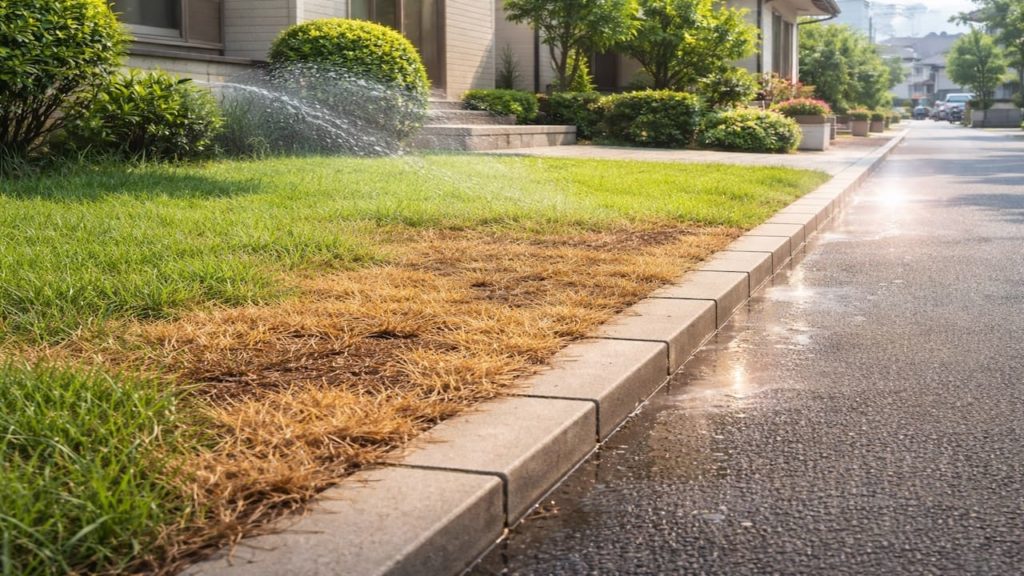
Looks are different too: turf stays evenly green, while lawn changes with seasons and mowing. In Japan’s humid months, lawn can thin in shade, and turf can trap fine dust and leaves along edges if you do not rinse and brush it. The “pretty” option depends on whether you prefer perfect color or natural texture.
- Check if you accept seasonal browning patches
- Check if you will brush turf monthly
- Check if you will edge trim regularly
- Check if you want barefoot softness daily
- Check if you can store tools somewhere
Some folks say turf means zero work—nah. You still clean, brush, and manage seams and edges, especially in small Japanese yards with lots of debris fall. Some folks say lawn is always cheaper—also not guaranteed if you end up reseeding and fighting weeds every season. Decide what you will actually do, then the cost story makes sense.
3. Why Japanese yards make this choice tricky
Japan amplifies moisture problems so the wrong surface feels worse fast.
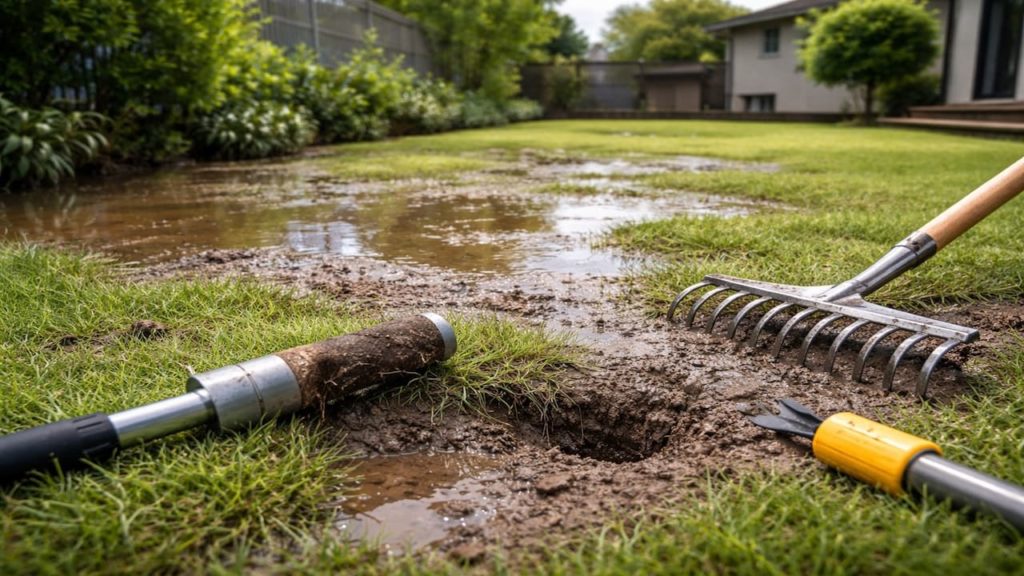
Rainy season can push water into corners, and small lots often have blocked wind from neighboring walls. That means lawn can stay wet longer and invite disease, while turf can hold moisture and grime under leaf litter if drainage layers are weak. Summer sun also hits hard, and artificial turf can feel noticeably hotter to the touch than living grass on bright days. Space constraints matter, because Japanese yards have more edges per square meter.
- Check downspouts dumping onto the yard
- Check tight side yards with poor airflow
- Check mud paths from gate to door
- Check leaf litter collecting at fence base
- Check winter shade keeping ground damp
People treat this like a style choice, but it is more like a drainage and lifestyle choice. If you have runoff and shade, lawn becomes a maintenance job. If you have blazing sun and no rinse habit, turf becomes a hot dusty mat. The yard conditions decide more than your taste.
4. How to decide and set it up so it stays nice
Use a hybrid plan if one surface cannot satisfy everything.
If you want low effort, turf works best in high-traffic strips and tiny side yards where mowing is annoying. If you want comfort and cooling feel, lawn works best where you can water in the morning and get airflow, which is easier in more open parts of Japanese yards. Your setup matters: for turf, prioritize a stable base and clean edges, and for lawn, prioritize soil health and mowing height.
- Put turf on traffic strips near entry
- Keep lawn in open sun with airflow
- Set stepping stones to protect weak areas
- Raise mowing height during humid summer months
- Rinse turf when dust and pollen build
People force an all-or-nothing decision and end up fighting their own yard. A small Japanese yard can look better with turf where the damage happens and lawn where you relax. If you still want one surface, pick the one you will maintain without resentment. That is the real durability test.
5. FAQs
Q1. Which is better for tiny Japanese side yards?
Artificial turf often wins for tight side yards because mowing access is annoying and weeds love those edges. Just plan to rinse and brush sometimes so debris does not settle into the pile.
Q2. Will artificial turf stop weeds forever?
No, weeds can still sprout from windblown seeds in dust that collects on top. Edge cleanup and occasional brushing keeps it under control.
Q3. Does lawn always look bad in Japan’s rainy season?
Not always—good airflow and morning watering help a lot. If shade and damp corners dominate, lawn needs more care to avoid thinning.
Q4. Can turf get uncomfortably hot?
Yes, in direct sun it can feel much hotter than grass, so barefoot comfort can drop. Shade, rinsing, and smart placement reduce the problem.
Q5. Is hybrid design worth it?
Usually, yes. Turf where you walk and lawn where you lounge gives you fewer headaches and a nicer feel in a small yard.
Pro's Tough Talk

I’ve spent 20+ years working around Japanese homes, so I’ve seen what tends to work—and what tends to go wrong—in everyday use. In Japan’s rainy season, the yard becomes a mud test lab whether you like it or not.
Here’s the breakdown, no sugar. Real lawn is a needy pet: it wants light, air, and the right mow height, or it throws a tantrum. Artificial turf is a frying pan in full sun: it looks great until you touch it and regret your life choices. You know that moment you step out in socks to bring in laundry and feel that damp squish by the fence line?
Fix drainage corners first. Decide where traffic actually happens next. Then pick turf or lawn for that zone.
If you want one surface everywhere pick the one you will maintain because neglect ruins both. If turf starts smelling or matting even after rinsing, that’s your sign to upgrade cleaning and base drainage, and if lawn keeps thinning after decent mowing and airflow, that’s your sign to reduce lawn area.
Bro, stop buying problems.
Summary
Artificial turf gives consistent green and lower weekly upkeep, while lawn gives natural softness and a cooler feel. Japanese yards make the tradeoffs louder because space is tight and humidity is real.
If you hate mowing and fight weeds constantly, turf in high-traffic zones can be a clean win. If you want a natural look and do not mind seasonal care, lawn can feel better underfoot.
Walk your yard and mark the traffic zones then choose turf for damage strips and lawn for comfort areas. That split decision usually looks best and feels easiest.