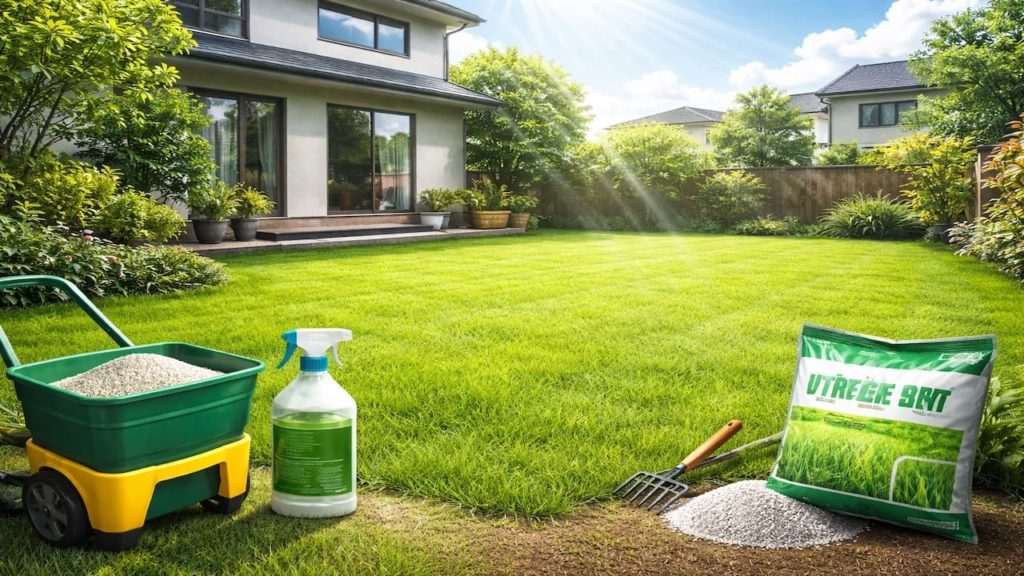
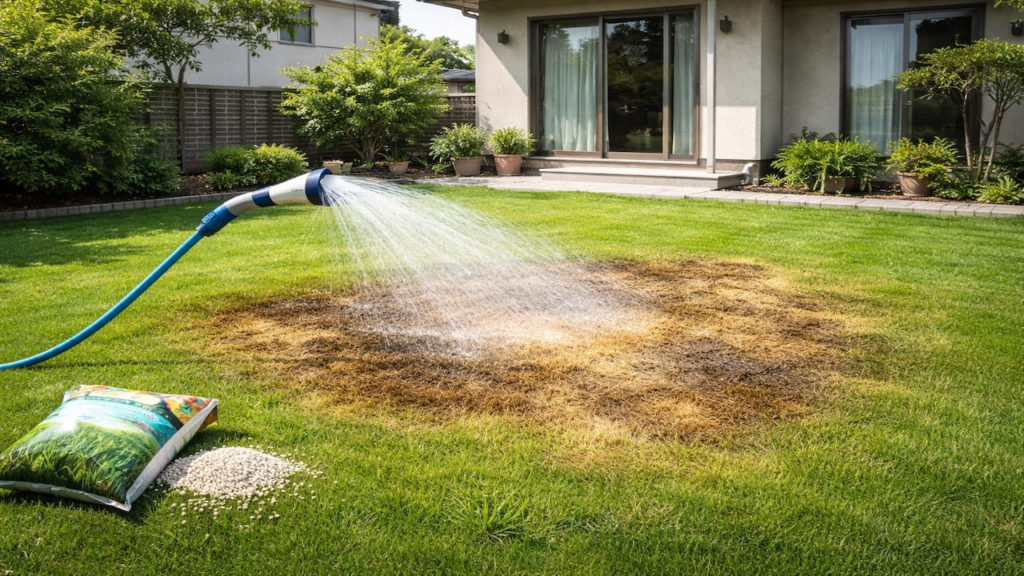
You run your hand through the lawn and it feels springy, like the blades sit on a sponge. When you rake, brown stuff keeps coming up, and you worry you will tear the grass out.
Dethatching can help, but it can also stress the lawn if you do it at the wrong time or too aggressively. In Japan, rainy season humidity and sudden heat spikes can slow recovery, especially in small yards with tight airflow.
In this guide, you'll learn how to dethatch safely without trashing your lawn. You’ll pick a dry day, rake the right way, and give the grass a clean recovery path.

Hi, I’m Ken — I’m Japanese, and I live in Malaysia long-term, so I explain everyday life in Japan from a practical ‘from abroad’ perspective.
I hold a building design qualification and I’ve been on site for 20+ years across hundreds of jobs. I turn Japan’s unspoken rules into simple checks, so you can avoid costly mistakes and take the next step with clear actions that feel safe.
1. Dethatching a lawn safely 5 steps without stress
Go light and controlled so you remove thatch without ripping crowns.
Dethatching is a reset, not a punishment—your goal is airflow and soil contact. In Japanese yards, narrow side spaces and fence lines stay damp longer, so thatch can build quietly under the green. If you attack it like you’re digging a trench, you expose roots and the lawn sulks. The safer move is thin passes and planned recovery.
- Pick a week with steady active growth
- Confirm soil is dry on the surface
- Test a small patch before full yard
- Rake in one direction then cross lightly
- Stop when soil shows in small spots
Some people wait until the lawn looks “terrible,” then overdo it in one day. That turns a small thatch issue into a bare spot problem. In Japan’s humid stretches, bare soil also invites weeds fast. Keep it gentle, then let growth do the heavy lifting.
2. Dry day rake and recover
Do it on a dry day so the rake lifts thatch instead of tearing turf.
Wet thatch behaves like a sticky carpet—everything snags and clumps. Japan’s rainy season makes “almost dry” feel dry, but the layer underneath can still be damp and heavy. Wait for a window where the top feels crisp and the lawn is not slick in the morning. You want clean pulls, not ripped runners.
- Wait until dew is gone before starting
- Mow slightly higher to reduce tugging
- Rake with short strokes not deep yanks
- Bag or tarp debris so it dries fast
- Water only after debris is fully removed
People think watering first makes it easier, but it usually makes it worse. If the rake drags grass blades forward, you are too wet or too deep. If you can lift thatch in fluffy strips, you are doing it right. Dry day, light hands, then recover.
3. Why dethatching can backfire if you rush it
It backfires when you remove living crowns and the lawn cannot rebound.
Thatch is normal in small amounts, and you only need action when it becomes a barrier. A common guide is that around 1/2 inch (about 1.25 cm) or more starts to interfere with water and air movement. In Japan, warm humid nights can keep the layer moist, which hides how thick it really is. If you dethatch during heat or drought stress, recovery slows and weeds jump in.
- Check thatch thickness with a pocket knife
- Check roots staying shallow when turf lifts
- Check mower scalping creating more thatch buildup
- Check shade corners staying wet and matted
- Check springiness underfoot like a sponge mat
Some folks dethatch because the lawn feels bouncy, but bounce can also be uneven soil. Others dethatch because they saw a video, not because the lawn needs it. In Japan’s shoulder seasons, recovery can pause for a week if weather flips. If you are not sure it is thatch, confirm thickness first and keep the stress low.
4. How to dethatch step by step and keep grass alive
Use a 5 step routine that removes debris and protects regrowth.
Step 1: pick a dry window with mild temps and no heavy rain forecast. Step 2: mow slightly higher and clear sticks so the rake does not snag. Step 3: rake shallow in sections, then cross rake lightly once. Step 4: remove every pile and expose grass tips again, then water lightly the next morning. Step 5: wait 7 to 10 days and repeat only if needed; expect ¥1,500–6,000 for a thatch rake or a basic tool setup if you do not own one.
- Work in small squares and finish each area
- Stop when you see scattered soil not bare dirt
- Collect debris immediately so it cannot smother
- Water lightly next day to support recovery
- Delay heavy foot traffic for several days
People try to “fix it all” in one pass—then the lawn looks worse for weeks. If you see lots of green runners coming up, you went too deep. If the lawn looks thinner but upright, that is normal and it rebounds with growth. In Japan, humidity can tempt you to overwater after, so keep it light and let the surface dry between cycles.
5. FAQs
Q1. How do I know I really need dethatching?
You need it when thatch blocks soil contact and the lawn feels springy even after mowing. Cut a small plug and check the layer thickness, then decide—do not guess.
Q2. Can I dethatch during rainy season?
You can, but only on a truly dry window when the surface is not slick. If the rake drags the turf forward, stop and wait.
Q3. Should I water before dethatching?
No, watering first usually increases tearing and clumping. Save watering for the next morning after debris is removed.
Q4. Will dethatching create bare spots?
It can if you go too deep or do too many passes. Light work may look thin for a bit, but growth usually fills it back in.
Q5. What should I do right after I finish?
Remove all debris and let the lawn breathe. Keep traffic light for a few days and mow higher until it looks stable.
Pro's Tough Talk

I’ve spent 20+ years working around Japanese homes, so I’ve seen what tends to work—and what tends to go wrong—in everyday use. In Japan’s sticky rainy months, thatch turns into a damp blanket that keeps the lawn sleepy.
Here’s the nasty truth. People rake like they’re trying to exorcise demons, and they pull out living crowns instead of dead fluff. That’s like ripping out stitches and acting shocked when it bleeds. And if you leave piles on the lawn, it’s basically putting a futon over your grass and calling it “recovery.”
Start with a small test patch near the edge. Rake shallow and collect the junk right away. Water lightly tomorrow morning and then back off.
If the lawn looks shredded after one section you went too deep and you need to stop, not “push through.” If it looks thinner but upright, let it regrow for 10 days and reassess before you touch it again.
ツッコミ:それ、草にケンカ売ってるだけだぞ。
Summary
Dethatching is safe when you choose a dry day and remove thatch in thin passes. The goal is airflow and soil contact, not scraping the yard bare.
If you rush it or do it wet, you rip crowns and slow recovery. If you keep it light and clean up debris fast, the lawn rebounds and thickens.
Test one small patch today and only expand if the rake lifts fluffy thatch cleanly. After you finish, clear every pile and give the lawn a calm week.