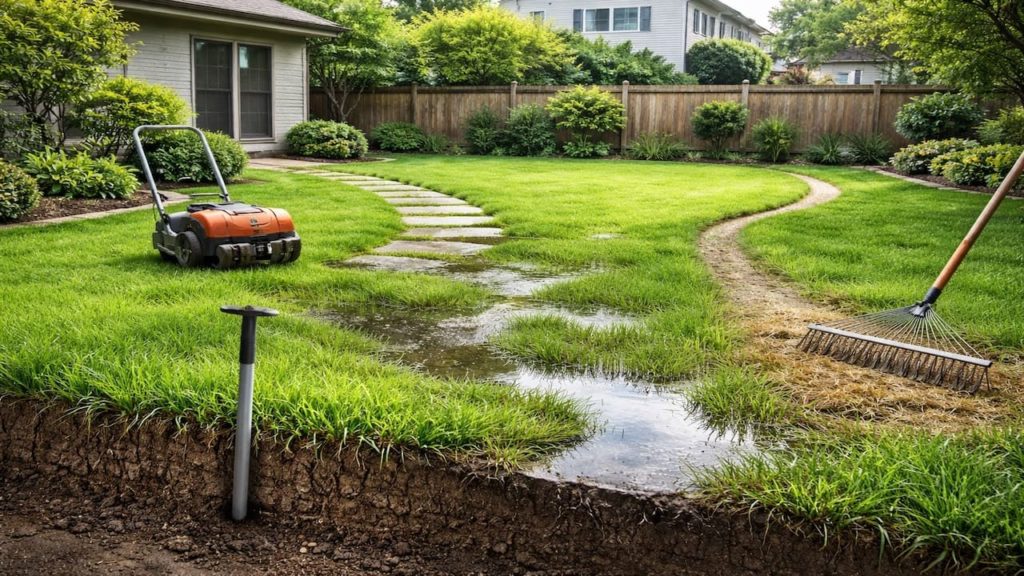
You look at the lawn and it still feels spongy, even days after the last rain. Your shoes leave prints, and the grass starts to smell a little “stale.”
Water that lingers can come from compaction, a low spot, clogged thatch, or runoff that keeps returning. In Japan, rainy season humidity and small-yard airflow can keep soil and blades wet longer than you expect.
In this guide, you'll learn how to diagnose why your lawn stays wet and what to fix first. You will run 5 checks that improve drainage without turning the yard into a construction site.

Hi, I’m Ken — I’m Japanese, and I live in Malaysia long-term, so I explain everyday life in Japan from a practical ‘from abroad’ perspective.
I hold a building design qualification and I’ve been on site for 20+ years across hundreds of jobs. I turn Japan’s unspoken rules into simple checks, so you can avoid costly mistakes and take the next step with clear actions that feel safe.
1. Lawn stays wet for days 5 checks to improve drainage
Start with a simple wetness map so you fix the real pattern.
“Wet lawn” can mean wet soil, wet thatch, or water that keeps arriving from somewhere else. In many Japanese yards, fences and neighboring walls block wind, so the surface dries slowly even when rain stopped. The cost is mostly time/effort. If you map where it stays wet, you avoid random fixes and wasted weekends—one clear target.
- Mark soggy spots after 48 hours no rain
- Check if wet zones match shade lines
- Check if wet zones match foot traffic paths
- Check if wet zones sit near downspouts
- Check if wet zones sit near paved edges
People treat the whole lawn because it feels safer. But drainage problems are usually local, not global. If only one corner stays wet, that corner has a reason. Find the reason first, then you can fix it once and stop the repeat.
2. Compaction slope and thatch
Separate soil issues from surface issues because the fix is different.
Compaction makes water sit on top because it cannot sink in fast enough. A slight slope can send runoff into one low pocket, so the same area stays saturated again and again. Thatch can act like a wet sponge that keeps the crown damp even when the soil below is not soaked—classic in Japan’s humid stretches when nights do not dry out. You need to know which layer is trapping water before you touch a rake or shovel.
- Push a screwdriver to test hard compacted zones
- Check for tiny puddles that reappear daily
- Check thatch thickness by parting grass to soil
- Check if water runs from higher ground into dips
- Check if mud forms near paving and edges
Some folks blame clay soil for everything. Clay matters, but compaction and runoff routing can make any soil act like clay. Others blame thatch and rake the lawn raw, then it turns thin and weedy. Confirm which layer is guilty, then do the least stressful fix that changes the outcome.
3. Why a lawn stays wet for days in Japan
It stays wet when drying is blocked and water input keeps repeating.
Drying needs airflow, sun, and a path for water to move down and away. In Japan, rainy season can keep humidity high, so the surface does not evaporate fast, especially in tight residential lots. Add shade from walls, and dew can linger into late morning, which keeps the crown wet and soft. If runoff keeps feeding the same low spot, you are not “draining slowly,” you are being refilled.
- Check morning dew lasting past late morning
- Check shaded corners near walls staying dark wet
- Check downspout splash carving small channels in soil
- Check mower tracks leaving grooves that hold water
- Check moss or algae film in damp patches
People try to solve wet lawns by watering less, but that is not always the core issue. If the area is wet from rain and runoff, irrigation is not even part of the story. If the crown stays wet from thatch, the soil could be fine and you still get disease pressure. Fix airflow and pathways, and the lawn stops acting like a wet towel.
4. How to improve drainage without killing the lawn
Fix in the order that changes water flow and let grass recover between steps.
Start with routing: extend or redirect downspout splash away from the lawn edge, then correct the low spot with thin topdressing layers instead of burying grass. Next, relieve compaction with aeration holes in the traffic strip, then lightly rake out matted thatch so air reaches the crown—Japan’s humid months make that step pay off fast. Expect about ¥2,000–6,000 for a basic aeration tool or simple lawn supplies if you do not own them yet.
- Redirect downspout splash away from lawn edges
- Topdress low spots thin then broom in
- Aerate traffic strips to open infiltration paths
- Rake light thatch so crowns can dry
- Pause heavy traffic and let roots rebound
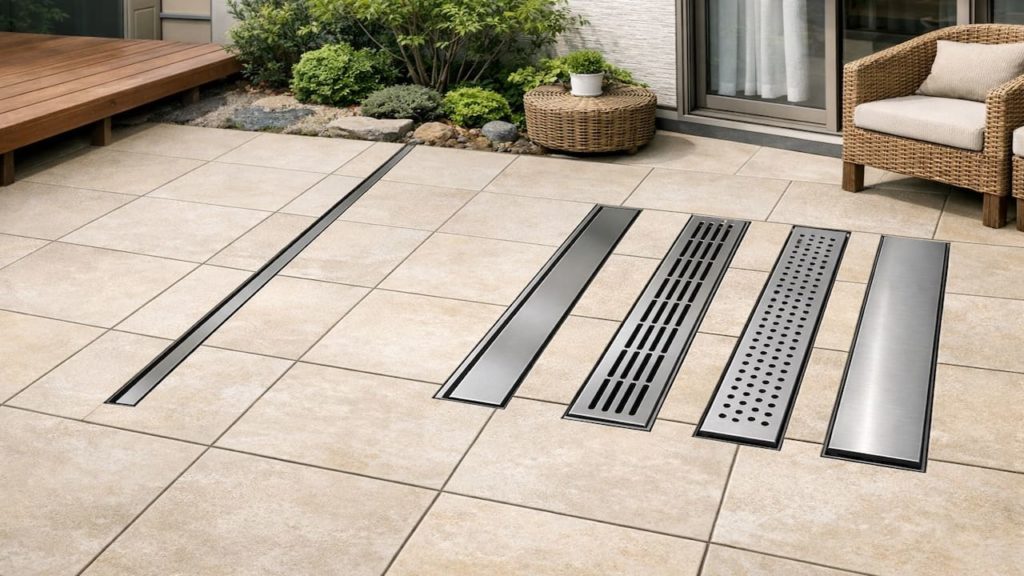
Some people jump straight to digging a trench drain. That can work, but it is often overkill for a small Japanese yard where one low pocket is the true issue. Others dump thick soil in one go, and the grass suffocates and turns into a bigger bare patch. If you change the water route first, then loosen the soil, the lawn usually improves without drama.
5. FAQs
Q1. Is it always a drainage problem if the lawn stays wet?
No sometimes it is a drying problem from shade and blocked airflow. In Japan’s humid season, even normal soil can stay wet on top if dew and shade linger.
Q2. How do I know if compaction is the main cause?
Try the screwdriver test in the wet zone and a nearby dry zone. If it barely goes in where it stays wet, compaction is likely a big part of it.
Q3. Should I rake out thatch right away?
Only if the surface feels spongy and you see a matted layer holding moisture at the crown. Go light, because aggressive raking can stress the lawn in warm weather.
Q4. Can a small slope really cause days of wetness?
Yes, because a gentle slope can funnel runoff into one low pocket over and over. If the same spot is always last to dry, think routing before soil type.
Q5. When is it time to do bigger drainage work?
If water actually stands as puddles after every rain and the spot keeps sinking, you may need grading or a drain. If the wetness is surface-only, fix airflow, compaction, and low spots first—then judge.
Pro's Tough Talk

I’ve spent 20+ years working around Japanese homes, so I’ve seen what tends to work—and what tends to go wrong—in everyday use. In Japan’s rainy season, a soggy lawn is basically a sponge left in a closed bathroom.
Here’s the cold setup. Compaction turns soil into a parking lot, so water just sits there like it paid rent. Thatch becomes a wet blanket, holding moisture at the crown where disease loves to party. And a tiny low spot is a soup bowl, refilled by runoff every time you get a shower. You step out in slippers to take out the trash and your heel sinks, right?
Unclog the water path now. Poke air holes in the traffic strip today. Give the low spot a thin topdress this weekend.
If it still stays wet after you fix routing and compaction then go after grading because the surface fixes won’t beat a bowl-shaped yard. If the grass starts smelling sour or thinning in rings, that’s your line to prioritize drying fast over “perfect green.”
Nope.
Summary
A lawn stays wet when water keeps arriving or cannot move down and away. The fastest progress comes from mapping the wet zones and separating compaction, slope, and thatch.
If the same corner is always last to dry, fix routing and low spots before you blame the whole lawn. If the screwdriver test fails, relieve compaction and give roots oxygen again.
Mark the soggy zones today then redirect splash and aerate the traffic strip next. Once the surface dries faster, you can fine-tune thatch and leveling without stress.