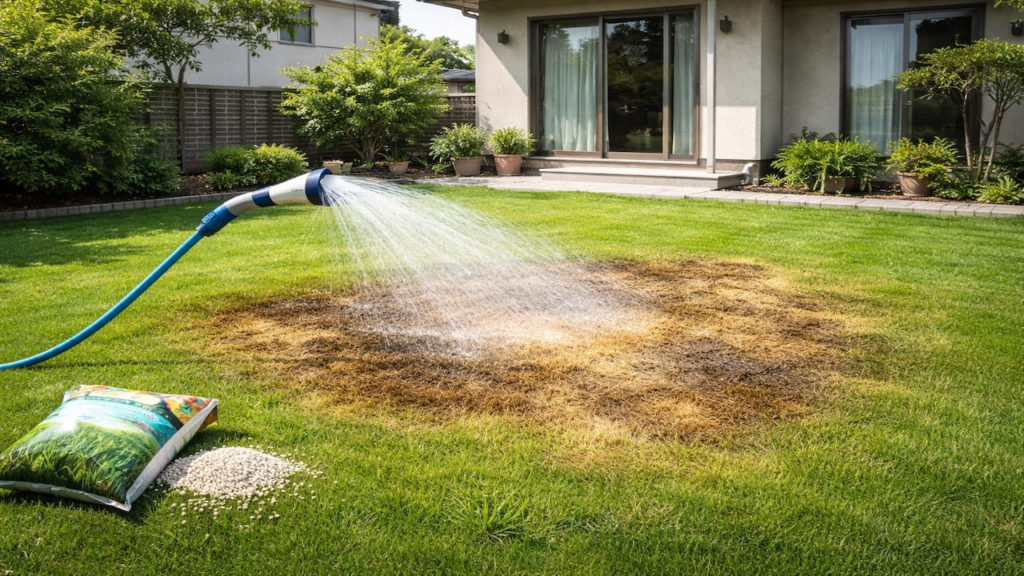
You fed the lawn and now it looks scorched, like the green got erased in stripes or patches. It’s scary because it feels like you caused it in one day.
Fertilizer burn can be mild and temporary, or it can kill crowns if salts sat too strong for too long. In Japan, humid weeks and sudden sun after rain can make the damage look worse before it looks better.
In this guide, you'll learn how to limit fertilizer burn damage fast. You will flush salts, stop extra stress, and give the lawn a clean chance to recover.

Hi, I’m Ken — I’m Japanese, and I live in Malaysia long-term, so I explain everyday life in Japan from a practical ‘from abroad’ perspective.
I hold a building design qualification and I’ve been on site for 20+ years across hundreds of jobs. I turn Japan’s unspoken rules into simple checks, so you can avoid costly mistakes and take the next step with clear actions that feel safe.
1. Lawn fertilizer burned it 5 checks to limit damage
Act fast before the burn spreads.
First, figure out what kind of “burn” you are seeing—brown tips are different from dead crowns. Look for patterns: straight stripes often mean spreader overlap, while blotches can mean spills or clumps. Heat and wind also speed up salt stress, so the same mistake looks worse on a hot dry day. This is triage—do the checks, then choose the lightest fix.
- Check if damage matches spreader stripe patterns
- Check for visible granules stuck on blades
- Check soil surface for crusty salty feel
- Check crowns by tugging blades near the base
- Check if the area feels dry and crunchy
Some people panic and apply more fertilizer to “fix the color.” That stacks salts and makes the burn deeper. If you confirm it is fertilizer injury, your job is flushing and patience, not feeding. Keep your hands off the bag for now.
2. Flush salts and wait
Flush the area deeply to move salts away from roots.
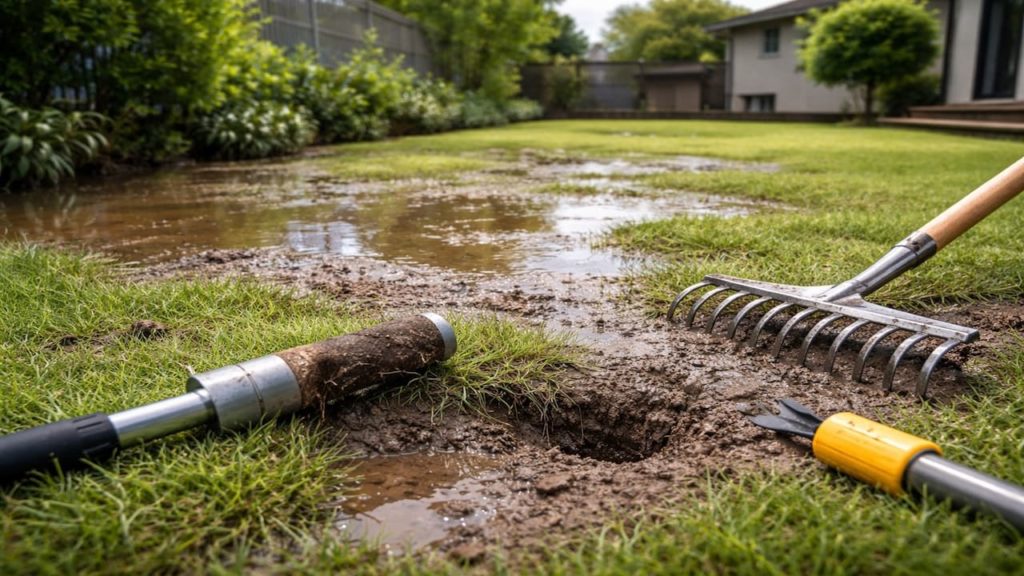
If granules are still visible, remove what you can first so you are not dissolving extra salts into the crown. Then soak in sessions instead of blasting once, because you want water to move down, not run off. In Japan’s tight yards, edges near concrete often dry faster, so they burn harder and also need more careful soaking. Slow water, repeated, then wait—grass needs time to respond.
Soaking the affected area with one-inch applications of water, three to four times, can help leach excess salts from the soil. According to University of Maryland Extension.
- Pick a calm day to avoid runoff loss
- Remove loose granules with a gentle sweep
- Soak in cycles instead of one long blast
- Stop if water starts pooling and moving away
- Wait a full week before judging recovery
People want to see green in two days and keep messing with it. That usually slows recovery because you keep stressing crowns that are already dehydrated. If you flushed and the soil is not salty anymore, the next move is simply time. Waiting is a tactic, not surrender.
3. Why fertilizer burn happens so fast
Burn is salt stress that pulls moisture out of roots and blades.
Fast-release fertilizer can create a high-salt zone right where roots drink, so grass dehydrates even if the weather looks normal. Spreader overlaps double the dose, and spills create a “dead dot” that looks like it was torched. Moist blades also hold granules higher up, so the burn starts on leaves and then moves down. In Japan, after-rain sun can bake that salty film quickly—ugly combo.
- Check for overlap lines where passes met
- Check for spill spots near driveway filling area
- Check if grass was damp during application
- Check for windy spread that piled fertilizer unevenly
- Check if you watered lightly instead of soaking in
Some folks blame disease because the lawn turns brown fast. But burn usually shows a sharp pattern and a sudden timeline, not a slow spread. If the pattern matches your walking route, it is not a mystery. Learn the cause so you do not repeat it next month.
4. How to limit damage and restart growth
Reduce stress and protect crowns while the lawn regains moisture.
After flushing, stop all fertilizer and avoid heavy mowing until new growth appears. Raise mowing height slightly so crowns stay shaded, and mow only when the lawn is dry enough to cut clean. Keep watering focused on recovery: deep enough to support roots, but not so constant that the surface stays soggy. In most cases, cost is mostly time/effort.
- Mow higher and avoid scalping stressed zones
- Rake gently to lift matted burned clippings
- Keep traffic off the patch for several days
- Water early morning not at night
- Spot seed only after you confirm crown death
Some people overseed immediately because brown looks like “empty.” If crowns are still alive, seed just wastes effort and can fail under salty conditions. Give it 7 to 14 days after flushing, then reassess. If the grass pulls out easily and stays bare, then you switch to repair mode.
5. FAQs
Q1. Is fertilizer burn always permanent?
No mild burn can recover if crowns are alive and you flush early. If the grass pulls out with no resistance, that spot may need repair.
Q2. Should I mow the burned area right away?
Not right away. Wait until it is dry and stable, then mow higher to avoid ripping stressed crowns.
Q3. When can I fertilize again?
Wait until you see steady new growth—then start lighter than last time. If you rush it, you can re-burn the same spot.
Q4. Can I “neutralize” fertilizer burn with another product?
No quick product cancels salt stress. Water and time are the real tools, plus preventing runoff and compaction.
Q5. How do I prevent this next time?
Apply on dry blades, calibrate the spreader, and water in properly. Also avoid filling the spreader over grass so spills do not create dead dots.
Pro's Tough Talk

I’ve spent 20+ years working around Japanese homes, so I’ve seen what tends to work—and what tends to go wrong—in everyday use. In Japan’s humid rainy season, burn patches look extra nasty because everything stays damp, then cooks fast.
Fertilizer burn is basically a salt slap. It’s like pouring soy sauce on rice and calling it “seasoning,” then acting shocked when it’s inedible. You double-pass one stripe, spill a handful near the gate, and now you’ve got a lawn tattoo you didn’t ask for. Friday night feed, Saturday morning “why is it brown,” classic.
Pick up the leftover granules. Soak in cycles so water goes down, not sideways. Then back off and let the crowns breathe.
If the patch still pulls out like dead hair after 10 days then switch to repair and stop pretending it will magically green up. If you keep fiddling daily, you’re just turning one mistake into a hobby.
Summary
Fertilizer burn is usually salt stress plus too much dose in one spot. The fastest damage control comes from checking patterns, removing granules, and flushing in cycles.
After flushing, reduce stress with higher mowing and lighter traffic while you wait for recovery. If crowns are dead and the grass pulls out easily, then it is time to repair instead of waiting.
Flush the spot and stop all feeding then give it a calm week before you judge results. Once it stabilizes, you can move on to prevention and steady growth.