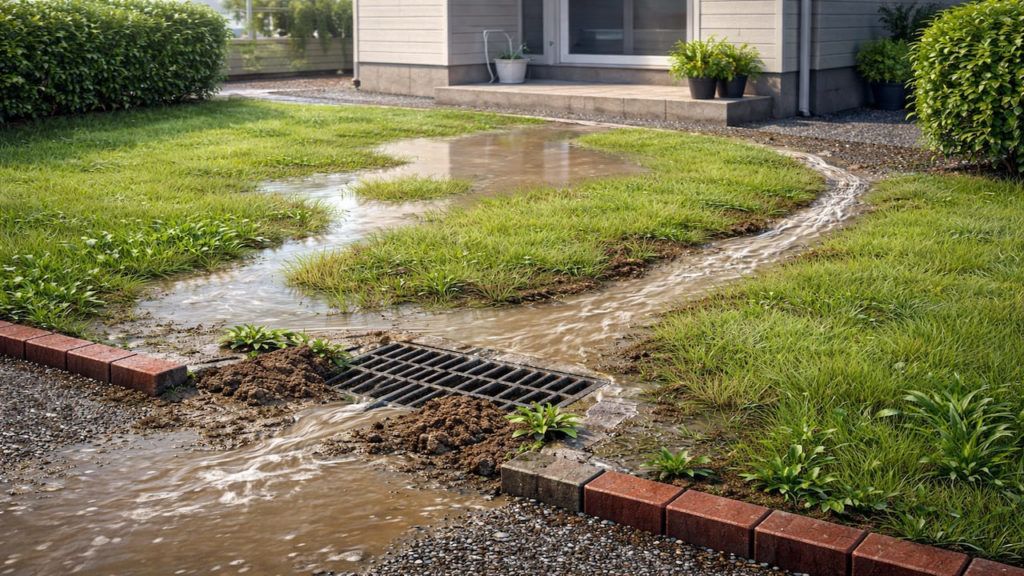
You step near the yard drain and the ground turns into a shallow pond. The water sits there, then the lawn around it goes soft and messy.
Flooding near drains is usually a path problem, not “too much rain” by itself. In Japan, tight yard layouts, gutters, and paved edges can funnel water into one weak spot fast.
In this guide, you'll learn how to trace water paths near drains. You will run 5 checks, then fix the path so the lawn stops drowning.

Hi, I’m Ken — I’m Japanese, and I live in Malaysia long-term, so I explain everyday life in Japan from a practical ‘from abroad’ perspective.
I hold a building design qualification and I’ve been on site for 20+ years across hundreds of jobs. I turn Japan’s unspoken rules into simple checks, so you can avoid costly mistakes and take the next step with clear actions that feel safe.
1. Lawn gets flooded near drains 5 checks for water paths
Find where the water comes from.
When a drain area floods, the source is often upstream from what you see. In Japanese yards, a small slope, a hard edge, or a downspout can steer runoff like a gutter on the ground—then the drain zone becomes the collection bowl. Start by watching the lawn during a light rain, not only during a storm. You want the first trickle, because that shows the real path.
- Follow the first runoff line during light rain
- Check if puddles start at paving edges
- Check if downspouts dump toward the drain
- Check if water returns after you clear puddles
- Check if only one corner always floods first
People assume the drain itself is the villain, then they keep scooping water and get nowhere. If the path keeps feeding the same spot, the drain never gets a break. Trace first, then fix the feed. That is how you stop repeat floods.
2. Gutters slope and silt
Fix the easy three first.
Gutters send water, slope decides where it goes, and silt decides whether it can go anywhere at all. In Japan, rainy season hits in bursts, so silt and leaf bits get pushed into low spots and pack tight. If the gutter output lands on soil, it can carve a channel that sends muddy water straight to the drain—then the drain chokes on its own supply. Clean the route, then make the route less dirty.
- Check gutters overflowing during moderate rain
- Check downspout splash digging a small trench
- Check if the lawn surface slopes toward drain
- Check silt layer sealing soil like a crust
- Check leaf mats blocking the drain opening
Some folks chase a “perfect drain” and ignore the gutter dump point. That is backwards. If the gutter keeps feeding mud, the best drain still clogs. Handle gutter output, confirm slope direction, then deal with silt so water can soak and move.
3. Why water backs up near yard drains in Japan
Backups happen when flow slows.
Water backs up when it meets resistance: packed silt, matted grass, or a shallow dip that acts like a bowl. In Japanese home yards, narrow gaps between house and fence can stay shaded, so the ground stays damp and soft, and fine soil moves easily when rain hits. Once fine silt settles near the drain, it seals the surface and blocks infiltration, so the next rain has nowhere to go. The drain looks “broken,” but the ground is the plug.
- Check if soil feels slick and smeared
- Check if footprints stay pressed for hours
- Check if water sits even after rain stops
- Check if grass is matted around the opening
- Check if the low spot keeps widening slowly
People say “my soil is just bad” and give up. But most of the time, the soil is just sealed and compacted in one small zone. If you open the surface and stop feeding it muddy water, the same lawn can drain fine. The cause is usually local, so the fix can be local too.
4. How to reroute runoff and keep drains from clogging
Change the path and the surface.
Step one is rerouting: make sure downspouts and gutter overflow do not dump straight into the drain zone. Step two is opening: rake and loosen the surface so silt crust breaks and water can sink, especially after Japan’s humid rainy weeks. Step three is protection: keep leaf mats and loose soil from collecting at the opening by clearing edges often. Do it in that order—path first, then surface, then maintenance.
- Redirect downspout flow away from drain zone
- Break silt crust gently and lift matted grass
- Topdress lightly to remove the small bowl
- Clear leaf mats before they compress and seal
- Add a simple border to slow muddy runoff
Some people jump straight to digging a trench and get exhausted fast. If you have not rerouted the source, the trench just becomes a new mud highway. Start with the water path you can control, then help the soil accept water again. If the zone stops flooding in light rain, you are winning.
5. FAQs
Q1. Is the drain always clogged if the area floods?
No it can be a sealed surface where silt forms a crust and water cannot sink. In Japan, shaded corners near walls can stay damp and compact faster.
Q2. Should I clear the drain opening every time it rains?
Not every time, but clear leaf mats and grass clumps before they get pressed down. If you see water swirling but not dropping, clean the rim and re-check the path.
Q3. Why does it flood only near one drain?
That spot is probably the lowest bowl or the main runoff landing zone. One small slope change can redirect a lot of water—follow the first trickle to confirm.
Q4. Can mowing make flooding worse?
Yes, scalping can expose soil and increase silt flow into the drain area. Keep mowing a bit higher around the drain zone so roots hold the surface together.
Q5. When should I stop DIY and call someone?
If water backs up even in light rain after you reroute and clear the surface, the line below may have a blockage. If the ground keeps sinking, treat it like a drainage design issue, not a quick cleanup.
Pro's Tough Talk

I’ve spent 20+ years working around Japanese homes, so I’ve seen what tends to work—and what tends to go wrong—in everyday use. In Japan’s rainy season humidity, one clogged corner can turn the whole yard into a wet sock.
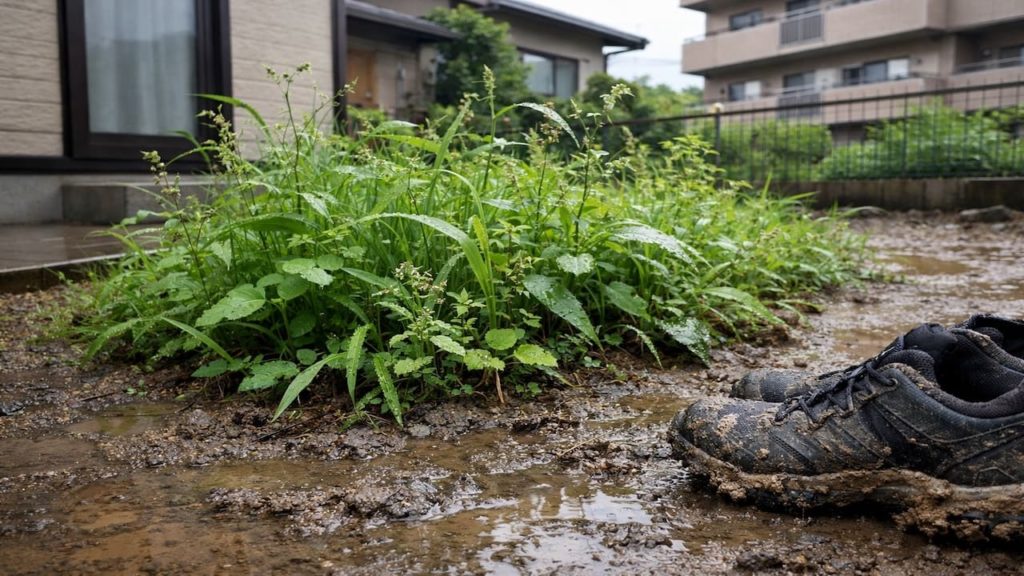
Here’s the cold breakdown. Your gutter dumps water like a fire hose, the slope guides it like a lazy river, and silt packs in like wet cement. That drain zone is a bowl, and you keep refilling it like you’re making miso soup on the ground. You know that moment you take out trash in sandals and your heel squishes into mud?
Reroute the downspout first. Break the silt crust next. Clear the leaf mat last.
If it still floods after you change the path then you have a below-grade issue and you need to stop blaming the lawn. If it improves even a little in light rain, keep working the path and surface until the drain zone stays firm.
Summary
Flooding near drains usually means water paths are feeding one low spot and silt is sealing the surface. The fastest fix is tracing the first runoff line and stopping the feed.
If you only clean the drain opening, the same muddy water will clog it again. Reroute gutter output, open the silt crust, and keep leaf mats from compressing near the rim.
Watch one light rain and mark the first trickle path then adjust that path before you dig anything. Once the spot stays firm, your lawn stops feeling like a swamp.