You look at the lawn and it is not dead, but it looks tired. The color is washed out and the blades feel thin.
Pale grass can come from low nitrogen, low iron, too much shade, or roots that never get oxygen. In Japan, humid nights and tight yard airflow can keep grass weak even with rain.
In this guide, you'll learn how to green up a pale lawn without overfeeding. You will check nitrogen, iron, and sun, then build a steady routine.

Hi, I’m Ken — I’m Japanese, and I live in Malaysia long-term, so I explain everyday life in Japan from a practical ‘from abroad’ perspective.
I hold a building design qualification and I’ve been on site for 20+ years across hundreds of jobs. I turn Japan’s unspoken rules into simple checks, so you can avoid costly mistakes and take the next step with clear actions that feel safe.
1. Lawn looks pale and weak 5 tips to green it up
Green it up by fixing the weakest link.
Pale lawns are usually missing one of three things: food, light, or root function—do not guess. In many Japanese yards, fences and neighboring walls cut wind, so the surface stays damp and roots stay shallow. If roots are weak, extra feeding just creates soft top growth that flops. Your job is to find the limiter, then support it calmly.
- Compare color in sun zones versus shade zones
- Pull a small plug and inspect root depth
- Check for thatch mat blocking soil contact
- Check soil firmness where traffic is heavy
- Check mower cut tips for tearing and fray
Some people see pale color and throw fertilizer at it right away. That can work if the lawn is simply hungry, but it fails if shade or compaction is the real issue. Fix the limiter first and the same lawn greens up with less input. Cleaner growth, fewer problems.
2. Nitrogen iron and sun
Use light feeding and iron only when needed.
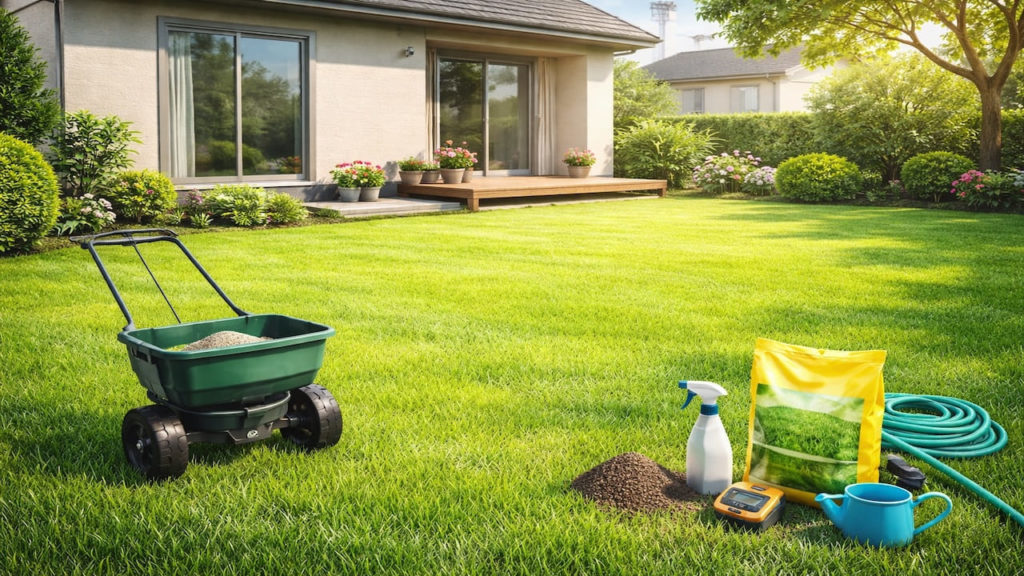
Nitrogen drives growth and color, but too much makes weak blades that fall over, especially after humid rain. Iron can deepen green without a big growth surge, but it will not fix shade or bad roots. In Japan, cloudy stretches can reduce sun, so timing matters more than the bag you buy. If you need basic supplies, ¥500–2,500 often covers small fertilizer bags and simple lawn feeds for home use. According to monotaro.com.
- Feed lightly after a mow during active growth
- Water in to move granules off blades
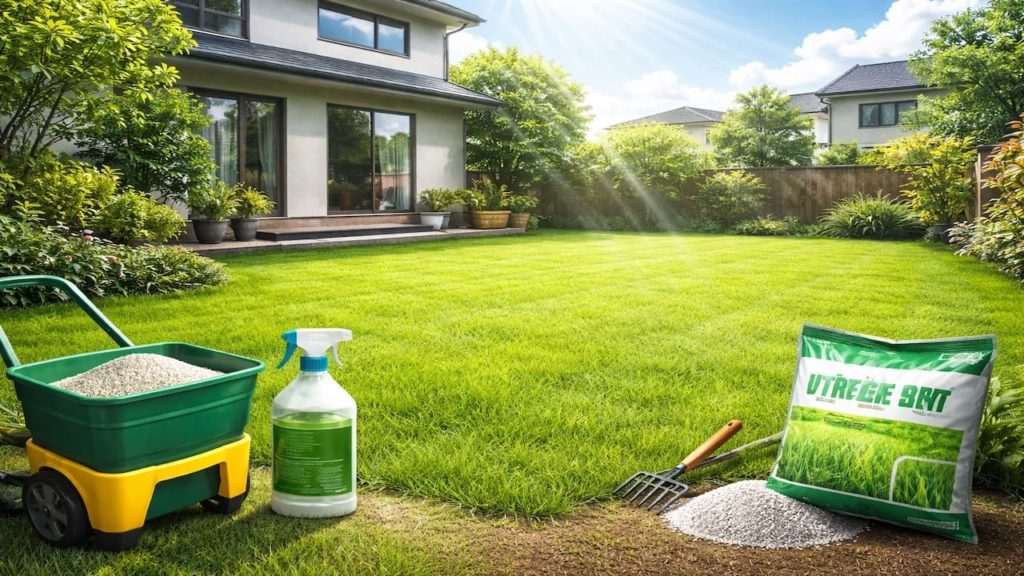
- Use iron when color is pale but growth continues
- Increase sun by trimming overhangs and tall shrubs
- Stop feeding when heat stress shows on blades
People love the idea of one magic product, then they keep stacking products when nothing changes. If the lawn has enough sun and roots, light nitrogen works fast. If it is shaded, you can only manage expectations and reduce stress. Use iron as a color assist, not a fix for structural problems.
3. Why pale lawns stay weak even after rain
Pale lawns stay weak when roots cannot breathe.
Rain can make a lawn look better for one day, then it fades again because the roots never improved. Compaction blocks oxygen and slows nutrient uptake, so the lawn stays pale even if you feed. In Japan, rainy season humidity can keep the crown damp, which encourages shallow roots and soft blades. The lawn looks alive, but it is not strong.
- Check for puddles that linger after light rain
- Check if the lawn feels spongy underfoot
- Check for moss in shaded damp corners
- Check for thin stripes along walking lanes
- Check for fast color loss after mowing
Some people blame the seed type or the soil brand, then they keep buying inputs. If the ground is sealed and the crown stays wet, nutrition cannot do its job. Fix airflow and soil function and the lawn starts using what it already has. Then feeding becomes a small boost, not a rescue mission.
4. How to green it up without forcing fast growth
Build a two week reset plan.
Week one is cleanup and airflow: mow when dry, remove clumps, and lift any matted thatch lightly—then stop touching it. Week two is support: water deep but not daily, and feed only lightly when you see active growth returning. In Japan, narrow side yards can stay shaded, so focus on drying the surface and protecting crowns from constant damp. If you buy a small iron product to help color, ¥1,198 and up is common for home-size liquid feeds. According to monotaro.com.
- Mow higher and keep the blade sharp
- Aerate traffic strips with simple holes
- Topdress thin low spots to reduce wet bowls
- Feed half rate and wait for response
- Track color weekly and adjust slowly
A lot of people try to green the lawn in one weekend and end up burning it or thinning it. Slow changes work because grass needs time to rebuild roots. If the lawn greens up but gets floppy, you pushed nitrogen too hard. If color improves but density does not, chase sun and soil next.
5. FAQs
Q1. Is pale grass always a nitrogen problem?
No shade and root stress can look identical even when nutrients are fine. Compare sun and shade zones and inspect roots before you feed.
Q2. When does iron help the most?
Iron helps when the lawn is growing but looks washed out. It is a color assist, not a cure for compaction or deep shade.
Q3. Why does my lawn green up then fade again?
That usually means the roots are shallow or oxygen is limited. Rain and quick feeding give a short bump, then the lawn slides back.
Q4. Can mowing make a lawn look pale?
Yes, dull blades tear tips and stress the plant, so it looks gray and weak. Fix cut quality first—then judge color.
Q5. How fast should I expect improvement?
Color can shift in a week, but density takes longer. If nothing changes after two calm cycles, the limiter is likely sun or soil structure.
Pro's Tough Talk

I’ve spent 20+ years working around Japanese homes, so I’ve seen what tends to work—and what tends to go wrong—in everyday use. In Japan’s sticky humid weeks, pale lawns usually scream root stress, not just hunger.
Here’s the cold truth. Overfeeding is like cranking the volume on a broken speaker, louder noise, same problem. And chasing green with zero sun is like painting a wall in the dark and calling it design. You toss fertilizer on Friday, then stare at the lawn on Sunday like it owes you money. You mow after work, see pale stripes, and start doom scrolling fertilizer ads.
Check sunlight first. Fix the cut quality next. Feed light and wait.
If the lawn stays pale after airflow and light improve then use a small iron boost and keep nitrogen gentle. If it greens up but turns floppy, you pushed too hard and you need to back off.
Nice plan, champ.
Summary
A pale lawn usually means one limiter is winning: low nutrients, low sun, or weak roots. The fastest progress comes from checking sun, roots, and cut quality first.
Use light feeding only during active growth, and use iron only as a color assist when the lawn is otherwise moving. If water sits or shade is heavy, fix those and stop forcing the lawn.
Pick one limiter and fix it this week then wait and measure the response. Once the lawn steadies, small doses keep it green without chaos.