Your lawn looks fine, then it turns patchy fast like it gave up overnight. You start thinking reseed, but you don’t want to waste time and money.
Patchiness can come from soil issues, shade pockets, and foot traffic patterns that keep repeating. In Japan, rainy season swings, humid heat, and tight home layouts can make weak spots show up quickly.
In this guide, you’ll learn what to check before you reseed anything. You’ll find the real trigger, fix the spot, then reseed only if it will actually take.

Hi, I’m Ken — I’m Japanese, and I live in Malaysia long-term, so I explain everyday life in Japan from a practical ‘from abroad’ perspective.
I hold a building design qualification and I’ve been on site for 20+ years across hundreds of jobs. I turn Japan’s unspoken rules into simple checks, so you can avoid costly mistakes and take the next step with clear actions that feel safe.
1. Lawn turns patchy fast 5 checks before you reseed
Reseeding fails when the patch cause stays in place.
Seed is not a magic erase button. If the soil is compacted, shaded, or constantly walked on, new grass dies fast and the patch returns. In Japan’s humid summer, bare soil can crust after rain, then bake in sun and block seedlings. Wrong foundation.
- Map where patches appear and how fast
- Check if patches align with walking routes
- Pull grass gently to test root grip
- Look for soil crust or hard surface layer
- Compare patch edges to healthy turf nearby
You might think you just need “better seed.” Nah; seed only works if the spot can hold moisture and oxygen. If the patch keeps forming in the same lane, fix the lane first.
2. Soil shade and foot traffic
These three decide if grass can recover between stresses.
Soil structure controls roots and water. Shade controls growth speed and drying, and foot traffic crushes soil and crowns. In Japan, narrow yards between buildings often stay shaded and damp, so traffic damage shows faster and heals slower. Slow recovery.
Cost is mostly time/effort, because diagnosis and small corrections beat buying random products. If you need a basic soil probe or hand aerator, plan around ¥500–2,000 for basic supplies.
- Do a screwdriver test for compaction depth
- Measure sun hours hitting the patch area
- Watch where people step during daily routines
- Check if runoff dumps onto the patch
- Inspect thatch thickness and matted clippings
You could argue “I can’t change shade or traffic.” You can still redirect steps with a stone, open airflow by trimming, and loosen soil where it’s crushed. Small adjustments work when the patch is local.
3. Why lawns turn patchy so quickly
Fast patchiness is usually stress stacking not one cause.
One stress weakens grass, then another finishes it. Shade slows regrowth, compaction blocks roots, and hot sun dries thin spots faster, so the patch expands. In Japan’s climate, warm humid nights plus strong daytime sun can push weak turf over the edge in a week. Sudden collapse.
- Compaction blocks oxygen and weakens roots
- Shade reduces growth and slows recovery
- Foot traffic crushes crowns and soil pores
- Thatch traps moisture and invites disease pressure
- Runoff and heat dry bare soil into crust
Some people blame insects immediately. Sometimes bugs are involved, but the common pattern is repeated stress in the same zone. If patch edges follow your footsteps, that’s not insects, that’s you. Be honest.
4. How to prep the spot so reseeding actually works
Fix soil and traffic first, then reseed as the final step.
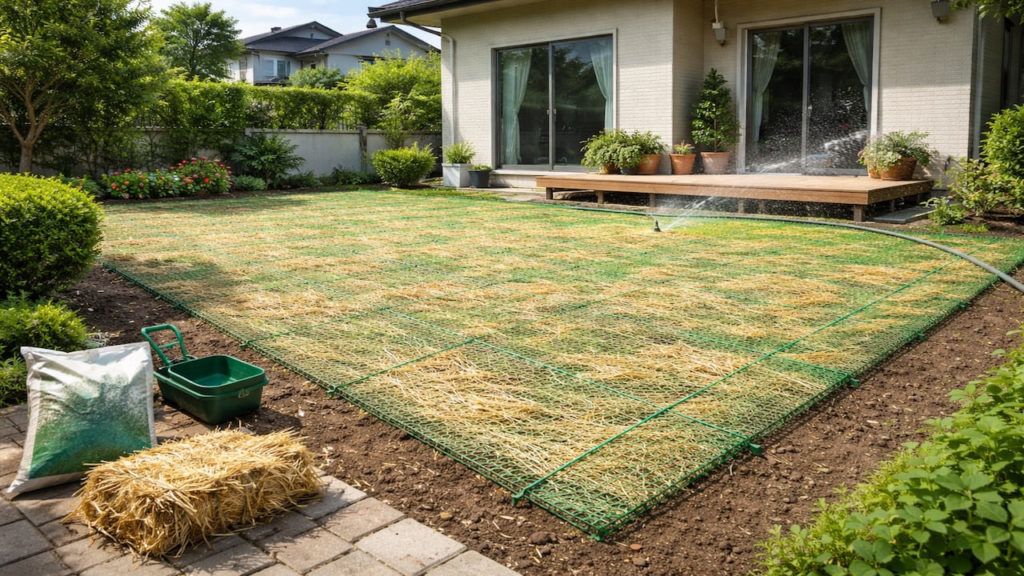
Loosen compacted soil, open light, and protect the seedbed from feet. In Japan, timing matters: avoid reseeding right before long rainy stretches, because seed can wash or crust can form after it dries. Pick a stable weather window and baby the spot for a week.
For seed, topdressing soil, and a simple cover mesh, expect about ¥1,000–5,000 depending on patch size and what you already have. Don’t overspend before the prep is done.
- Aerate the patch and rough up the top layer
- Topdress lightly and level the seedbed
- Reseed and press seed into soil gently
- Cover with mesh to block birds and feet
- Water lightly at dawn until germination starts
You might want to dump seed and hope. That’s the fast way to repeat the problem. If you can’t keep feet off the spot, don’t reseed yet; build a stepping route first, then seed. Seed needs peace.
5. FAQs
Q1. How do I know if compaction is the real cause?
If a screwdriver barely goes in, and water puddles instead of soaking, compaction is likely. If the patch sits near a path or routine walking lane, that’s another strong clue.
Q2. Should I remove dead grass before reseeding?
Yes, remove loose dead material so seed touches soil. Don’t scalp the whole area, just expose the top layer and rough it up for contact.
Q3. Can shade alone make a lawn patchy?
Yes, deep shade slows growth so much that wear damage never heals. If sun hours are low, choose shade-tolerant seed or rethink the surface instead of repeating reseed cycles.
Q4. How long should I keep people off the patch?
At least until seedlings are rooted and resist a light tug. That can take weeks, so use mesh or a temporary stepping stone route.
Q5. What if patchiness keeps spreading even after prep?
Then it may be disease, insects, or drainage. Recheck moisture patterns, look for slimy or spotted blades, and inspect roots under the edge of the patch.
Pro's Tough Talk

I’ve spent 20+ years working around Japanese homes, so I’ve seen what tends to work—and what tends to go wrong—in everyday use. Patchy lawns don’t “randomly die,” they get bullied in the same spot until they quit.
Cold breakdown: soil gets crushed, shade slows recovery, and feet keep hitting the same lane. Then you throw seed on top like confetti and act shocked when it fails. It’s like trying to paint over rust without sanding, and expecting a showroom finish.
Seriously?
Check sun hours today. Loosen the soil tomorrow. Block the traffic route this weekend.
If you can’t keep feet off it, don’t reseed yet. If the soil finally takes water and the area dries evenly, reseed and protect it, and you’ll stop repeating the same cycle.
Keep reseeding without fixing traffic and you’re basically feeding birds for free.
Summary
Patchy lawns usually come from soil stress, shade, and repeated foot traffic, not bad luck. Check patterns, root grip, and compaction before you buy seed.
Prep the spot by loosening soil, improving light and airflow, and protecting it from steps. If patchiness still spreads after prep, investigate drainage, disease, or root damage.
Fix one hotspot route and prep the soil this week. Then reseed only when the patch can actually support new roots and stay green.